
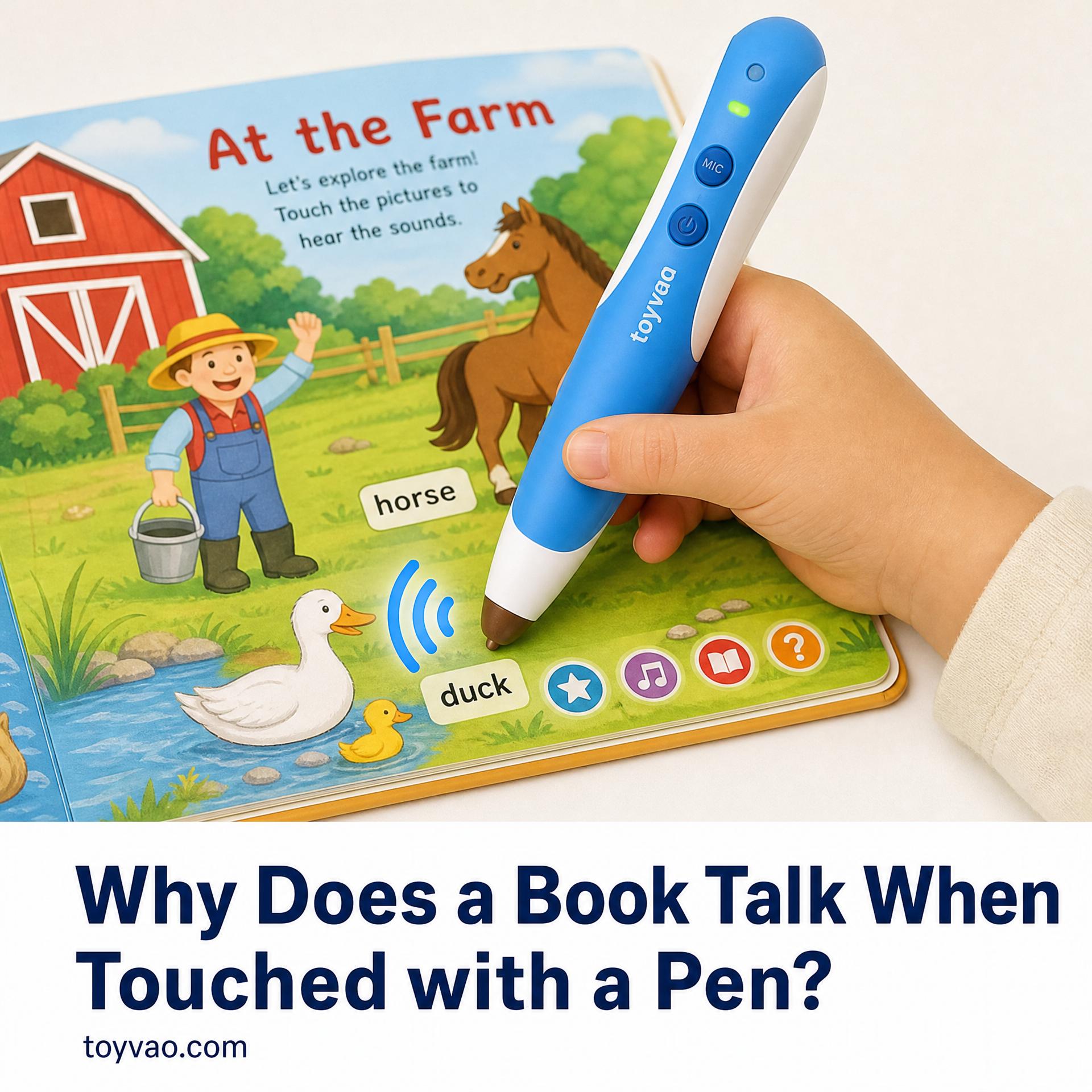
Why Does a Book Talk When Touched with a Pen?
Have you ever wondered how a seemingly ordinary book can magically speak when touched by a special pen? The fascinating technology behind this interactive experience lies primarily in Optical Identification (OID) technology, often involving tiny, invisible dot codes printed on the pages. When a talking pen or reading pen touches these specific points, its optical sensor reads the embedded code, which is then linked to pre-recorded audio files. This allows the pen to instantly play back words, sentences, music, or sound effects, transforming static text into an engaging auditory learning experience.
The Core Technology: Optical Identification (OID) and Dot Codes
At the heart of every interactive talking book system is a sophisticated yet simple concept: Optical Identification (OID). This technology relies on a pattern of microscopic, nearly invisible dots printed on the surface of the book or card. These dots are arranged in unique, non-repeating patterns, much like a highly advanced barcode, with each pattern corresponding to a specific location and associated audio file.
How the Magic Happens: A Step-by-Step Breakdown
- Invisible Dot Codes: Special ink is used to print a grid of tiny dots on the pages. These dots are usually imperceptible to the naked eye but are crucial for the pen’s functionality. Each unique arrangement of dots acts as a digital address.
- Optical Sensor: The talking pen is equipped with a miniature optical sensor (often an infrared camera) at its tip. When the pen touches a specific area on the page, this sensor captures an image of the dot pattern.
- Data Processing: The pen’s internal processor quickly analyzes the captured dot pattern. It decodes this pattern to identify the unique digital address.
- Audio Playback: Once the address is identified, the pen retrieves the corresponding audio file from its internal memory or a linked memory card. This audio is then played through the pen’s built-in speaker or via headphones, providing instant auditory feedback.
This seamless process allows children and learners to interact directly with books, flashcards, and other educational materials, making learning more dynamic and immersive. Companies like Toyvao leverage this OEM and ODM expertise to create innovative educational toy products, such as talking flash cards and reading pens, that bring learning to life.
Components of an Interactive Talking Pen System
An effective talking pen system comprises several key components working in harmony:
The Talking Pen Itself
- Optical Sensor: The primary component responsible for reading the dot codes on the page.
- Microprocessor: The brain of the pen, processing the OID data and managing audio playback.
- Internal Memory: Stores the audio files. This can be built-in flash memory or an expandable SD card slot.
- Speaker/Headphone Jack: For audio output.
- Battery: Powers the device, typically rechargeable lithium-ion.
- USB Port: For charging, transferring audio files, and sometimes for firmware updates.
The Interactive Book/Material
- OID-Encoded Pages: Books, flashcards, or posters with the special dot codes printed on them.
- Associated Audio Files: Digital audio files (e.g., MP3, WAV) that correspond to the dot codes. These are loaded onto the pen.
OID vs. OCR: Understanding the Difference
While both OID (Optical Identification) and OCR (Optical Character Recognition) involve optical scanning, their functions are distinct, especially in the context of reading pens and talking pens.
| Feature | Optical Identification (OID) | Optical Character Recognition (OCR) |
|---|---|---|
| Primary Goal | Trigger pre-assigned audio based on unique dot patterns. | Convert scanned images of text into editable, searchable text data. |
| Technology | Reads invisible or near-invisible dot codes. | Analyzes visible characters (letters, numbers) and recognizes them. |
| Output | Plays audio files (words, sentences, sounds). | Generates digital text that can be edited or processed. |
| Application | Interactive books, talking flash cards, educational toys. | Document scanning, digital archiving, accessibility tools. |
| Dependency | Requires specially printed materials with OID codes. | Works with any standard printed text. |
Talking pens primarily utilize OID technology to provide an interactive audio experience with specially prepared materials. While some advanced reading pens for accessibility might incorporate OCR to read any printed text aloud, the core functionality of educational talking pens relies on OID.
The Educational Impact and Benefits
The integration of talking pens and reading pens into educational toy products has revolutionized early childhood education and language learning. These devices offer numerous benefits:
- Enhanced Engagement: The interactive nature keeps children engaged and motivated to learn, turning reading into a fun, multi-sensory activity.
- Improved Pronunciation: Children can hear correct pronunciation instantly, aiding in language acquisition and speech development.
- Independent Learning: Learners can progress at their own pace, repeating words or phrases as needed without constant adult supervision.
- Multi-sensory Learning: Combining visual (text/images) and auditory (sound) input caters to different learning styles and reinforces comprehension.
- Accessibility: For children with learning difficulties or those learning a new language, reading pens can provide crucial support, making educational content more accessible.
Toyvao, as a leading OEM/ODM manufacturer, understands these benefits and specializes in creating high-quality talking pens and talking flash cards that empower children globally. Our products are designed to be intuitive, durable, and effective learning tools.
The Future of Interactive Learning Toys
The market for educational toys is continuously evolving, with technology playing an increasingly vital role. The demand for interactive learning solutions, such as talking pens and reading pens, is on the rise as parents and educators seek effective ways to engage children in learning. Future developments may include:
- Cloud Integration: Pens that can download new content wirelessly or connect to online learning platforms.
- AI-Powered Personalization: Adaptive learning experiences tailored to individual child’s progress and needs.
- Augmented Reality (AR) Integration: Combining physical books with digital overlays for an even richer interactive experience.
- Advanced Analytics: Tracking learning progress and providing insights to parents and educators.
These advancements will further solidify the position of talking pens as indispensable tools in modern education, offering even more dynamic and personalized learning journeys.
Ready to Source Talking Pens & Reading Pens for Your Brand?
Toyvao is a Shenzhen-based OEM/ODM manufacturer specializing in electronic educational toys, including talking pens, reading pens, and talking flash cards. With 15+ years of experience and CE/FCC/EN71/ASTM certifications, we help global brands develop custom reading pen products from concept to shelf. – Email: sales@toyvao.com – WhatsApp: +86 186 8106 4480 – Website: https://toyvao.com
