
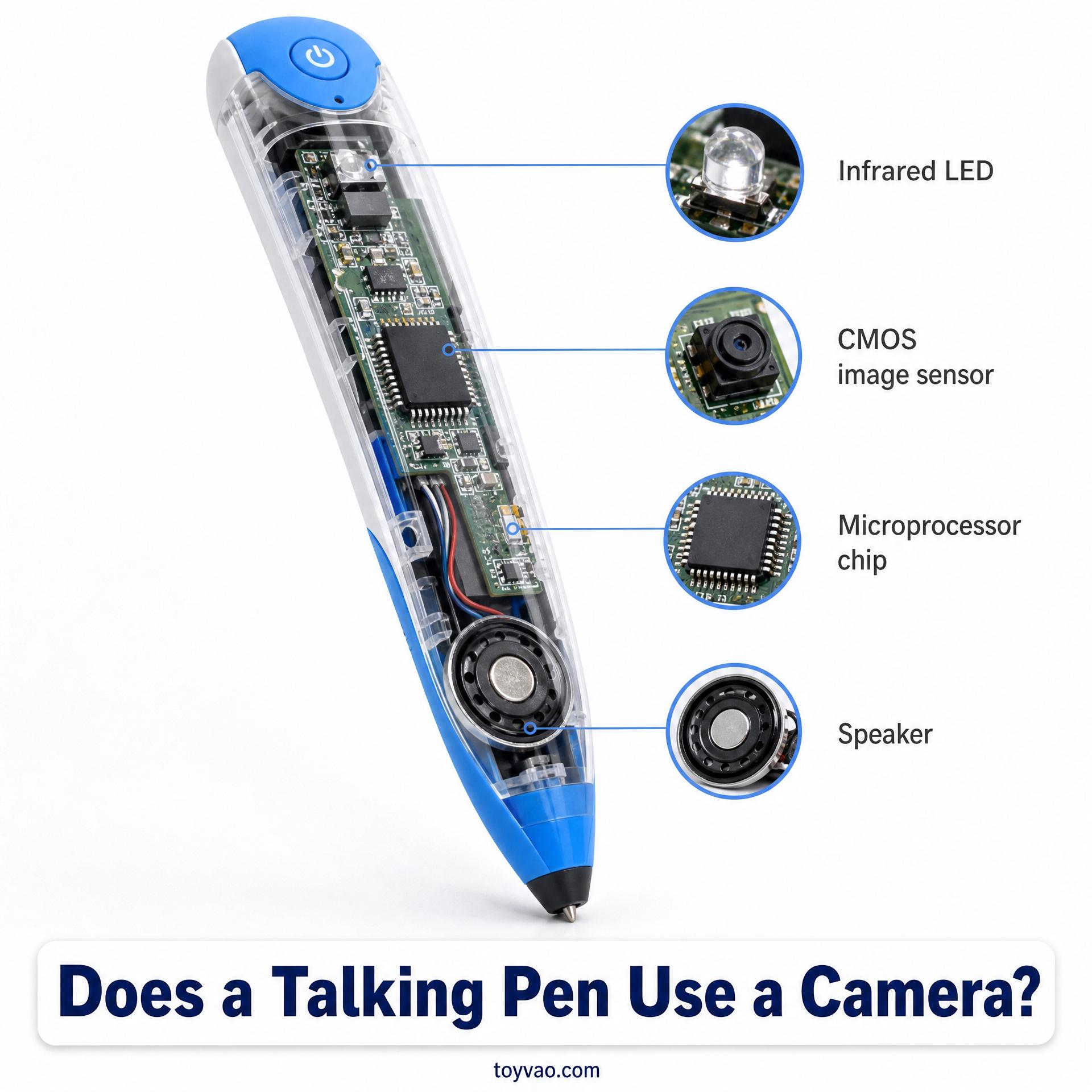
Does a Talking Pen Use a Camera?
Yes, many advanced talking pens, particularly those utilizing Optical Character Recognition (OCR) technology, indeed use a camera. While some talking pens rely on Optical Identification (OID) technology that reads invisible micro-dots on specially printed materials, OCR-based reading pens incorporate a high-speed camera to scan and digitize printed text, converting it into audible speech. This fundamental difference in optical capture mechanisms determines whether a camera is an integral component of a talking pen’s functionality.
Understanding the Core Technologies: OID vs. OCR Talking Pens
Talking pens, also widely known as reading pens, are innovative educational tools designed to bring printed content to life through audio. They serve a crucial role in early childhood education, language learning, and providing assistive technology for individuals with reading difficulties. The underlying technology largely dictates their capabilities and how they interact with learning materials. Primarily, two distinct technologies power these devices: Optical Identification (OID) and Optical Character Recognition (OCR).
Optical Identification (OID) Talking Pens
OID talking pens are commonly found in early learning kits and interactive storybooks. These pens operate by detecting invisible micro-dots printed on the pages of specialized books or learning cards. Each unique pattern of micro-dots corresponds to a specific audio file stored within the pen’s memory. When the pen’s optical sensor (which is a type of image sensor, though not typically referred to as a camera in the conventional sense) hovers over these dots, it recognizes the pattern and triggers the playback of the associated sound, word, or phrase [1]. This technology is highly effective for structured learning environments where content is pre-coded.
Key Characteristics of OID Pens: * Specialized Materials: Requires books and cards with invisible micro-dot patterns. * Optical Sensor: Uses a sensor to read these patterns. * Pre-loaded Audio: Audio content is pre-linked to specific dot patterns. * Ideal for: Toddlers, preschool language learning, interactive storybooks.
Optical Character Recognition (OCR) Talking Pens
In contrast, OCR talking pens are more versatile and are often used for scanning and reading any printed text. These pens are equipped with a high-speed camera at their tip. As the user slides the pen across a line of text, the camera captures thousands of images per second. An internal microchip then processes these images using Optical Character Recognition software, converting the visual data of letters and words into digital text strings [1]. Once digitized, a Text-to-Speech (TTS) engine converts this digital text into audible speech, often with natural-sounding voices enhanced by AI.
Key Characteristics of OCR Pens: * Integrated Camera: Features a tiny, high-speed camera for scanning. * Versatility: Can read almost any printed text (books, newspapers, documents). * OCR Software: Converts scanned images into digital text. * Text-to-Speech (TTS): Transforms digital text into spoken words. * Ideal for: Students with dyslexia, language learners for instant translation, independent reading, and general accessibility.
The Role of the Camera in Modern Reading Pens
For OCR-based reading pens, the camera is the cornerstone of their functionality. It acts as the primary interface between the physical printed world and the pen’s digital processing capabilities. Without the camera, these pens would be unable to capture the visual information necessary to perform optical character recognition. This technology allows for a dynamic and flexible learning experience, as users are not limited to specially prepared materials but can interact with a vast array of printed media.
The integration of a camera in reading pens has significantly expanded their utility. For instance, a student struggling with dyslexia can use an OCR reading pen to scan a textbook, and the pen will read the text aloud, helping them to comprehend the material more effectively. Language learners can quickly scan foreign words or phrases for instant translation and pronunciation guidance. This adaptability makes camera-equipped reading pens invaluable tools in diverse educational settings.
Evolution of Reading Pen Technology: From OID to Advanced OCR
The journey of reading pen technology reflects a broader trend in educational technology: the move towards more versatile, intelligent, and user-friendly devices. Early iterations predominantly relied on OID technology, which, while effective for specific applications, had inherent limitations regarding content compatibility. The necessity for specially coded books meant a closed ecosystem, limiting the scope of learning materials.
The advent and refinement of OCR technology, coupled with advancements in miniature camera sensors and powerful microprocessors, revolutionized the reading pen landscape. Modern OCR reading pens are capable of high-speed, accurate text recognition across various fonts and sizes. This evolution has transformed them from niche educational gadgets into powerful, general-purpose assistive learning devices. The continuous improvement in AI-driven Text-to-Speech engines further enhances the user experience, providing more natural and engaging audio feedback.
Toyvao’s Contribution to Educational Technology: Smart Learning Devices
Toyvao, a Shenzhen-based OEM/ODM manufacturer, specializes in electronic educational toys, including advanced talking pens, reading pens, and talking flash cards. Our products embody the latest advancements in both OID and OCR technologies, catering to a wide range of educational needs. For instance, our talking flash cards leverage OID technology, allowing young children to interact with specially designed cards that trigger audio responses, fostering early language development and cognitive skills. This hands-on approach is crucial for tactile learning, a key benefit often cited for talking pens over screen-based alternatives [1].
Our reading pens, on the other hand, often incorporate sophisticated camera-based OCR capabilities, providing older children and language learners with the flexibility to scan and read any printed text. This dual approach ensures that Toyvao offers comprehensive solutions for different age groups and learning styles, emphasizing screen-free learning and interactive engagement. We understand the importance of integrating relevant keywords like reading pen, talking pen, and educational toy into our product development and marketing strategies to reach global brands seeking high-quality OEM and ODM manufacturing partners.
Data Comparison: OID vs. OCR Talking Pens
To further illustrate the differences and advantages of each technology, consider the following comparison:
| Feature | OID Talking Pen | OCR Talking Pen (Camera-based) |
|---|---|---|
| Primary Mechanism | Reads invisible micro-dots on special paper | Scans printed text using a high-speed camera |
| Content Type | Specialized, pre-coded books/cards | Almost any printed text (books, newspapers, documents) |
| Versatility | Limited to specific coded materials | Highly versatile, works with a broad range of materials |
| Key Component | Optical sensor (detects dot patterns) | High-speed camera (captures text images) |
| Application | Early learning, interactive storybooks, talking flash cards | Dyslexia support, language learning, general reading assistance |
| Example Product | Toyvao Talking Flash Cards | Toyvao Reading Pen |
| Offline Use | Yes, typically | Yes, typically (updates may require WiFi) |
The Future of Talking Pens and Educational Technology
The trajectory of educational technology points towards increasingly intelligent and adaptive tools. Talking pens, whether OID or OCR-based, are at the forefront of this evolution. As AI and machine learning capabilities advance, we can expect even more sophisticated features, such as improved natural language processing, enhanced translation accuracy, and personalized learning experiences tailored to individual user needs. The role of the camera in these devices will likely expand, enabling more advanced functionalities like image recognition for objects and diagrams, further blurring the lines between physical and digital learning environments.
For manufacturers like Toyvao, staying abreast of these technological shifts is paramount. Our commitment to innovation ensures that our educational toy offerings, including reading pen and talking pen solutions, remain competitive and effective. We continuously explore new ways to integrate cutting-edge technology into our OEM and ODM services, providing global partners with products that meet the evolving demands of the educational market.
Ready to Source Talking Pens & Reading Pens for Your Brand?
Toyvao is a Shenzhen-based OEM/ODM manufacturer specializing in electronic educational toys, including talking pens, reading pens, and talking flash cards. With 15+ years of experience and CE/FCC/EN71/ASTM certifications, we help global brands develop custom reading pen products from concept to shelf.
- Email: sales@toyvao.com
- WhatsApp: +86 186 8106 4480
- Website: https://toyvao.com
References
[1] What is a Talking Pen and How Does It Work? A Beginner’s Guide. Reading-Pen.com. Available at: https://www.reading-pen.com/blogs/what-is-a-talking-pen-and-how-does-it-work-a-beginner-s-guide.html
