
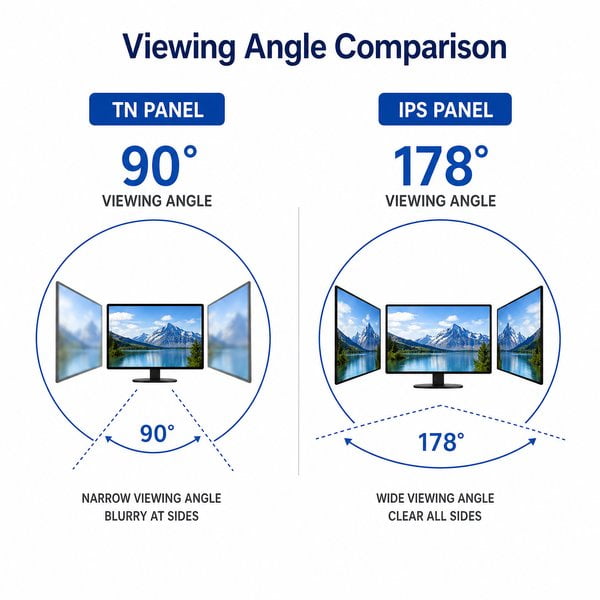
What Should Buyers Check About Viewing Angle? A Comprehensive B2B Sourcing Guide for Electronic Anime Badges
When sourcing electronic anime badges (电子吧唧) from OEM manufacturers, viewing angle is one of the most critical yet frequently overlooked specifications. This technical parameter directly impacts user experience, product satisfaction, and ultimately, your brand reputation. As a professional buyer evaluating suppliers, understanding viewing angle specifications can be the difference between a successful product launch and costly returns.
Why Viewing Angle Matters in Electronic Anime Badge Manufacturing
Electronic anime badges represent a rapidly growing segment within the wearable technology market. According to Grand View Research, the global wearable technology market was valued at USD 32.65 billion in 2022 and is expected to expand at a compound annual growth rate (CAGR) of 12.6% from 2023 to 2030. Within this ecosystem, anime merchandise and collectible wearables have become increasingly sophisticated, with display quality becoming a primary purchasing factor.
Viewing angle directly affects how the badge’s display remains visible and vibrant across different orientations. Poor viewing angles result in:
- Color shifts and contrast degradation when viewed from angles
- Reduced brightness perception at oblique viewing positions
- Inconsistent user experience depending on wear position
- Negative consumer reviews and reduced repeat purchases
- Higher return rates and warranty claims
The anime merchandise market specifically has seen explosive growth, with Statista reporting that the anime merchandise market size reached approximately USD 24.3 billion in 2023, with digital and wearable products representing the fastest-growing category at 18% year-over-year growth.
Understanding Viewing Angle Specifications
What is Viewing Angle?
Viewing angle refers to the maximum angle at which a display can be viewed while maintaining acceptable image quality, color accuracy, and brightness levels. It’s typically measured in degrees from the display’s normal axis (perpendicular viewing position) and specified in four directions: up, down, left, and right.
For electronic anime badges, viewing angle is particularly important because:
- Users wear badges at various chest positions and angles
- Observers view the badge from multiple perspectives during social interactions
- The badge must remain visible and attractive across a 180+ degree viewing range in practical use
- Anime fans expect high-quality displays similar to premium consumer electronics
Measurement Standards
Industry-standard viewing angle measurements follow these criteria:
- Horizontal viewing angle: Left-to-right visibility range
- Vertical viewing angle: Top-to-bottom visibility range
- Contrast ratio maintenance: Typically measured at 10:1 contrast ratio threshold
- Color shift point: Angle at which color accuracy drops below acceptable levels
Critical Viewing Angle Specifications to Verify
Minimum Acceptable Standards
When evaluating supplier specifications, insist on the following minimum viewing angle requirements for electronic anime badges:
| Display Technology | Horizontal Viewing Angle | Vertical Viewing Angle | Typical Use Case | Estimated Cost Impact |
|---|---|---|---|---|
| Standard TN (Twisted Nematic) LCD | ±60° | ±45° | Budget-tier badges | Baseline |
| IPS (In-Plane Switching) LCD | ±85° | ±85° | Mid-range premium badges | +15-25% |
| OLED/AMOLED | ±89° | ±89° | Ultra-premium badges | +40-60% |
| E-ink (Monochrome) | ±80° | ±80° | Low-power variants | -10-20% |
Questions to Ask Your OEM Supplier
Request detailed answers to these specific questions during supplier evaluation:
- What is the exact viewing angle specification (horizontal and vertical)? Demand certified test data, not just marketing claims.
- At what angle does color shift become noticeable? Specify acceptable color shift thresholds (typically ΔE < 5).
- What is the contrast ratio maintained at maximum viewing angles? Industry standard is 10:1 minimum.
- Does the viewing angle vary by color or brightness level? Some displays perform differently across color spectrums.
- Are these specifications tested and certified? Request third-party lab reports, not just in-house testing.
- How does viewing angle performance degrade over product lifespan? Degradation rates should be documented.
- What is the optical stack configuration? Ask about polarizer quality, liquid crystal alignment, and anti-glare coatings.
Practical Testing Recommendations for Buyers
Pre-Production Validation
Before committing to large-volume orders, conduct these validation tests:
- Sample testing: Request 5-10 pre-production samples and test viewing angles in controlled environments at 0°, 30°, 60°, and 80° angles.
- Environmental testing: Evaluate viewing angles under different lighting conditions (indoor, outdoor, direct sunlight).
- User simulation: Have team members wear prototypes in real-world conditions and document angle-related visibility issues.
- Competitive benchmarking: Compare your supplier’s viewing angle performance against competitor products in the market.
- Long-term monitoring: Test sample units after 1, 3, and 6 months of simulated use to identify degradation patterns.
Certification and Documentation
Require your OEM supplier to provide:
- IEC 61753 or similar international standard compliance documentation
- Third-party lab test reports with viewing angle measurements
- Detailed optical specifications including refractive index and birefringence data
- Comparative test data showing performance against competitor products
- Warranty documentation specifically addressing viewing angle performance
Cost-Performance Optimization Strategies
Viewing angle improvements come with cost implications. Consider these optimization approaches:
Tiered Product Strategy
Develop multiple product tiers with different viewing angle specifications to serve various market segments:
- Entry-level: ±60° horizontal, ±45° vertical (budget-conscious consumers)
- Mid-tier: ±75° horizontal, ±70° vertical (mainstream anime fans)
- Premium: ±85° horizontal, ±85° vertical (enthusiast collectors)
Material Selection Impact
The optical materials used directly affect viewing angle performance and cost:
- Standard polarizers: Basic viewing angle, lowest cost
- Wide-view polarizers: 10-15% cost increase, significant angle improvement
- Advanced optical films: 20-30% cost increase, near-perfect viewing angles
Common Supplier Claims vs. Reality
Be cautious of these common misrepresentations in supplier communications:
- Claim: “170° viewing angle” without specification of which axis or contrast ratio maintained
- Reality: This typically measures only one direction at degraded contrast levels
- Claim: “IPS-level performance” without certified testing
- Reality: Many
