
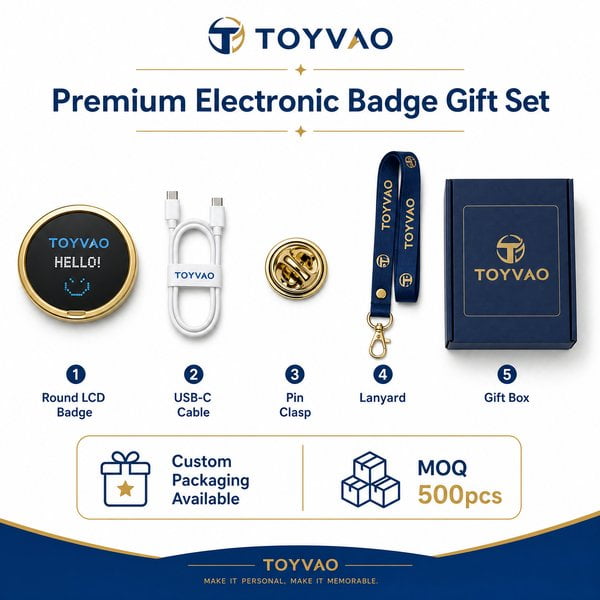
Electronic anime badges (数字/电子吧唧) blend collectible fandom with interactive electronics — a fast-growing niche for promotional giveaways, retail collectibles, subscription boxes, and event merchandise. For B2B buyers (retail buyers, licensing teams, promotional agencies, and e-commerce brands) a “premium” badge gift set must deliver on design, durability, safety, and custom-brand storytelling while remaining cost-effective at scale.
Market context — demand signals you should know
- Wearable and small-form consumer electronics continue to expand: industry research shows the global wearable technology market is projected to grow at double-digit rates into the next decade (Grand View Research estimates roughly a mid-teens CAGR across the 2020s), reflecting sustained consumer appetite for wearable/collectible electronics.
- Unit volumes for wearable-type devices reached the hundreds of millions annually in recent years (Statista reports global wearable device shipments surpassed 400 million units in the 2020 timeframe), indicating strong logistics, manufacturing infrastructure and channel demand for compact electronic products.
These data points support investing in premium badge sets as scalable promotional items or retail SKUs—provided suppliers meet industrial, regulatory and branding requirements.
- High-quality badge unit: Durable housing (metal or high-grade ABS/POM), secure pin/backing or magnetic mount, and premium surface finish (UV print, soft-touch, or metallic plating) to match licensed artwork.
- Electronics: Reliable MCU/SoC (e.g., low-power ARM or Nordic chips for BT), LED/OLED/e-paper display options depending on use, flash memory for animations, and well-implemented firmware with OTA/update path if applicable.
- Power & charging: Rechargeable solution (USB‑C magnetic or pogo-pin cable) or replaceable coin cell with clear expected runtime specs (playback vs standby hours). For rechargeable types include battery mAh, charge time and protection circuit details.
- Accessories: Premium gift box, instruction card (multilingual), charging cable, lanyard or interchangeable backs, and certificate/serial card for limited editions.
- Packaging & presentation: Branded rigid box with foam insert, printed sleeve, and optional numbered limited-edition printing — these add perceived value and protect units during shipping.
- Documentation & after-sales: CE/FCC declarations, RoHS compliance statement, battery safety info (UN38.3 for lithium shipments if rechargeable), warranty card (1–2 year typical), and return/replacement SLA.
Technical and compliance checklist for procurement teams
- Display type: LED matrix (simple animations), OLED (high contrast), or e-paper (static art with ultra-low power). Match art complexity to display capabilities.
- Battery & safety: Specify capacity (mAh), protection circuit, charge cycles, and compliance tests (UN38.3, IEC62133 where applicable).
- Connectivity: Bluetooth LE (for app control), NFC (for tap-to-collect), or offline only. Confirm supported OS versions and security measures.
- Materials & housing: Specify metal vs plastic, plating options, IP-rating (IP54+ for splash resistance), and drop test requirements.
- EMC & radio: FCC/CE for markets you serve. Ask supplier for test reports and traceability to lab report numbers.
- Firmware & content pipeline: Who owns assets and firmware? Request source-code escrow or locked firmware provision; confirm content update methods and limits on animation length or memory usage.
Quality assurance, testing and acceptance criteria
Insist on factory QA records and the following tests before shipment:
- 100% functional burn-in (48–72 hrs recommended for new runs),
- Battery cycle and safety tests,
- IP and drop testing for premium SKUs,
- Visual inspection for print alignment and color fidelity,
- Random sample EMI/EMC and radio performance verification.
Cost drivers, MOQ and lead times
Primary cost drivers: display type, battery choice, connectivity module, packaging finish, licensing fees for artwork, and certification tests. Typical MOQs:
- Basic LED badge: MOQ 500–1,000 pcs
- OLED or rechargeable badge: MOQ 300–1,000 pcs depending on module availability
- Fully custom metal housing + premium box: MOQ may rise to 1,000–5,000 pcs
Standard lead times: 4–8 weeks for repeat production; 8–14+ weeks for first-run custom tooling, certifications and complex packaging.
Specification comparison table — typical B2B tiers
| Feature | Basic | Standard | Premium |
|---|---|---|---|
| Display | LED matrix (simple) | Small OLED (128×64) | OLED / e‑paper or full-color mini display |
| Battery | Coin cell (replaceable) | Rechargeable 200–350 mAh | Rechargeable 400–800 mAh + fast charge |
| Connectivity | None | Bluetooth LE | Bluetooth LE + NFC / OTA |
| Housing | Printed plastic | Metal bezel + printed face | Die-cast metal / plated finishes |
| Packaging | Polybag + card | Paper box + foam | Premium rigid box + insert + certificate |
| Typical MOQ | 500–1,000 | 300–1,000 | 1,000+ |
| Lead time (repeat) | 4–6 weeks | 4–8 weeks | 6–12 weeks |
Procurement tips for B2B buyers
- Request functional samples and content proofs (animated files on-device) before tooling sign-off.
- Negotiate milestone payments: prototype/sample, pre-production, and production completion.
- Include clear warranty and RMA language in your PO for electronics and batteries.
- Factor in certification time and costs into initial quotes — test reports can be reused across clients but must match your product variant.
- Consider a staged rollout: small pilot SKU run to validate market response before committing to large MOQ and premium packaging.
Closing & next steps
A well-constructed premium electronic anime badge gift set balances display quality, battery life, certified safety, premium presentation and reliable supply-chain execution. Use the checklist above when evaluating suppliers, and require test reports, clear IP/licensing terms, and sample approval before production.
FAQ
What certifications should I demand for rechargeable badge sets?
At minimum ask for RoHS, CE and FCC declarations for electronics. For rechargeable lithium batteries request UN38.3 and IEC62133 test reports and labeling for air shipment compliance.
Expect MOQs from 300–1,000 for electronically complex units; premium tooling and packaging can push MOQ to 1,000+. Repeat lead time is usually 4–8 weeks; first-run with tooling and testing can be 8–14+ weeks.
Can animation/content be updated after shipment?
Yes, if the badge includes Bluetooth or USB update functionality. Confirm OTA support, app availability, and any recurring costs for cloud services before purchase.
Consider BOM, packaging, certification amortization, freight and margin. Premium end-customer retail pricing often ranges from 3–6x landed unit cost depending on brand positioning and licensing fees.
What warranty terms are typical?
1 year limited warranty is common for electronics; premium brands may offer 2-year coverage. Clarify what parts (battery, display, electronics) are covered and any conditions.
Ready to get sample quotes, lead-time estimates and tooling guidance? Contact our Shenzhen-based manufacturing team:
- Email: sales@toyvao.com
- WhatsApp: +86 186 8106 4480
