
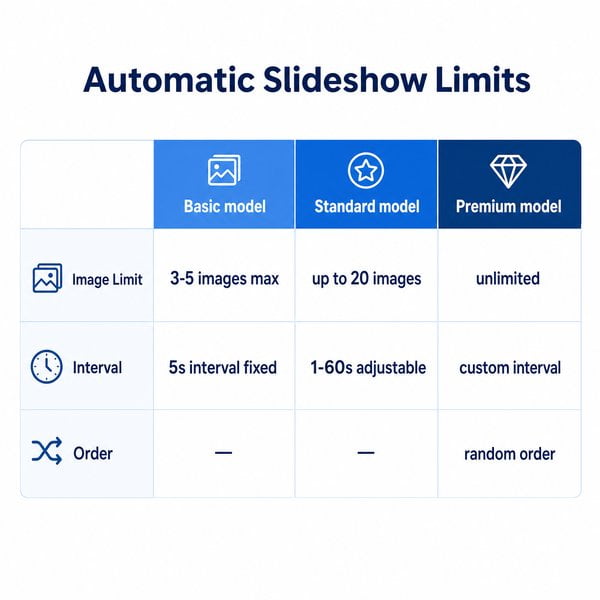
What Are the Limits of Automatic Slideshow on Electronic Badges?
Electronic anime badges (digital round badges) have become a staple in the merchandise and fan engagement ecosystem, with the global wearable technology market projected to reach $115.57 billion by 2030, according to Grand View Research. Within this space, automatic slideshow functionality represents one of the most sought-after features for B2B buyers—from anime convention organizers to merchandise distributors and brand partners. However, understanding the technical and practical limitations of automatic slideshow capabilities is essential for making informed sourcing decisions.
This comprehensive guide explores the constraints, technical specifications, and optimization strategies for electronic badges with automatic slideshow features, providing B2B sourcing professionals with actionable insights.
Understanding Electronic Badge Slideshow Technology
Automatic slideshow functionality on electronic badges refers to the device’s ability to cycle through multiple pre-loaded images or animations at set intervals without manual intervention. This feature is particularly valuable for anime merchandise, promotional badges, and collectible displays.
Core Technical Limitations
- Memory Capacity: Most consumer-grade electronic badges operate with 512MB to 2GB of onboard storage. At standard resolution (128×128 pixels, typical for round badges), each image consumes approximately 5-20KB. This theoretically allows for 25,600 to 409,600 images, but practical constraints reduce this significantly.
- Processing Power: Entry-level badges use ARM Cortex-M0 or M4 processors operating at 48-100MHz. These cannot smoothly render high-complexity animations or process slideshow transitions faster than 30-60 frames per second without battery drain.
- Display Refresh Rate: E-ink and LCD display panels on electronic badges typically support refresh rates of 1-10Hz for e-ink (to preserve battery) and up to 60Hz for LCD. Slideshow transitions are constrained by these hardware specifications.
- Battery Endurance: Continuous slideshow operation significantly reduces battery life. A typical 250mAh lithium battery provides 20-40 hours of continuous slideshow operation versus 7-14 days in standby mode.
Practical Slideshow Constraints for B2B Sourcing
Image Count and Sequence Limitations
While storage capacity theoretically permits thousands of images, practical slideshow performance degrades with excessive image counts:
- Optimal Range: 50-200 images per slideshow sequence maintains smooth transitions and predictable performance
- Maximum Practical Limit: 500+ images introduces loading delays between transitions (2-5 second gaps) and increased CPU load
- Transition Speed: Standard slideshow speeds range from 1-5 seconds per image. Faster transitions (sub-1 second) consume significantly more power and may cause visual artifacts
Resolution and File Format Constraints
| Display Type | Native Resolution | Max Image Size (per file) | Supported Formats | Battery Impact (8hr slideshow) |
|---|---|---|---|---|
| E-ink (monochrome) | 128×128 to 200x200px | 3-8KB | BMP, PNG (grayscale) | 15-20% drain |
| LCD (color) | 128×128 to 240x240px | 15-50KB | BMP, PNG, JPEG | 40-60% drain |
| OLED (color) | 128×128 to 256x256px | 20-80KB | PNG, JPEG, GIF (limited) | 50-75% drain |
Firmware and Software Limitations
Most OEM electronic badges operate on proprietary firmware with fixed slideshow functionality. Key constraints include:
- Fixed Interval Timing: Slideshow intervals are typically locked to 1, 2, 3, 5, or 10-second increments. Custom intervals require firmware modification (additional cost: $500-$2,000 per batch)
- Limited Transition Effects: Standard badges support fade, slide, or instant transitions. Advanced effects (3D rotation, morphing) require premium firmware ($1,000+ licensing)
- No Real-Time Updates: Most consumer badges cannot update slideshow content via Bluetooth or WiFi without returning to the manufacturer
- Sequence Restrictions: Many models support only linear slideshow sequences; looping, random, or conditional sequences require custom development
Environmental and Operational Constraints
Temperature and Humidity Impact
Electronic badge performance degrades in extreme conditions:
- Operating Range: Most badges function optimally between 0°C and 40°C. Outside this range, display refresh rates slow and battery efficiency drops by 15-30%
- Humidity Sensitivity: Above 85% relative humidity, condensation can damage display panels and interrupt slideshow playback
- Continuous Operation Risk: Running slideshow sequences for 12+ hours in high-humidity environments (e.g., outdoor anime conventions) risks hardware failure
Power Management Constraints
Battery limitations are the primary constraint on slideshow duration:
- Standard Capacity: 250-400mAh batteries (typical for round badges) provide 15-40 hours of continuous slideshow
- Premium Capacity: 800-1200mAh batteries extend this to 40-80 hours but increase device thickness by 2-3mm and cost by $3-$8 per unit
- Power Consumption Trade-off: E-ink displays consume 50-70% less power than LCD but offer limited color and animation capability
B2B Sourcing Recommendations
Specification Guidelines for Importers
When sourcing electronic badges with automatic slideshow, prioritize these specifications:
- For High-Volume Events (1,000+ units): Specify 100-150 image sequences, 3-5 second intervals, e-ink or monochrome LCD to balance cost ($4-$8 per unit) and battery life
