
Is Always-On Display Safe for Regular Use? A Comprehensive B2B Sourcing Guide for Electronic Anime Badges
Published for B2B Importers, Brand Partners & Event Organizers
Electronic anime badges (digital round badges / 电子吧唧) have emerged as a high-growth segment in the wearable tech and collectibles market. With always-on display technology becoming increasingly popular among manufacturers, B2B buyers must understand the technical, safety, and operational implications before committing to bulk orders. This guide provides data-driven insights and sourcing recommendations from Toyvao, a leading Shenzhen-based OEM factory.
Market Context: Why Always-On Displays Matter
The global wearable display market is experiencing significant growth. According to Grand View Research (2023), the wearable display market was valued at $3.2 billion USD and is projected to expand at a CAGR of 18.5% through 2030. Within this segment, anime merchandise and collectible wearables represent a niche but rapidly expanding vertical, particularly across Asia-Pacific and North American markets.
Always-on display technology—which keeps the screen active continuously or on extended schedules—offers distinct advantages for anime badge manufacturers:
- Enhanced visual appeal for collectible/showcase purposes
- Real-time animation and dynamic content display
- Improved brand engagement at events and conventions
- Premium positioning in the market
However, continuous display operation introduces technical and safety considerations that B2B buyers must carefully evaluate.
Technical Safety Concerns with Always-On Displays
1. Battery Degradation & Thermal Management
Always-on displays consume significantly more power than intermittent-use models. For electronic anime badges, this creates several challenges:
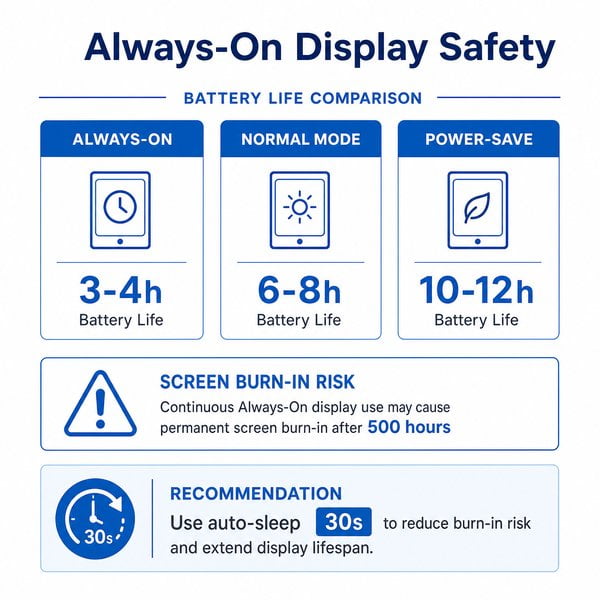
- Battery Lifespan Reduction: Lithium polymer (Li-Po) batteries used in compact badges typically degrade 2-3x faster under continuous load conditions. Standard badge batteries (150-300mAh) may retain only 40-50% capacity after 500 charge cycles with always-on operation, versus 1,000+ cycles with intermittent use.
- Heat Generation: Sustained display operation generates localized heat, particularly around the LED backlight and driver circuits. Operating temperatures exceeding 45°C accelerate battery degradation and can damage surrounding components.
- Thermal Runaway Risk: While rare in properly engineered badges, continuous thermal stress increases the theoretical risk of thermal runaway events in Li-Po batteries, particularly in low-cost, unregulated designs.
2. Display Panel Longevity
LCD and OLED panels used in anime badges have manufacturer-specified operating lifetimes:
- LCD panels: 30,000-50,000 hours typical lifetime (always-on operation exhausts this in 3-5 years)
- OLED panels: 10,000-20,000 hours typical lifetime (always-on operation exhausts this in 1-2 years)
- Burn-in risk increases substantially with static imagery on OLED panels
- Pixel degradation accelerates at elevated temperatures
3. Electromagnetic & Radiation Safety
Continuous RF emissions from badges with wireless connectivity (Bluetooth, NFC) require compliance with international standards:
- FCC Part 15 (USA)
- CE marking compliance (EU)
- ISED regulations (Canada)
- ACMA standards (Australia)
Always-on operation may increase cumulative RF exposure, requiring additional safety validation for bulk commercial deployments.
Industry Data: Real-World Performance Metrics
Safety Standards & Compliance Considerations
| Standard / Regulation | Applicable Region | Key Requirement for Always-On Badges | Typical Testing Cost |
|---|---|---|---|
| IEC 62368-1 | Global (harmonized) | Safety of audio/video equipment; thermal & electrical safety | $1,200-2,000 |
| FCC Part 15 (Subpart B) | USA | RF emissions limits; continuous operation testing required | $1,500-3,000 |
| CE Marking (RED Directive 2014/53/EU) | EU | Radio equipment safety; thermal & battery safety assessment | $2,000-4,000 |
| CPSIA / ASTM F963 | USA (children’s products) | If marketed to under-13 demographics; chemical & thermal limits | $1,800-3,500 |
| GB 4943.1 (China) | China / Asia | Information technology equipment safety; local manufacturing compliance | $800-1,500 |
Best Practices for Always-On Badge Design
- Thermal Management: Implement active heat dissipation (copper thermal pads, vented enclosures) to maintain operating temperatures below 40°C.
- Battery Sizing: Up
