
Executive Summary
This guide provides a practical, actionable distribution strategy for Picture Book Reading Pens (also called Story Pens, Talking Book Pens, OID Reading Pens) entering Middle East markets. It focuses on three priority areas that determine market access and commercial success: language support (Arabic and local languages), electrical and power considerations (chargers, battery standards, voltage), and regulatory/certification needs (toy safety, electrical safety, EMC, radio approvals, customs/registration). The guide quantifies typical technical choices (storage, audio quality, battery sizing), lists the certifications and test standards buyers and regulators expect, compares cost components (unit cost, testing, registration, duties, VAT), and provides a step‑by‑step decision framework for selecting OEMs, local partners and certification paths. Practical recommendations target distributors, retailers, and education buyers responsible for sourcing at commercial volumes (MOQ 1,000+ units) and for national rollouts to schools and libraries.
Key takeaways:
– Arabic language support (Modern Standard Arabic plus optional local dialect packs) is mandatory for regional uptake. Storage recommended: minimum 16 GB for multi‑language catalogs; 32 GB preferred for extensive audio libraries.
– Design chargers and power systems to support 100–240 VAC, 50/60 Hz input; supply USB‑C or micro‑USB charge options with 5 V, 1–2 A output. Internal batteries typically 500–1500 mAh Lithium‑ion/Li‑Po for 8–12 hours playback.
– Regulatory baseline: toy safety (EN 71 or IEC equivalent), electrical safety (IEC 62368‑1 or EN 62115 for toys), EMC (CISPR/EN 55032 family), RoHS/REACH, and local type approvals for RF (if Bluetooth/Wi‑Fi). GCC and national registration (Saudi SABER, UAE ECAS/ESMA, Qatar CRA/CITRA) will require test reports and documentation. Expect 4–12 weeks for testing + registration and $3,000–$15,000 in laboratory and registration costs per product line.
This guide assumes you are buying at scale and need a defensible compliance strategy and an effective localization plan to win distribution in the Gulf Cooperation Council (GCC) and wider Middle East region.
What Is Picture Book Reading Pen and Who Uses It
Product definition:
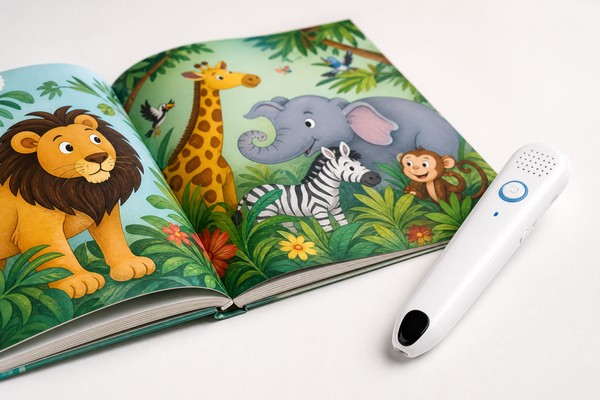
– A Picture Book Reading Pen is a handheld electronic pen that, when touched to printed illustrations or specially encoded pages, plays pre‑recorded audio: narration, word pronunciations, sound effects, or interactive prompts. Variants include:
– Passive OID chips with optical detection (basic pens)
– Pens with internal storage and indexing (MP3/AAC playback)
– Bluetooth/Wi‑Fi enabled pens for downloading content or app integration
– Pens with microphones and record/playback functions for interactive learning
Primary user segments:
– Children age ranges: typically 2–10 years, segmented into pre‑school (2–5), early readers (5–8), and emergent readers (8–10).
– Buyers in B2B contexts:
– Distributors and wholesalers supplying toy retailers and bookstores
– Educational procurement (ministries of education, school districts)
– Publishers seeking bundled physical/digital products
– Online marketplaces and value‑added resellers
Functional expectations in the Middle East market:
– Arabic narration with clear pronunciation and appropriate pacing; age‑appropriate voice talents; sometimes bilingual Arabic/English switching.
– Durable design: repeated drops, constant handling, resistance to saliva and sticky fingers.
– Simple UX: single‑button operation, tactile feedback, long battery life, minimal maintenance.
– Content localization: cultural relevancy, religious and cultural sensitivities, correct religious content handling for conservative markets.
Commercial usage:
– Retail bundles: pen + single book or small set
– Educational kits: class packs (20–50 pens per classroom) with curriculum alignment
– Library lending models: multi‑book support, durable cases
– Licensing deals: characters and story rights for local markets
Why Demand Is Growing
Market drivers:
– Literacy and early childhood education: Governments in GCC and wider Middle East have active literacy campaigns and early childhood curriculum rollout; interactive audio tools are used in classrooms to improve phonemic awareness.
– Increasing household purchasing power in GCC: disposable incomes support mid‑range educational electronics for children as supplementary learning aids.
– Bilingual demand: English proficiency remains a priority; dual‑language pens that support Arabic and English have strong uptake among parents and schools.
– E‑commerce growth: marketplaces in UAE/Saudi Arabia (Amazon.ae, Noon, Souq historically) and cross‑border channels reduce distribution friction for physical products.
– Reduced cost and improved component availability: low‑cost microcontrollers, low‑power Bluetooth modules, and mass‑produced speakers make these devices affordable at scale.
Quantitative observations:
– Typical classroom deployments require 20–50 units per school; national pilot programs scale from 1,000 to 50,000 units.
– Manufactured unit cost ranges (indicative FOB China, 2024 prices):
– Basic OID pen (no wireless, basic speaker, 8 GB): $4–8/unit (MOQ 1,000–5,000)
– Mid‑range pen (better speaker, 16–32 GB, recording): $8–18/unit
– High‑end pen (Bluetooth/Wi‑Fi, screen, 32+ GB, premium materials): $20–45/unit
– Buyers should assume a 4–6 month timeline from sample approval to first shipment for certified products; 6–12 months if radio approvals or multiple country registrations required.
Risk factors:
– Failure to support Arabic or align voice/dialect expectations reduces adoption; simple translation is insufficient.
– Noncompliance with toy/electrical safety and radio regulations results in customs detention and product refusals.
– Cultural mismatches in content or inappropriate imagery can lead to public backlash or government intervention.
Key Technology Differences
Architectures and their regulatory/market implications:
Optical/Passive OID pens:
– How they work: Pen reads printed invisible ink or codes (Opto‑Identification) and triggers pre‑stored audio samples from internal memory.
– Pros: Low power, no RF approvals required, lower BOM cost.
– Cons: Limited interactivity, content updates require returning to factory or swapping chips/cards.
– Best for: Low‑cost retail bundles, bulk classroom deployments where content is fixed.
Smart pens with internal storage:
– Specs: MCU (ARM Cortex‑M series), onboard flash or microSD (8–32 GB), mono speaker 0.5–1.5 W, ADC for microphone, MP3/WAV playback support at 16–44.1 kHz.
– Pros: Flexible content, offline operation, firmware update via USB.
– Cons: No remote updates unless wireless included.
– Typical components: 2–4 GB to 32 GB flash, 300–1000 mAh battery, single microcontroller with DSP audio playback.
Bluetooth/Wi‑Fi enabled pens:
– Features: OTA content updates, app pairing, analytics, multiplayer/sync features, streaming content.
– Regulatory impact: Requires radio type approval per country (TRA UAE, CITC Saudi, CRA Qatar, etc.), potential SAR testing.
– Security considerations: Data privacy laws (some countries require local data hosting for education datasets), secure pairing and content DRM for licensed content.
– Power management: increased consumption; batteries 800–1,500 mAh common; standby optimization necessary.
User interface differences:
– No‑screen pens: simpler manufacturing, lower cost, better durability for young children. UI via audio prompts and LEDs.
– With small screens: add graphics, menus and multi‑language selection, but add cost and potential for breakage.
Audio architecture decisions:
– TTS vs. recorded audio:
– TTS: scalable, easier to add languages/dialects; modern Arabic TTS quality varies — MSA TTS now acceptable for educational reading but still lagging behind human narration in prosody and expressiveness.
– Recorded human narration: higher quality, better engagement; higher content cost and storage needs.
– File formats: MP3 (mono 22.05–44.1 kHz, 32–128 kbps), AAC or Ogg for better compression. Recommend mono 22.05 kHz at 64–96 kbps for balance of clarity and size.
– Indexing: OID mapping requires precise byte offsets or indexed MP3 files with per‑word/per‑line timestamps; implement error correction for misreads.
Mechanical and durability specs:
– Drop tests: target military standard levels not necessary, but aim for IEC toy shock/durability equivalents: survive 1.2–1.5 m drop onto concrete 10–20 drops.
– Ingress: IP54 minimum for splash resistance; higher for library/classroom use.
– Materials: ABS/PC plastics, no phthalates; compliance with chemical migration (EN 71‑3).
Power and charging:
– Internal battery sizes: 500–1,500 mAh Li‑ion/Li‑Po common.
– Charging interface: USB‑C recommended; micro‑USB acceptable for cost constraints. Fast charging not necessary; standard 5V/1A chargers sufficient.
– Charger input: design for 100–240 VAC, 50/60 Hz to avoid regional SKUs.
– Charging time: 2–4 hours typical; runtime 8–12 hours continuous playback for classroom use.
Key Features and Specifications to Evaluate
Technical specifications buyers should require from suppliers and OEMs:
Core hardware
– Memory: minimum 8 GB; prefer 16 GB for bilingual packs; 32 GB for multiple dialects and rich audio. Support microSD expansion up to 64 GB where possible.
– Battery: Li‑ion/Li‑Po battery capacity with cycle life ≥300 cycles, nominal capacity 800–1,200 mAh for 8–12 hours playback. Provide battery datasheet and UN38.3 test report.
– Speaker: 0.5–2 W, frequency response ~300–16,000 Hz; voice clarity prioritized over bass.
– Microphone: omnidirectional MEMS microphone when recording required. SNR ≥58 dB.
– MCU: 32‑bit ARM Cortex‑M4 or equivalent with DSP for audio processing; codec support for MP3/AAC/WAV.
– Charging interface: USB‑C preferred; charger must be rated for 100–240 VAC 50/60 Hz, output 5 V ±5%, 1–2 A.
Audio and content
– Sample rates: 22.05 kHz or 44.1 kHz. Mono voice files acceptable; use 16‑bit depth.
– Bitrate: MP3 64–128 kbps; human narration recommend 96–128 kbps mono.
– File indexing: per‑word or per‑sentence time codes; provide mapping method (byte offsets, cue files).
– Languages supported: Arabic (MSA), English, and optionally local dialect packs (Egyptian, Levantine, Gulf), Farsi, Turkish, Hebrew. Specify exact language variants and voice talents.
Localization and UI
– UI language support: firmware menus, voice prompts, manuals and packaging available in Arabic (right‑to‑left) and English.
– App support: Android and iOS companion apps with Arabic UI and RTL layout for Arabic.
– Content management: OTA content updating methodology or USB content loader; DRM for licensed audio.
Durability and safety
– Materials: ABS/PC compliant with EN 71‑3 limits for heavy metals and migration guidelines. Phthalate content ≤0.1% as per EU REACH.
– Physical spec: recommended drop height 1.2 m, IP54 splash resistance, no small detachable parts for age <3 unless designed for older kids.
– Battery safety: overcharge, overdischarge, short‑circuit protection; thermal cutoff.
Connectivity and RF (if applicable)
– Bluetooth: BLE 4.2 or 5.0 module with certified module recommended to expedite approvals.
– Wi‑Fi: 2.4 GHz only recommended (no 5 GHz) to lower complexity; if included, choose modules that already have FCC/CE test reports.
– Security: encrypted transfer (TLS) for app/pairing; data storage and privacy policies for user/child data.
Regulatory and documentation
– Test reports: CB/IECEE report for IEC 62368‑1 or 60065 legacy, IEC 62115 (toys), EN 71 family reports, EMC (CISPR/EN 55032), RoHS, REACH where applicable.
– Certificates: G‑Mark (GCC conformity) or country specific approvals; local registration evidence (SABER for Saudi, ECAS/ESMA for UAE) if required.
– Labeling: manufacturer name, model, batch code, CE/UKCA (if applicable), G‑Mark or country acceptance mark, Arabic label for warnings and age grading.
Service and warranties
– Minimum 12 months warranty; spare parts availability for 2–3 years; RMA process and local service center options.
Procurement KPIs
– MOQ: clearly specify OEM MOQ (commonly 1,000 units for custom revisions; 3,000–5,000 for new tooling/colors).
– Lead time: 60–120 days from PO to FOB for full production after samples approved.
– Acceptable defect rate: maximum 2% AQL for bulk shipments; negotiate return and replacement terms.
Pros and Cons
Pros
– High educational value: supports literacy initiatives and bilingual learning; strong demand in education channels.
– Scalable product variants: hardware is modular; content is the differentiator and can be re‑used across markets.
– Low entry cost on basic models: basic pens can be produced at low COGS, enabling margin for localization and distribution.
– Reduced RF complexity option: choosing non‑wireless designs avoids radio approvals and simplifies compliance.
Cons
– Content localization cost: high quality recorded Arabic narration and culturally appropriate content significantly increases content production costs ($200–$2,000 per hour of recorded audio depending on talent and production quality).
– Regulatory complexity: fragmented approvals and registration processes across GCC and non‑GCC markets increase lead time and compliance cost.
– Battery and shipping constraints: Li‑ion batteries impose logistic restrictions and increase testing/certification requirements (UN38.3).
– After‑sales expectations: buyers expect local support, returns handling, firmware updates and rapid replacements; building this network is costly.
– Piracy and content licensing: managing rights for translations and character IP requires legal agreements and DRM handling.
Step-by-Step Decision Guide
Step 1 — Define target countries and channels
– List priority markets (e.g., Saudi Arabia, UAE, Qatar, Kuwait, Egypt, Jordan, Lebanon, Israel). Each has differing regulatory and cultural requirements.
– Define channels: education procurement, retail chains, e‑commerce, publisher partnerships. Channel determines product specification (rugged classroom pens vs premium retail).
Step 2 — Specify feature set with stakeholders
– Create a prioritized feature matrix: Arabic MSA required (must), dialect packs optional, Bluetooth optional (if school Wi‑Fi allowed), battery life requirement (8–12 hours), memory minimum (16 GB).
– Decide on packaging and labeling languages: Arabic + English mandatory in most markets.
Step 3 — Select hardware architecture
– If minimizing regulatory friction: choose non‑RF pens.
– If content updates and analytics needed: select BLE/Wi‑Fi modules that are pre‑certified and have vendor test packs to accelerate local approvals.
Step 4 — Request technical and compliance documentation from suppliers
– Ask for: schematic, BOM, EMC pre‑test data, CB/IECEE test reports, UN38.3 battery test, UL/IEC certificates, firmware source and security documentation, battery datasheet, material compliance declarations (RoHS/REACH).
Step 5 — Conduct localized content planning
– Budget for professional Arabic voice recording: estimate $500–$2,000 per finished hour depending on studio and talent.
– Decide between TTS and recorded audio: TTS for scale and fast updates; recorded for flagship titles.
– Localize UI and packaging; provide right‑to‑left text in firmware and companion apps.
Step 6 — Plan certification and registration pathway
– For GCC countries: prepare CB/IEC test reports for safety and EMC; translate test reports and technical files into Arabic if requested by authorities.
– Register with Saudi SABER early (pre‑registration recommended) and with UAE ECAS/ESMA processes for electrical/toy categories.
– For RF devices: initiate TRA/CITC/Qatar CRA approvals; expect 4–12 weeks and potential local agent requirement.
Step 7 — Pilot and field test
– Run a pilot in selected schools/retailer stores (500–2,000 units) to gather feedback on audio quality, battery life, and durability.
– Collect user feedback on dialect preferences and content appropriateness.
Step 8 — Scale, inventory and logistics
– Establish regional warehousing in UAE (Jebel Ali free zone used commonly) or Saudi to reduce delivery times and duties.
– Factor in import duties (GCC often 5% common external tariff) and local VAT (e.g., UAE 5%, Saudi 15%).
Step 9 — After‑sales support setup
– Establish RMA logistics, spare parts inventory, repair/replace SLAs. Offer firmware update mechanisms (USB or OTA).
– Provide Arabic customer support documentation and training materials for distributor staff.
Step 10 — Monitor compliance and lifecycle
– Maintain technical file, test reports and keep firmware signed and updated. Re‑test if components change (e.g., speaker chipset or battery supplier), or if regulation updates occur.
Pricing and Cost Analysis
Cost buckets and indicative values (all USD, indicative 2024 market data):
Manufacturing cost (FOB China, per unit)
– Basic OID pen (8 GB, basic speaker): $4–8
– Mid‑range (16–32 GB, better speaker, recording, USB‑C): $8–18
– High‑end (BLE/Wi‑Fi, 32 GB, premium materials, small display): $20–45
Testing and certification
– CB/IECEE safety + EMC test reports: $2,500–$6,000 per product model
– EN 62115 / EN 71 toy safety battery and mechanical tests: $2,000–$8,000 depending on lab and scope
– RF type approvals (per country): $500–$3,000 if using pre‑certified module; full testing per country could be $3,000–$10,000
– UN38.3 battery testing: $800–$2,500 per battery type
Registration and local fees
– Saudi SABER registration: variable; expect administrative fees and possible local agent fees $200–$2,000 depending on service provider
– UAE ECAS/ESMA registration: $200–$2,000 via a local agent
– GCC G‑Mark consolidation (if pursued route): $1,000–$5,000 depending on dossier and testing
Logistics and customs
– Freight: sea FCL or LCL; for 1,000 units expect palletized sea freight $300–$900 to Jebel Ali per container share, air freight significantly higher.
– Import duty: GCC common tariff typically 5% on most electronics unless exempt.
– VAT: 5% in UAE, 15% in Saudi; other regulators vary.
Content and localization
– Arabic human narration: $500–$2,000 per finished hour; budget $3,000–$20,000 for launch catalog depending on title count.
– Translation and localization: $0.06–$0.18 per word for professional translation and proofreading with cultural review.
Inventory and working capital
– Minimum working capital: 30–90 days of inventory. For a 5,000 unit purchase at $10 FOB, inventory cost $50,000 plus testing/registration overheads.
Total landed unit cost (example for mid‑range device)
– FOB: $12
– Freight & insurance per unit: $1.50
– Import duty (5%): $0.70
– Testing amortized per batch: $2.00 (assuming tests cost $5,000 spread over 2,500 units)
– Local registration/agent amortized: $1.00
– VAT (5% on landed + markup not included): computed at sale
– Landed cost per unit: approximately $17–$20 before distributor margin, retail margin, content costs and marketing.
Pricing strategy
– Education tenders: aim margin 15–30% for distributors; procurement entities negotiate lower net prices.
– Retail pricing: typical retail markup 2–3x landed cost for consumer segments depending on brand positioning; price sensitivity high in non‑premium segments.
– Bundling: include 1–3 books per pen to justify higher price points; content licensing costs must be included in final pricing.
Competitive Landscape
Regional structure
– Chinese OEMs dominate hardware supply due to price competitiveness and manufacturing scale.
– Local distributors and value‑added resellers (VARs) differentiate by content localization, packaging, after‑sales service and education partnerships.
– Global educational brands may compete on trust, IP and global content but are fewer in number in Arabic market.
Business models in use
– OEM/ODM white‑label: retailers and publishers brand hardware; content provided by partner or publisher. MOQ typically 1–5k.
– Licensed bundles: local publishers negotiate rights with OEMs to produce regionally relevant content; higher margins but higher upfront content cost.
– Subscription/content ecosystem: pen sold at lower margin while content is monetized via subscription; requires ongoing content management and app infrastructure.
Barriers to entry
– High‑quality Arabic content production and cultural verification.
– Complexity of multi‑country regulatory approvals for RF-enabled devices.
– Need for local partnerships for school tenders and distribution.
Key differentiators buyers evaluate
– Audio quality and native Arabic voice talent
– Robustness and battery life
– Regulatory compliance documentation and local registration support
– Local support network and spare parts availability
– Price and bundle economics
Partner selection criteria
– Supplier must provide full technical file, factory audits (ISO 9001 preferred), and references for exports to GCC.
– Prefer suppliers offering pre‑certified RF modules and evidence of prior GCC registrations to reduce timeline.
– Local distributor must offer customs clearance services, warehousing, Arabic customer service and relationships with education procurement bodies.
What Buyers Say
Common procurement insights from regional buyers and distributors:
Arabic content quality is the primary driver of adoption:
– Buyers prioritize pens that use clear, age‑appropriate Arabic narration. MSA is generally accepted for pan‑regional sales but local dialects increase engagement and sales in single‑country campaigns.
Battery reliability and durability are the most frequent complaints:
– Buyers report 20–30% of returns linked to battery failures when manufacturers use low‑grade cells or insufficient protection circuits. Require UN38.3 report and battery supplier traceability.
Regulatory documentation is often incomplete from suppliers:
– Distributors often need to commission additional testing or third‑party conformity assessments. Ask for CB/IECEE reports, test dates, and details of what models were tested.
App and content management implementations vary widely:
– Buyers expect secure pairing and easy content loading; poorly designed apps or firmware that requires frequent manual updates create support burdens.
Service expectations are high:
– Education customers expect quick replacements and loaner devices for classes. Without local support, sales teams struggle to close tenders.
Packaging and labelling oversight:
– Missing Arabic instructions or warnings cause delays in customs and retail shelf approvals. Buyers insist on Arabic warnings and age grading included in label art files pre‑production.
Price vs. value:
– Basic models sell in volume when priced below $15 landed; above this, content quality and brand recognition must justify premium.
Safety, Maintenance and Compliance
Safety standards to prioritize
– Toy safety (mechanical and chemical): EN 71‑1 (mechanical/physical), EN 71‑2 (flammability), EN 71‑3 (migration of certain elements). If selling as a toy, compliance expected in many markets even if not legally mandated.
– Electrical safety: IEC 62368‑1 (audio/video and ICT equipment). For battery operated toys, EN 62115 is the specific toy electrical safety standard.
– EMC: CISPR 32 / EN 55032 for multimedia devices; immunity per EN 55035 or IEC 61000 series.
– ROHS: Restriction of Hazardous Substances; demonstrate Pb, Cd, Hg, PBB, PBDE limits compliance.
– UN38.3: Mandatory for transport of lithium batteries; ensure shipping manifests and labeling for air/sea freight.
Local and regional compliance mechanisms
– Saudi Arabia: SABER platform for regulated products; confirm current category and registration steps. Expect required reports and local importer / authorized representative.
– UAE: ECAS/ESMA registration for specific categories; customs may request conformity documentation.
– GCC: G‑Mark certification in some cases if the product fits GCC conformity regulation scope; check GSO lists.
– RF approvals: UAE TRA, Saudi CITC, Qatar CRA/CITRA, etc. Some accept pre‑certified modules but require documentation and local agent for application.
Maintenance best practices
– Firmware signing: use cryptographic signing for firmware updates. Maintain version control and release notes in Arabic and English.
– Battery maintenance: recommend charging cycles, storage at 40–60% SOC for long‑term inventory, avoid heat exposure.
– Cleaning: specify cleaning agents (mild soap and water, no alcohol on printed sensors), avoid submersion even with IP ratings.
– Spare parts: maintain a 6–12 month parts buffer for commonly failing components (batteries, speakers, buttons).
Labeling and manual requirements
– Arabic user manual mandatory in most countries; include safety warnings, age grading, battery disposal instructions in Arabic.
– Product labels should contain manufacturer name, model, production lot, manufacturing date and safety mark(s).
– For school deployments, include a printed quick start guide in Arabic for teachers.
Liability and insurance
– Product liability insurance: recommended minimum $1–5 million USD depending on scale and sales channels. Education contracts may require higher coverage.
– Recall plan: establish recall and corrective action plan and ensure distributor/retailer coordination.
Audits and quality control
– Pre‑production sample inspection (PPS), in‑line inspection (DUPRO) at 20–30% of production, final random inspection AQL 2.5 or 1.5 depending on risk tolerance.
– Factory audit: request ISO 9001 or ICTI/SEDEX for labor standards if social compliance impacts school or government procurement.
Frequently Asked Questions
Q: Is Arabic support a single SKU change or content only?
A: Arabic support is predominantly content (audio files, UI text) but also requires firmware and app localization for right‑to‑left text rendering, and possibly different indexing due to script differences. For dialect variants, you will need separate content files and potentially storage upgrades (16–32 GB).
Q: Do I need RF approvals if the pen only uses Bluetooth to pair to a phone intermittently?
A: Yes. Any integrated RF transmitter (Bluetooth, Wi‑Fi) typically requires type approval in target countries. Using a pre‑certified module reduces testing burden but you still must submit documentation and follow national registration processes.
Q: Can I avoid battery testing by shipping pens without batteries and including only chargers?
A: Shipping without batteries avoids UN38.3 for air freight but creates a poor customer experience. Batteries still need to comply with local safety standards and must be certified for the device; chargers should be universal input 100–240 VAC and certified (IEC/EN 62368‑1).
Q: What sample and test reports should I demand from an OEM?
A: Demand: CB/IECEE certificate and report, EN 71 test reports, EN 62115 or IEC 62368‑1 safety test report, EMC report (CISPR/EN 55032), RoHS/REACH declaration, UN38.3 battery report, and supplier quality documents (ISO 9001, factory audit). For RF devices, include module certificates and SAR if relevant.
Q: How long does local registration take?
A: Variable. For electrical and toy categories expect 2–8 weeks if documentation is complete; for RF devices allow 4–12 weeks. Delays are common if reports are older than 12 months or if translation/local agent documents are missing.
Q: What storage and audio specs should I require for bilingual products?
A: Minimum 16 GB onboard storage for a single bilingual catalogue; 32 GB for richer libraries. Audio: 22.05 kHz sample rate, MP3 mono at 64–96 kbps for clarity and storage efficiency.
Q: How should I price for school tenders?
A: Build a landed cost model including hardware, testing amortization, content costs, logistics, VAT, and distributor margin. Aim for a net tender price below $20 per unit for mid‑range pens if targeting large public school tenders; pricing depends on country procurement norms.
Contact Toyvao
For sourcing assistance, compliance advisory, OEM vetting, and localized content production in the Middle East, submit the following to Toyvao via Toyvao.com/contact:
– Target countries and expected annual volumes
– Desired product configuration (basic, mid‑range, wireless)
– Required languages/dialects and sample content list (number of titles, average length per title)
– Timeline for pilot and rollout
– Any mandatory certifications or tender documentation requirements
Toyvao will provide a tailored sourcing plan including:
– Recommended OEMs with verified factory audits
– Cost breakdown and landed cost model
– Compliance roadmap with estimated testing and registration timelines and costs
– Content localization partners and budget for Arabic narration and app localization
– Logistics and warehousing options for GCC distribution
Provide the technical brief and any available sample files (audio specs, UI mockups, mechanical drawings) to enable a detailed proposal. Toyvao will respond with an actionable RFP template, supplier shortlist, and next‑step timeline within 3–5 business days.
