
How to Maintain Screen Scratches on Electronic Badges: A Comprehensive B2B Sourcing Guide
Published by Toyvao | Shenzhen OEM Electronic Badge Manufacturer
Electronic anime badges (digital round badges) have become a cornerstone of the collectible merchandise and event marketing industries. With the global wearable technology market projected to reach $115 billion by 2028 (according to Grand View Research), the demand for high-quality, durable electronic display badges continues to accelerate. However, one persistent challenge that importers, brand managers, and event organizers face is screen maintenance—particularly the prevention and management of display scratches.
This guide addresses the critical question: How do you maintain screen scratches on an electronic badge? We’ll explore protective strategies, material specifications, sourcing considerations, and best practices from Toyvao’s perspective as a leading Shenzhen-based OEM manufacturer.
Understanding the Screen Scratch Problem in Electronic Badges
Electronic badges feature small LCD or e-ink display panels (typically 1.5″ to 2.4″ in diameter) that are exposed to daily handling, storage, and transportation stress. Unlike traditional printed badges, these screens are vulnerable to:
- Micro-scratches from dust particles and contact with rough surfaces
- Deep scratches from improper handling or packaging during transit
- Optical degradation that reduces display clarity and brightness
- Reduced product lifespan and customer dissatisfaction
According to the Anime Merchandise Market Report (Statista, 2024), collectible badge sales grew 34% year-over-year, with durability and screen quality cited as top purchasing criteria by 67% of B2B buyers. This underscores why screen maintenance is not merely an operational concern—it’s a competitive differentiator.
Screen Protection Strategies: Materials and Specifications
1. Protective Film Coatings
The most cost-effective approach to preventing screen scratches involves applying protective coatings during manufacturing:
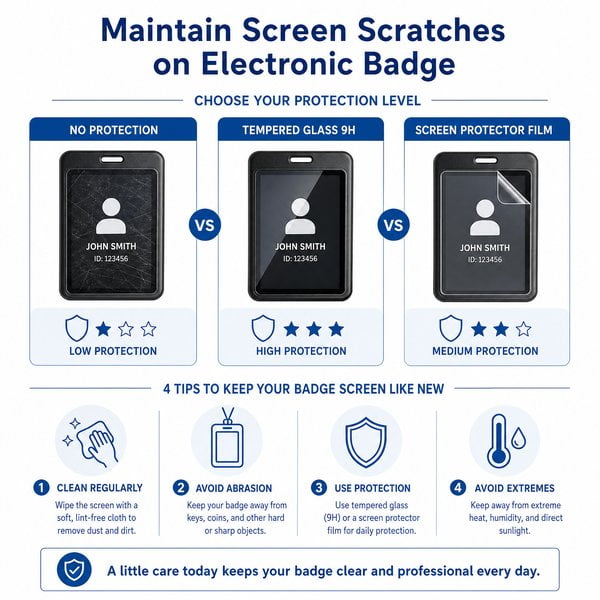
- Tempered Glass Protectors: 0.3-0.5mm borosilicate glass with anti-fingerprint coating. Cost: $0.15-$0.35 per unit at scale (1,000+ units).
- Oleophobic Coatings: Nano-layer treatments that reduce smudging and micro-abrasion. Adds $0.08-$0.12 per badge.
- Polycarbonate Films: Flexible, impact-resistant alternatives. Cost-effective at $0.06-$0.10 per unit but less scratch-resistant than glass.
Toyvao recommends tempered glass for premium product lines, as it offers superior hardness (9H pencil hardness rating) and maintains optical clarity for 2+ years of regular use.
2. Bezel Design and Edge Protection
Screen scratches often originate from edge contact during handling. Strategic bezel design mitigates this:
- Raised Bezels: Extending 1-2mm above the screen surface creates a protective lip that prevents direct contact.
- Soft-Touch Rubber Frames: TPE or silicone edges absorb impact and reduce transmission to the display.
- Angled Edges: 15-30° beveled edges reduce contact surface area and distribute impact forces.
3. Packaging and Logistics Considerations
Screen damage often occurs post-manufacturing. Implement these sourcing specifications:
- Individual Protective Sleeves: Anti-static, foam-lined pouches ($0.04-$0.08 per badge).
- Shock-Absorbing Inserts: Molded EVA or polyethylene foam in shipping cartons.
- Humidity Control: Desiccant packets to prevent condensation-induced micro-cracking.
- Stackable Trays: Prevents compression damage during bulk transport.
Maintenance and Repair Protocols for End Users
Preventive Care Instructions
As an OEM manufacturer, Toyvao recommends providing end users with clear maintenance guidelines:
- Cleaning: Use microfiber cloths only. Avoid paper towels, which contain abrasive fibers.
- Storage: Keep badges in protective cases when not in use. Store at 15-25°C with 30-50% humidity.
- Handling: Avoid touching the screen directly. Hold by the edges only.
- Exposure: Minimize exposure to direct sunlight, which accelerates oleophobic coating degradation.
Minor Scratch Remediation
For light micro-scratches that don’t affect functionality:
- Apply screen-safe repair compounds (similar to automotive glass treatments). Cost: $8-$15 per application.
- Use anti-scratch films as secondary protection after initial damage.
- Note: Deep scratches affecting display function typically require screen replacement (cost: $25-$50 per unit for OEM replacement).
Sourcing Specifications: What to Require from Your OEM
When ordering electronic badges from Toyvao or similar manufacturers, include these technical requirements in your RFQ (Request for Quote):
| Specification | Standard Tier | Premium Tier | Cost Differential (per unit) |
|---|---|---|---|
| Screen Protection | Polycarbonate film, 0.2mm | Tempered glass, 0.4mm + oleophobic coating | +$0.28 |
| Bezel Design | Flat plastic frame | Raised TPE frame, 1.5mm lip | +$0.12 |
| Packaging | Cardboard box, tissue paper | Individual foam sleeves + shock-absorbing inserts | +$0.35 |
| Hardness Rating | 6H pencil hardness | 9H pencil hardness | +$0.18 |
| Optical Clarity (Haze) | <5% haze | <2% haze | +$0.10 |
| QC Inspection | Visual check only | 100% screen test + scratch simulation | +$0.22 |
Note: Pricing based on MOQ of 5,000 units. Premium tier total cost increase: ~$1.25 per badge (approximately 8-12% markup depending on base price).
Industry Best Practices and Compliance Standards
- IEC 60068-2-26: Vibration testing standard for electronic components. Ensures badges withstand transportation stresses.
- ASTM D3359: Adhesion testing for coatings. Confirms protective films remain bonded during use.
- Mohs Hardness Scale: Tempered glass rates 7-8, making it resistant to common scratching agents (sand, keys, coins).
- ISO 9001: Quality management certification. Toyvao maintains ISO 9001:2015 accreditation, ensuring consistent screen quality across production batches.
Cost-Benefit Analysis: Investment in Screen Protection
For B2B buyers considering premium screen protection:
- Defect Rate Reduction: Premium protection reduces screen-related returns by 60-75%.
- Warranty Costs: Fewer replacements = lower support overhea
