
Executive Summary
This guide explains what European buyers, importers, and brand owners must do to launch Picture Book Reading Pens (also called Story Pens, Talking Book Pens, or OID Reading Pens) across the EU/EEA. It focuses on regulatory compliance (CE marking), mandatory toy safety testing (EN 71 series), radio and electrical requirements, supply-chain practicalities, and retail expectations for in-store and online distribution.
Key takeaways:
– Talking book pens are classified as toys under the Toy Safety Directive (2009/48/EC) when intended for children. CE marking is mandatory and requires a Technical File, risk assessment, and test reports proving conformity with applicable standards.
– Core mandatory standards and regulations typically include EN 71 (parts 1–3 at minimum), RoHS (2011/65/EU), REACH restrictions, WEEE and Batteries regulations, and—if wireless—the Radio Equipment Directive (2014/53/EU, “RED”). Rechargeable lithium batteries trigger IEC 62133 and UN38.3 transport requirements.
– Testing package budget: plan €4,000–€15,000 per model for full EN71 + electrical/EMC + chemical + battery tests, with 4–8 weeks lead time. Retail-specific additions (retailer labs, extra language translations, additional physical testing) add €1,000–€5,000.
– Commercial/operational items: MOQ 500–2,000 units typical from qualified Chinese factories; FOB unit price ranges roughly €5–€80 depending on features. Retail margins often require 30–60% distributor/retailer gross margins.
– Noncompliance risks: market surveillance enforcement, product recalls, fines, and forced withdrawal. Maintain a Technical File for 10 years and an EU Authorized Representative if you (the economic operator) are outside the EU.
This guide details the technical, legal, and commercial steps required for reliable market entry and provides decision pathways and cost models to support B2B sourcing and procurement.
What Is Picture Book Reading Pen and Who Uses It
Product definition
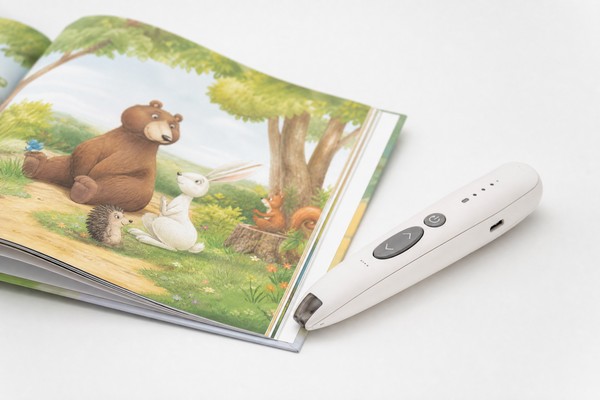
– Talking Book Pen: a handheld, child-directed device that reads audio when the pen tip taps printed picture books, flashcards, or embedded printed codes. Functionality ranges from single-track audio playback to multi-track interactive features (multi-language support, games, recording, Bluetooth streaming, app pairing).
– Hardware typically includes a microcontroller, speaker, microphone (optional for record/play), flash memory, rechargeable battery or replaceable cells, touch or optical sensor for recognizing book hotspots (infrared optical sensor, RFID/NFC, or pattern OCR), and optional wireless modules (Bluetooth Low Energy, Wi‑Fi).
Primary users and channels
– End users: children aged 0–10 years, preschools, language-learning centers, and special-education programs.
– B2B buyers: educational publishers, private-label toy brands, distributors, e‑commerce retailers, late-stage manufacturers (ODM/OEM).
– Retail channels: national toy chains, supermarkets, educational-specialist retailers, Amazon EU/marketplaces, museum shops, and direct-to-consumer brand stores.
Key product variants
– Basic offline pens: onboard audio only, no wireless. Lower technical complexity; battery often replaceable.
– Rechargeable pens with content update via micro-USB/USB-C or SD card.
– Wireless-enabled pens: Bluetooth streaming to speakers/headphones or Wi‑Fi for cloud updates and analytics. Adds RED and EMC obligations plus data/privacy considerations.
– Integrated platform pens: subscription or cloud content, mobile apps for content management, requiring data protection and content-licence compliance.
Why Demand Is Growing
Market drivers
– Educational shift toward interactive learning and early-language acquisition: parents and preschools value tactile and auditory hybrid learning tools.
– Content bundling opportunities: publishers use pens to monetize back-catalogue through interactive add-ons and localized language tracks.
– Accessibility and special education: audio support for literacy and learning-disabled children increases public and private procurement.
– Digital fatigue balancing: many parents prefer low-screen options; talking pens are perceived as screen-light interactive tools.
Commercial advantages for buyers
– Higher perceived unit value vs. traditional picture books: pens enable premium pricing and recurring revenue via content modules.
– Differentiation opportunity for private-labels: hardware customization plus exclusive content rights.
– Cross-selling: pens can be bundled with books, subscription services, or educational kits.
Constraints and risks that temper demand
– Regulatory complexity and recurring compliance (especially for wireless models and battery handling).
– Content localization and copyright/licensing costs per market.
– Margin pressure from low-cost manufacturers and commoditization of basic pen functionality.
– Retailer quality gates: many EU retailers require independent lab testing beyond mandatory standards.
Key Technology Differences
Sensing/Recognition technologies
– Optical (pattern recognition): optical sensors read printed codes or visual patterns. Pros: low-cost, offline; cons: requires precise printing/registration and higher failure rates on low-quality printing.
– Infrared/Reflective sensors: detect printed hotspots using IR reflectivity. Pros: tolerant of some print variation; cons: limited data capacity.
– RFID/NFC: tags embedded in pages. Pros: robust recognition, multi-data capacity; cons: cost per book increases significantly, possible interference, and additional RFID regulatory considerations.
– OCR/Computer Vision: uses camera + image processing. Pros: flexible; cons: higher power draw, privacy concerns if images are stored/transmitted.
Audio storage and playback
– Onboard flash (eMMC/serial flash) vs. removable SD card: onboard flash preferred for retail because it simplifies product use; SD cards increase user replaceability but add logistics and theft risk.
– Codec and audio quality: typical sampling rates 16–44.1 kHz; AAC/MP3 compression commonly used. Higher quality uses more storage and drives up cost.
– Speaker specs: typical small internal speaker 0.5–2 W, sensitivity 80–92 dB SPL/W/m. Acoustic testing is needed to ensure safe output levels for children.
Power and batteries
– Replaceable alkaline/AAA or coin cells: cheaper, easier logistics; battery compartment must be secured to prevent access (screw-lock) per EN 71.
– Rechargeable Li-ion/LiPo: smaller form factor and better audio runtime; requires IEC 62133 certification and UN 38.3 testing for transport. Shipping costs higher and logistics more complex (air shipment restrictions).
Connectivity
– No wireless: simpler compliance (toy + chemical testing). Ideal for low-cost models.
– Bluetooth Low Energy (BLE): common for app integration; triggers RED compliance/EMC testing and privacy requirements (data, pairing).
– Wi‑Fi: less common, higher energy use and stricter RED/EMC complexity.
Firmware and software
– Local-only firmware: lower regulatory burden but still requires safety assessment for software-controlled functions (e.g., volume limits, firmware integrity).
– App/cloud integration: must address GDPR (data minimization, lawful basis) and provide terms/consent flows. App stores and retailers may require privacy policy.
Materials and mechanical construction
– Plastics: ABS, PP, PC commonly used. EN 71-3 migration limit and REACH SVHC screening critical.
– Paints and inks: must meet EN 71-3 limits for heavy metals and banned phthalates.
– Small parts and detachable elements: subject to EN 71-1 mechanical tests for choking hazards.
Key Features and Specifications to Evaluate
Regulatory and safety specifications (mandatory)
– EN 71-1: Mechanical and physical properties — small parts, edges, points, stability, and moving parts.
– EN 71-2: Flammability — surface flammability testing for textiles and painted surfaces.
– EN 71-3: Migration of certain elements — heavy metals limits in accessible materials (lead, cadmium, mercury, etc.). Typical testing in mg/kg; ensure pass limits per EN 71-3:2019+A1.
– Toy Safety Directive (2009/48/EC): compliance basis for CE marking.
– RoHS (2011/65/EU and updates): restricts Pb, Hg, Cd, hexavalent chromium, PBB, PBDE, and phthalates in electrical/electronic assemblies.
– REACH: SVHC screening and restricted substances (phthalates) for items that contact children.
– WEEE and Batteries: appropriate producer registrations and labeling.
Electrical and radio specifications (where applicable)
– EMC standards: EN 55032/EN 55035 (electromagnetic emissions/immunity) for devices with electronics.
– RED (2014/53/EU): for devices with radio modules (Bluetooth, Wi‑Fi). Check if module is pre‑certified; integrating manufacturer still needs to demonstrate RED conformity.
– IEC 62133: safety testing for rechargeable lithium batteries (cells and complete battery packs).
– UN38.3: transport testing for lithium cells (required for air/sea transit). Certifications required for shipping.
Mechanical/physical specs
– Choking hazards: small parts thresholds — test per EN 71: ensure no detachable parts pass the small part cylinder (typically 44 mm diameter test cylinder).
– Battery compartment security: fastener screw or tool locked per standard.
– Water ingress rating: optional but important for durability; IP54–IP67 may be relevant for preschool use cases.
– Acoustic output: ensure safe sound pressure levels. Common target: continuous sounds below 85 dB(A) measured at specified distance (verify with notified lab). Set volume limiting in firmware.
Content and software specs
– Localization: user manual and safety information in official language(s) of destination country (EU requirement).
– Content DRM/licensing: contract and rights clearance for text, music, and narrations. Buyers should budget for territory-specific licensing fees.
– Firmware update mechanism: secure boot and update signing recommended to avoid supply-chain malware and for safety patches.
Manufacturing and QA specs
– MOQ, tooling lead time, PPAP-like sample runs. Typical MOQ: 500–2,000 units; tooling and injection molds cost €2,000–€20,000 depending on cavitation and design complexity.
– AQL inspection levels: commonly 2.5% or 4.0% inspection level II. Implement pre-shipment inspection (PSI) and in-line quality control (IQC).
Documentation and labeling
– CE mark on product and packaging.
– EU declaration of conformity (DoC) in Technical File.
– WEEE symbol (crossed‑out bin) and battery disposal symbols.
– Manufacturer name, importer name (where applicable), model/part number, and batch code for traceability.
Pros and Cons
Advantages of selling talking book pens in Europe
– High consumer willingness to pay for interactive educational products.
– Repeatable content sales and high perceived value; opportunities for recurring revenue (content packs/subscriptions).
– Strong physical retail and e‑commerce channels to scale quickly if compliance and quality are in place.
Commercial and technical challenges
– Regulatory complexity increases required investment and time-to-market—especially for wireless or battery-powered models.
– Upfront testing and certification costs are non-trivial (€4k–€15k per SKU) and need periodic retesting after design changes.
– Logistic and compliance overhead: WEEE, batteries, EPR producer schemes, and country-specific packaging/language rules.
– Retailer-imposed extra testing and quality standards (independent labs, on-site audits).
Operational tradeoffs
– Basic offline models: cheaper certification, lower shipping complexity, but lower margins and easier to commoditize.
– Wireless/rechargeable models: higher margins and feature differentiation, but require more testing, more expensive logistics, and ongoing software/data compliance.
Step-by-Step Decision Guide
Step 1 — Define product scope
– Choose recognition method (optical, RFID, NFC) and connectivity (none, BLE, Wi‑Fi).
– Decide battery technology: disposable or rechargeable. If rechargeable lithium, budget for IEC 62133 and UN38.3.
Step 2 — Classify regulatory obligations
– Confirm it’s a “toy” per Toy Directive (intended use by children). If so, EN 71 applies.
– Identify additional directives: RED (radio), EMC, RoHS, REACH, WEEE, Batteries Regulation, GDPR (if data collected).
Step 3 — Design for compliance
– Implement secure battery compartments, avoid small detachable parts, select non-toxic paints and plastics, and set firmware volume limits.
– Use pre-certified radio modules when possible to shorten RED conformity work.
Step 4 — Pre-sample and pre-test
– Order engineering samples and perform in-house checks: small parts gauge, drop tests, battery safety measures, and firmware validation.
– Engage a notified/independent lab for pre-testing to identify design weaknesses.
Step 5 — Prepare Technical File and DoC
– Technical File contents: product description, drawings, risk assessment, test reports, manufacturing process, labeling and user instructions (in market language), and DoC signed by manufacturer/importer.
– If you are not the EU manufacturer, appoint an EU Authorized Representative.
Step 6 — Execute official testing
– Submit representative production samples to an accredited lab for EN 71-1/2/3, flammability, chemical analysis, EMC, RED, and battery tests as required.
– Typical sample quantities: 3–6 units for mechanical tests; additional samples for chemical extraction testing. Confirm directly with lab.
Step 7 — Implement QA at factory
– Define AQL, in-line checks, and pre-shipment inspections. Require factory to run a first article inspection and control plans.
– Arrange production oversight: sample audits and firmware version control.
Step 8 — Logistics and EPR registrations
– Register with national EPR schemes for packaging and batteries in each EU country of sale (or via pan-European provider).
– Arrange WEEE producer obligations and ensure correct labeling and documentation.
Step 9 — Retailer onboarding
– Provide retailer-required test certificates, sample units, packaging mockups, and insurance details.
– Expect retailers to ask for additional lab tests or retailer-specific QA audits.
Step 10 — Post-market surveillance and incident response
– Monitor complaints and returns, retain traceability records for 10 years, have a Product Recall Plan and recall insurance, and be responsive to market surveillance requests.
Pricing and Cost Analysis
Typical cost components and sample ranges (EUR)
– Product development and tooling:
– Prototype/small batch engineering: €3,000–€15,000.
– Injection tooling per cavity: €2,000–€20,000 (single-cavity low-end; multi-cavity higher).
– Testing and certification:
– EN 71 (1/2/3 bundle): €1,500–€6,000 depending on scope and lab.
– EMC & RED testing (if wireless): €2,000–€8,000.
– IEC 62133 (battery safety): €1,000–€3,000.
– UN38.3 (transport): €500–€2,000.
– RoHS/REACH screening: €300–€2,000.
– Retailer-specific tests: €500–€3,000 per retailer requirement.
– Notified Body involvement (if required for RED): €5,000–€20,000 (sometimes avoidable if pre-certified modules used).
– Compliance and admin:
– EU Authorized Representative: €1,000–€5,000/year.
– Translation of manuals and labels: €100–€500 per language.
– EPR/WEEE registration fees: €200–€5,000/year depending on volumes and scheme.
– Logistics, shipping and batteries:
– Air/sea shipping and customs duties: dependent on origin and Incoterms.
– Lithium battery shipping surcharges: variable; per-shipment surcharges for air freight.
– QA/inspections:
– Factory audits and PSI: €300–€1,000 per trip/test.
Unit price bands and margins (FOB China approximate)
– Low-end offline pen (basic play, replaceable batteries): €5–€15 FOB, MOQ 1,000–5,000.
– Mid-range rechargeable pen (onboard flash, USB charging, basic audio quality): €15–€40 FOB, MOQ 500–2,000.
– High-end pen (BLE/Wi‑Fi, app integration, high-quality speaker, proprietary content): €40–€80+ FOB, MOQ 500–1,000.
Retail pricing model example (simplified)
– Target retail price: €49.99
– Typical retailer/distributor gross margin: 40–50%
– Required wholesale price to retailer: ≈€25–€30
– Recommended FOB including testing amortization: €8–€18 (depending on volumes)
– When calculating, amortize fixed certification/testing costs across an initial production run size (e.g., €10,000 certification ÷ 10,000 units = €1 per unit).
Cost and timeline sensitivities
– Testing retests due to design changes can add €1,000–€10,000 and delay launch by 2–6 weeks.
– Investing in pre-certified modules reduces RED testing time and Notified Body costs.
– Localization (multiple language manuals) and EPR registrations increase per-country go-to-market costs.
Competitive Landscape
Manufacturing and supply-side
– Shenzhen/Dongguan-based OEMs dominate hardware supply; they typically offer full ODM services including moulds, firmware, and basic content bundling.
– Specialized European manufacturers and design houses offer higher-cost localized features and closer compliance control but higher unit costs.
– Module suppliers (Bluetooth, NFC chips) provide pre-certified modules — using these reduces RED/EMC burden.
Market segmentation
– Value segment: low-cost, mass-market pens sold through discount retailers and marketplaces. Key success factors: price, simple packaging, fast SKU turnaround.
– Mid-range educational brands: focus on durability, bilingual content, and better QA. Retailers: specialized toy stores and educational channels.
– Premium/Platform segment: selling hardware as part of an ecosystem (exclusive content, subscription, app). Requires ongoing software/compliance investment and content licensing.
Retailer requirements and gatekeepers
– Large European retailers (toy chains and supermarkets) have formal supplier compliance programs and may require additional independent testing, factory audits, and commercial insurance.
– Online marketplaces (Amazon EU) require CE/DOC and may require safety reports for category approval and to contest product safety takedowns.
– Distributors expect margin and often require exclusivity terms or minimum order commitments.
Intellectual property and content ecosystem
– Publishers and content owners control audiobook rights; content licensing cost is often per language/territory and sometimes per unit sold.
– Competitive differentiation often depends more on exclusive, localized content than purely hardware specs.
What Buyers Say
Common buyer priorities
– “Minimize testing surprises”: Buyers repeatedly say pre-testing is critical. Budget for a pre-compliance round with the same accredited lab you intend to use.
– “Control battery risk early”: Battery selection drives compliance complexity (IEC 62133, UN38.3 shipping). Buyers recommend selecting battery suppliers with full certification history.
– “Use pre-certified radio modules”: Buyers prefer BLE modules with documented RED/EMC evidence to avoid expensive Notified Body assessments.
– “Don’t skimp on manuals and labels”: Retailers reject products whose packaging/manuals lack correct safety warnings or translations.
Frequent complaints
– Hidden recurring costs: EPR registrations, yearly lab retests after design tweaks, and retailer-specific test requirements.
– Lead-time overruns: tooling and certification delays are common causes of missed retail windows, particularly pre‑Christmas season.
– Quality consistency: Buyers report variations in speaker quality and recognition reliability across production lots; enforce in-line testing.
Buyer recommended practices
– Contractually require factory compliance documentation (material certificates, COA, RoHS declarations).
– Define clear failure and remediation clauses tied to AQL thresholds.
– Source from factories with prior EU toy export experience and established QA/testing partners.
Safety, Maintenance and Compliance
Child safety measures and testing specifics
– Mechanical safety (EN 71-1): drop, tension, torque, compression, and bite tests; small parts check with the small parts cylinder (44 mm). Verify any detachable stylus tips, buttons, or decorative pieces.
– Flammability (EN 71-2): apply to textiles/soft parts; paints and foam must pass burn tests.
– Chemical safety (EN 71-3): migration of heavy metals; ensure testing on accessible parts and printed inks. Do not use paints or plastics with lead/cadmium above prescribed mg/kg thresholds.
– Magnets: comply with EN 71-1 magnet requirements if magnets are present; internal magnets must not be accessible or powerful enough to pose ingestion risks.
– Acoustics: limit continuous sound pressure; set maximum firmware volume and test with accredited labs.
Battery and transport safety
– For lithium batteries: IEC 62133 certification and UN38.3 shipping testing are mandatory practical measures. Shipping by air will require proper UN ID labels and sometimes reduced pack energy limits.
– For replaceable coin or alkaline cells: battery compartment must prevent child access; include battery polarity markings and disposal instructions.
Maintenance and durability
– Firmware update policy: supply mechanism for field updates to address safety bugs; maintain signed firmware.
– Cleaning and care instructions: include disinfection guidance and water-resistance limitations.
– Spare parts and service: plan for a minimum 2–3 year availability of spare parts and content access to satisfy retailers and warranty obligations.
Compliance lifecycle
– Maintain Technical File for at least 10 years from the date the last product was placed on the market.
– Update files and re-test after design or supplier changes that could affect compliance.
– Register with national market surveillance authorities if requested and keep records of corrective actions.
Recalls and incidents
– Have a documented recall and corrective action plan. The economic operator in the EU (manufacturer or importer) must notify national authorities and cooperate on any corrective measures.
– Carry product liability insurance with adequate limits (commonly €1–5 million) depending on volume and exposure.
Frequently Asked Questions
Q: Is CE marking mandatory for talking book pens?
A: Yes. If the device is intended for children it falls under the Toy Safety Directive and must carry the CE mark supported by a Technical File and a Declaration of Conformity.
Q: Which parts of EN 71 are always required?
A: EN 71-1 (mechanical/physical), EN 71-2 (flammability), and EN 71-3 (migration of certain elements) are baseline for toys. Additional parts or standards (e.g., acoustics, magnets, batteries) may apply depending on features.
Q: Do wireless pens require extra certification?
A: Yes. Bluetooth or Wi‑Fi triggers the Radio Equipment Directive (RED) and EMC testing. Using a pre‑certified radio module reduces but does not eliminate the integrator’s responsibility to demonstrate compliance.
Q: How long does testing and certification take?
A: Lab testing cycles vary. EN 71 testing commonly takes 2–4 weeks; RED/EMC adds 2–6 weeks. Allow a total of 4–12 weeks including retests and administrative DoC preparation.
Q: Typical testing budget per SKU?
A: For a full compliance package (EN71 suite, EMC/RED for wireless, battery safety, chemical screens): plan €4,000–€15,000 per SKU. Use design choices (no wireless, replaceable alkaline batteries) to reduce costs.
Q: Who signs the EU Declaration of Conformity?
A: The party placing the product on the EU market—typically the EU-based manufacturer or the importer—must sign the DoC. If the manufacturer is outside the EU, appoint an EU Authorized Representative to handle formalities.
Q: Are translations required?
A: Safety instructions and warnings must be in the official language(s) of the country where the product is sold. For pan‑EU online sales, include translations for each market you intend to serve.
Q: What are typical MOQs?
A: Chinese ODM MOQs commonly range from 500–2,000 units. Prototype and pilot runs can sometimes be negotiated at 200–500 units with higher unit costs.
Q: How to manage content licensing for audiobooks?
A: Secure territory-specific licenses for text, narrations, and music. Evaluate whether rights holders require DRM or watermarking and factor licensing fees into margins.
Q: Do retailers require additional testing?
A: Many large retailers and national chains request extra testing or their approved labs and often require factory audits and insurance certificates.
Contact Toyvao
Toyvao provides sourcing, compliance coordination, and product assurance services for educational and toy hardware. Services include:
– Compliance roadmap creation: product classification, standards list, and Technical File assembly.
– Test-lab coordination: manage sample logistics and testing schedules with accredited EU labs.
– Supplier sourcing and audits: select factories with relevant toy export experience and manage AQL/PSI.
– Logistics and regulatory registrations: support EPR/WEEE and batteries registration in EU countries and assistance with Authorized Representative setup.
– Commercial advisory: pricing models, packaging localization, and retail onboarding support.
To discuss specific sourcing needs, certification timelines, or to request a compliance assessment, visit Toyvao.com/contact or submit product details and projected volumes through our contact form for a tailored quotation.
