
Executive Summary
This guide is a practical, step‑by‑step resource for Amazon FBA sellers of Picture Book Reading Pens (also called Story Pens, Talking Book Pens, or OID Reading Pens) who plan to import and fulfill in the United States. It covers the exact packaging, labeling, testing and compliance obligations you must meet to get inbound shipments into Amazon fulfillment centers and keep inventory active for consumer sale. The content focuses on U.S. regulatory requirements (CPSC/CPSIA, ASTM, FCC where applicable), hazardous goods rules for batteries and battery‑powered devices, Amazon FBA prep and labeling standards, and buyer expectations for packaging durability and information. Where appropriate the guide provides numeric tolerances, typical test and service cost ranges, and an actionable checklist you can implement with suppliers, labs, and your logistics partners.
Key takeaways:
– Picture Book Reading Pens are treated as children’s products under U.S. law when marketed for ages 0–12. They therefore require accredited third‑party testing, a Children’s Product Certificate (CPC), and permanent tracking labels under CPSIA.
– If the pen contains wireless modules (Bluetooth/Wi‑Fi) or radios, FCC certification and certification statements are mandatory before sale in the U.S.
– Lithium batteries (internal or removable) trigger UN38.3 testing, special packaging/labeling, and shipper declarations for air freight. Amazon enforces strict dangerous‑goods rules — failure to comply will lead to shipment rejection and possible account action.
– Amazon FBA requires an Amazon‑scannable FNSKU on every unit, consistent outer box labeling, and adherence to their prep and polybag warnings. Use ISTA 3A or equivalent parcel testing for packaging durability.
– Budget for testing and compliance: expect $2,000–$10,000 upfront for combined tests (CPSIA, UN38.3, FCC) depending on features; unit costs for labeling/prep and Amazon services typically add $0.30–$3.00 per unit plus storage and shipping.
This document provides the regulations, technical tests, packaging specifications, labeling templates, and a decision workflow to minimize hold‑ups at U.S. customs and Amazon inbound.
What Is Picture Book Reading Pen and Who Uses It
Product definition
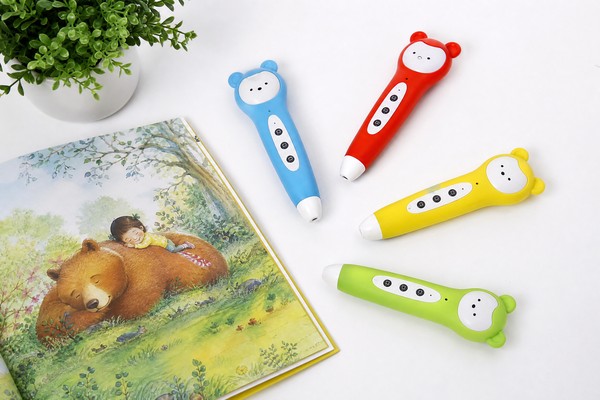
– A Picture Book Reading Pen is a handheld electronic device that, when tapped on designated points in a print picture book or an encoded surface, plays preloaded audio narration, music, or sound effects. They may include:
– Speaker and microphone (some models).
– Onboard memory (microSD or internal flash).
– Rechargeable battery (lithium‑ion) or replaceable batteries.
– Wireless connectivity (Bluetooth, Wi‑Fi) for content updates via an app.
– LED indicators, buttons, headphone jack, charging port (USB‑C, micro‑USB).
Primary users and market use cases
– Children aged 0–12 and caregivers using the pen for language learning, reading-aloud reinforcement, interactive storytelling, and bilingual education.
– Schools and preschools buying in small bulk to support early literacy.
– Gift and educational toy retailers selling single units or bundles (pen + book pack).
– Licensing partners that pair branded content and books with pens.
Product variants to consider
– Basic offline pen: no wireless, content preloaded; typically lower compliance complexity (no FCC).
– Connected pen: Bluetooth/Wi‑Fi for updates; triggers FCC and privacy obligations plus app compliance.
– Recording-enabled pen: allows user voice recording; raises privacy/COPPA implications if app or cloud upload exists.
– Battery types: disposable alkaline vs rechargeable lithium‑ion; battery choice directly affects shipping, labeling, and Amazon acceptance.
Why Demand Is Growing
Market drivers
– Edutainment trend: parents value screen‑free interactive tools that promote reading and phonics.
– Increased bilingual education and early literacy programs require portable, repeatable audio tools.
– Book subscription and licensing models favor pairing print content with interactive hardware as a premium add‑on.
– E‑commerce growth: increased buyer comfort with online purchases of educational toys drives volume into FBA.
Quantifiable trends
– Unit economics: average retail price for a branded picture book reading pen ranges $25–$80, with bundle (pen + 1–2 books) often sold at $35–$120.
– Repeat purchase potential: pens can repeatedly pair with new books, enabling content licensing revenue and higher LTV.
– Bulk buyers: schools and libraries commonly purchase 10–100 units per order, which favors sellers offering compliant bulk packaging and clear labeling.
Operational implications for sellers
– Scalability requires robust compliance documentation, consistent barcode and packaging standards, and reliable inbound freight handling for hazardous materials (lithium batteries).
– Returns and customer service burden is higher for electronic devices than for standard paper books; plan for at least 5–15% return/replacement rate in early SKUs.
Key Technology Differences
Component and feature choices materially change compliance and logistics:
No wireless / offline pen
– Compliance profile: Children’s product testing (CPSIA/ASTM F963), RoHS and REACH for materials; no FCC wireless approval.
– Shipping: standard consumer goods; batteries still relevant if rechargeable.
Bluetooth or Wi‑Fi enabled pen
– Adds FCC Part 15 certification (FCC ID) and Supplier’s Declaration of Conformity (SDoC) statements.
– May require ISED (Canada) and ETSI/CE approvals for cross‑border listings.
– Remote update capability triggers data privacy obligations if personal data is collected — review COPPA, GDPR (if selling in EU), and CCPA.
Recording/audio capture pens (with microphone or cloud)
– Must implement privacy-by-design policies. If minors’ data is transferred off‑device, COPPA compliance and parental consent mechanisms are required. App Store/Play Store privacy policy must be explicit.
– Secure data storage and TLS encryption expectations apply.
Battery options
– Alkaline (standard AAA/AA): simple shipping but shorter runtime and worse user experience.
– Nickel‑metal hydride (NiMH): rechargeable but considered less hazardous than lithium for transport.
– Lithium‑ion (Li‑ion) rechargeable: best energy density; requires UN38.3 testing and air shipment restrictions. If battery watt‑hour rating per cell is >100 Wh, more strict restrictions apply (rare for pens; typical pen batteries are <10 Wh).
Memory and storage
– Internal flash vs removable microSD: removable media increases small parts and choking risk considerations for very young age grades; also affects packaging and labels.
Firmware / update capability
– OTA firmware increases FCC re‑test risk if the radio behavior changes. Maintain version control and change logs; re‑testing may be required if RF characteristics or antenna design are modified.
Key Features and Specifications to Evaluate
Hardware specifications that affect compliance and customer satisfaction
– Speaker output: 1.5–3W recommended for classroom use; >2W improves intelligibility in noisy home settings.
– Battery capacity: 400–1500 mAh typical for pen; target runtime 6–12 hours continuous audio for a positive user experience.
– Charging standard: USB‑C preferred; includes safer charging standards and easier sourcing.
– IP rating: IPX4 splash resistance desirable for children’s products; higher ratings increase BOM cost.
– Weight and dimensions: target 80–200g and length 12–18cm to balance ergonomics for kids 3–8.
– Buttons and ports: use recessed or covered ports to reduce ingress and foreign object risk.
Compliance and labeling specs
– CPC: must list tests and standards with lab name, test report ID, date, and certifier details.
– Permanent tracking label (CPSIA): must include manufacturer/importer name, location, batch/lot/serial number, and production date — place on packaging AND on product when feasible.
– FNSKU barcode: must be scannable, placed on the outermost sellable packaging, and must cover any manufacturer barcode if Amazon requires FNSKU.
– Poly bag suffocation warning text: include Amazon‑required warning if poly bag >= 5 inches; exact recommended language: “WARNING: To avoid danger of suffocation, keep this plastic bag away from babies and children. Do not use this bag in cribs, beds, carriages or playpens. This bag is not a toy.”
Testing and documentation to collect from suppliers
– Full CPSIA test report from CPSC‑accepted lab covering:
– Lead in paint and substrate (limit: 100 ppm for children’s products).
– Phthalates: limits for six listed phthalates (DEHP, DBP, BBP, DINP, DIDP, DnOP) typically 0.1% by weight each for children’s toys.
– Mechanical/physical tests per ASTM F963 (small parts, sharp edges).
– Lab test report for REACH and RoHS hazardous substances where applicable.
– UN38.3 test report for lithium batteries; keep cell and battery watt‑hour calculations and test certificate.
– FCC certification or Supplier’s Declaration for devices containing transmitters.
Packaging materials and performance
– Inner packaging to immobilize pen and book: molded pulp tray, die‑cut foam, or vacuum-formed PET blister. Avoid PVC in children’s products due to phthalate testing complications.
– Outer carton: double‑wall corrugated (ECT 32 / B flute or stronger) recommended for shipper pallets. For single units shipped direct, single wall 32 ECT with padding may suffice; test using ISTA 3A.
– Cushioning: 20–50 mm of foam/bubble wrap or molded pulp with snug fit.
– Inner poly bag for humidity protection: use >2.5 mil thickness, but check Amazon thresholds for suffocation warnings and poly bag thickness requirements.
Pros and Cons
Pros of selling Picture Book Reading Pens via Amazon FBA
– Prime eligibility → higher conversion rates.
– Fulfillment scale and multi‑channel fulfillment options.
– Simplified returns processing for end customers.
Cons and operational risks
– High compliance burden for children’s electronic products — failure to maintain documentation can cause Amazon restrictions.
– Lithium battery logistics increase inbound complexity and cost; some Amazon centers won’t accept DG shipments without pre-approval.
– Higher returns and technical support overhead compared with non‑electronic toys.
– Margin erosion due to testing, certification, labeling, Amazon prep/labeling fees, and potential rework.
Risk profile by variant
– Offline, battery‑free or alkaline single-use battery pens: lowest regulatory complexity; fewer DG and FCC constraints.
– Li‑ion battery, Bluetooth pens with apps/recording: highest complexity — need FCC, UN38.3, COPPA‑aware policies, and more rigorous packaging/procedure.
Step-by-Step Decision Guide
Vendor selection and product definition
– Specify product spec sheet including battery type (exact chemistry and nominal Wh/cell), wireless modules (chipset and FCC ID if pre‑approved), speaker power, IP rating, dimensions, and materials.
– Require supplier to provide sample units for pre‑compliance testing including: product, battery, packaging, and any app/cloud features documented.
– Contractually require supplier to supply test reports from accredited labs before shipment. Do not accept self‑certificates.
Testing and certification workflow
– Children’s product pathway:
– Identify all applicable rules (CPSIA, ASTM F963, 16 CFR references).
– Engage a CPSC‐accepted third‑party testing lab. Minimum tests: lead, phthalates, mechanical/physical (ASTM F963 sections on small parts, sharp edges), flammability.
– Obtain a Children’s Product Certificate (CPC) referencing the tests and standard.
– Add permanent tracking label per CPSIA on the product and packaging.
– Wireless device pathway:
– If Bluetooth/Wi‑Fi is present, require FCC certification (either FCC ID for modular/devices or SDoC) and test reports for Spurious Emissions, RF power, and radiated measurements.
– Ensure supplier provides FCC ID or test report and compliance statement to include in CPC or product files.
– Battery pathway:
– For Li‑ion: obtain UN38.3 test report for the cell and battery, complete battery watt‑hour calculations, include overcharge/short circuit test records.
– Prepare IATA DGR documentation and include required shipment marks and labels for air shipments.
– For removable batteries shipped separately, follow Amazon’s “dangerous goods” inbound rules and include proper documentation.
Packaging and Amazon prep
– Decide product packaging style: retail box (with window), blister, or poly bag. If using poly bag ≥5 inches, include suffocation warning on bag outer surface in the applicable language.
– Confirm FNSKU usage: choose between manufacturer barcode (UPC/EAN) or Amazon’s FNSKU. If using FNSKU, ensure it is affixed to outside of sellable packaging; cover manufacturer barcode to avoid misrouting.
– Require supplier to place packing slip inside the outer carton and on the outside as appropriate. Palletize per Amazon requirements: standard pallet dimensions (48″x40″), stack height ≤ 72 inches, and maximum pallet weight typically ≤ 1,000–2,000 lbs (confirm current Amazon inbound requirements per fulfillment center).
– Validate packaging with ISTA 3A drop test. If shipping in bulk pallets, perform pallet integrity test; use edge protectors and stretch wrap.
Inbound shipping and Amazon compliance steps
– Create FBA shipment plan in Seller Central with accurate weights/dimensions and specify whether pallets or cartons will be delivered.
– For shipments including lithium batteries, open a case with Amazon Seller Support as part of shipment creation to verify acceptance and provide DG documentation. Amazon may require a DG Handling Agreement and proof of UN38.3 testing.
– Label all cartons with shipper and FBA destination labels. Place required DG labels on outer cartons for battery shipments.
– Consider Amazon FBA labeling service (per‑unit fee typically $0.30–$0.55) only if you cannot reliably apply FNSKUs in origin country — note Amazon will not accept units with incorrect labels.
Post‑launch monitoring and quality control
– Randomly test 5–10% of pre‑production shipments for consistency with the certified sample. Maintain a master file with test reports, CPC, lab reports, FCC documentation, and tracking labels.
– Keep firmware under version control; document release notes and maintain a record of the firmware version shipped with each lot for traceability.
Pricing and Cost Analysis
Typical upfront compliance and testing costs (approximate ranges)
– Third‑party children’s product testing (lead, phthalates, basic ASTM F963 battery of tests): $800–$3,000 per SKU depending on number of samples and complexity.
– FCC testing and certification for a Bluetooth module/device: $5,000–$15,000 (modular approval for a pre‑certified Bluetooth/Wi‑Fi module can reduce the cost to $1,500–$4,000).
– UN38.3 battery testing: $2,000–$6,000 depending on lab and test scope; separate cell and battery tests may both be required.
– App security and COPPA review (if applicable): $1,000–$5,000 depending on scope and legal review.
– Compliance consultant/legal review (optional): $1,000–$4,000.
Unit costs and Amazon related fees
– Manufacturing cost per unit (highly variable): typical FOB China range for basic pen + book bundle $6–$25 depending on BOM, printing, and packaging.
– Packaging and labeling unit cost (retail boxed, with printed manuals and poly bag): $0.80–$3.00 depending on box quality and printed manual languages.
– Amazon FBA fees:
– Fulfillment fee (varies by size/weight): for a standard small item 6–12 oz, typical tier $3.00–$4.50 per unit; for standard larger items 1–2 lb, $4.00–$6.50 per unit. Confirm current Amazon FBA fee schedule for exact numbers.
– Monthly storage fees: $0.75–$2.40 per cubic foot depending on month (greater in Oct–Dec peak season increases).
– Long‑term storage and removal fees apply if inventory aging occurs.
– Amazon labeling and prep service fees: labeling $0.30–$0.55 per unit; bubble wrap or poly bag services ~$0.97 per unit.
– Logistics and inbound shipping:
– LCL ocean freight per carton depending on volume and origin: $5–$20 per carton; air freight often $4–$8/kg depending on urgency.
– Dangerous goods handling surcharges for battery shipments add $3–$15 per carton or per unit equivalent.
Breakeven and margin example (illustrative)
– Example SKU: FOB $10.00, freight & customs $1.50, packaging/labels $1.50, FBA fulfillment $4.50, referral fee (Amazon 15%) on $40 retail = $6.00, storage amortized $0.50 → landed per‑unit all‑in ≈ $24.0. If retail $40, gross margin ≈ $16/unit before advertising and returns. Add initial compliance amortized over volume: $5,000 testing amortized over first 5,000 units = $1.00/unit; includes additional margin pressure. Adjust pricing and inventory plan accordingly.
Competitive Landscape
Supplier segmentation
– OEM/ODM electronics manufacturers in China (Guangdong, Zhejiang): provide turn‑key solutions: design, molding, firmware, and packaging. Minimum order quantities (MOQs) often 1,000–5,000 units for custom molds; stocking SKUs available in smaller MOQs.
– White‑label resellers offering existing pen designs with content localization: lower engineering costs, faster time to market; limited custom features.
– Licensed content manufacturers who produce pens bundled with branded storybooks: higher wholesale cost, potential for higher retail price and better margin.
Retailer and brand competitive dynamics
– Big brands and licensed products occupy the premium end ($50–$80). They emphasize safety certifications, brand trust, and content partnerships.
– Generic pens compete on price ($20–$35) with basic feature sets and often limited content or language support.
– Differentiation levers for sellers: battery life, build quality, speaker clarity, content library, bilingual features, and durable retail packaging.
Amazon marketplace dynamics
– Winning product listings combine high‑quality images, video demo, clear specification bullets, verified safety and certification statements, and bundled content that reduces returns.
– Reviews and return metrics: electronic devices are scrutinized. Aim for <2% defect rate and maintain high review scores by performing QC checks and pre‑shipping sample inspections.
Sourcing tradeoffs
– Cost vs compliance: cheaper BOMs often use cheaper plastics and inconsistency in paint/ink that can fail CPSIA testing. Insist on material declarations and pre‑production testing to avoid failures.
– Time to market vs certification: wireless variants require extra time for FCC steps. Plan 8–16 weeks for full FCC certification if module certification isn’t used.
What Buyers Say
Common buyer expectations and complaints (collected from marketplace reviews across similar products)
– Positive drivers:
– Clear audio narration and distinct voices.
– Durable pen construction and comfortable grip for small hands.
– Quick, simple pairing with books and fast response when tapped.
– Good battery life and USB‑C charging.
– Frequent complaints:
– Poor synchronization between tap point and audio (causes frustration).
– Durability issues: speaker rattle, cracked casing after light drops.
– Incomplete or missing labels/instructions in English (resulting in returns).
– Battery failures after a few months or charging port failures.
– App instability and failed firmware updates, particularly for connected pens.
– Implication for sellers:
– Prioritize on‑device reliability and robust mechanical design.
– Include simple, illustrated quick‑start guide and clear warranty/return procedure.
– Maintain a spare parts and repair plan for higher volume channels (schools).
Safety, Maintenance and Compliance
Regulatory checklist for U.S. FBA sale
– Children’s Product Certificate (CPC): created and retained by the importer/brand owner. Must reference the specific tests performed and the CPSC‑accepted lab.
– Permanent tracking label: include manufacturer/importer name, location, batch/lot/serial number, and production date on each product or its packaging.
– Third‑party testing: conducted by a CPSC‑accepted lab for the applicable requirements (lead, phthalates, mechanical/physical, flammability).
– FCC compliance: required for devices that intentionally radiate RF (Bluetooth, Wi‑Fi). Keep technical file with test reports and user manual compliance statements.
– UN38.3 and IATA DGR: required for lithium batteries used in products; include packaging marks, label, and shipper declaration when shipping by air.
– Privacy/COPPA obligations: if the pen or companion app collects personal information from children, implement verifiable parental consent, data deletion mechanisms, and store a clear privacy policy and COPPA compliance documentation.
Maintenance guidance for end users (recommended labels and manual content)
– Battery handling: instructions for charging, no exposure to heat, do not disassemble battery pack, and contact procedures for battery failure.
– Cleaning instructions: wipe with damp cloth, avoid submerging in water; if IP rating is lower than IPX4, state explicitly.
– Warranty and service: state warranty period (commonly 12 months) and return/address for repair.
– Age and choking warnings: if product contains removable small parts or components that can detach, include “Not for children under 3 years” label as applicable.
– Disposal and recycling: include battery disposal instructions to comply with local waste regulations.
Recordkeeping and ongoing compliance
– Keep all certificates, test reports, lab contact info, and CPCs in a central compliance file for at least the expected product lifecycle (recommended 5 years).
– Revalidate tests after material changes, supplier changes, or firmware/radio changes.
– Maintain incident reporting processes to capture any safety complaints and investigate root causes.
Frequently Asked Questions
What if my pen has no wireless connectivity — do I still need FCC certification?
– No FCC certification is required for devices that do not intentionally emit RF energy. However, you still must satisfy all toy and children’s product testing (CPSIA/ASTM). If the unit has a microphone that uploads audio via USB to a host PC without RF, FCC is not implicated, but privacy obligations may still apply if data is stored or transferred.
Do I need a CPC before sending inventory to Amazon FBA?
– Yes. For any product “designed or intended primarily for children 12 years of age or younger”, a Children’s Product Certificate (CPC) must exist before the product is sold in the U.S. Amazon will request proof of compliance in enforcement cases and customs may detain non‑compliant goods.
How do lithium batteries affect inbound shipments to Amazon?
– Li‑ion batteries require UN38.3 testing and specific shipping marks and declarations for air freight. Amazon’s fulfillment centers have strict DG rules; you must open a ticket with Seller Support and provide documentation. Some FCs may refuse non‑compliant shipments and return them at your cost.
What labeling does Amazon require on products and outer cartons?
– Each sellable unit must have an Amazon‑scannable barcode (FNSKU or manufacturer barcode if you use that option). Outer cartons must have the Amazon shipment ID labels and, if necessary, DG and lithium battery marks. Poly bags >= 5 inches must carry suffocation warnings.
How much testing should I budget for pre‑production?
– At minimum budget for: CPSC children’s product tests ($800–$3,000), UN38.3 battery testing ($2,000–$6,000) if applicable, and FCC testing ($1,500–$15,000) if wireless. Use conservative budgeting of $5,000–$10,000 total initially for a connected pen SKU.
What happens if my products are flagged by Amazon for lack of certification?
– Amazon may suppress listings, block fulfillment, or remove inventory pending documentation. Late submission can lead to inventory destruction at seller expense. Keep a current compliance file and respond quickly to requests.
How should I place the FNSKU label on retail packaging?
– Place the FNSKU on a flat, scannable surface of the sellable unit (top or side). If you use FNSKU labels you must cover any other barcodes that could be scanned at the fulfillment center to avoid routing errors.
Contact Toyvao
For sourcing, compliance coordination, and packaging services for Picture Book Reading Pens, contact Toyvao:
– Website: https://toyvao.com
– Email: sourcing@toyvao.com
– Business inquiries: submit your product spec sheet, proposed BOM, battery chemistry details, and desired order quantity via the contact form on the website for a compliance and cost estimate.
Toyvao provides supplier vetting, pre‑shipment testing coordination with accredited labs, Amazon FBA inbound packaging checks, and dangerous‑goods handling advisory to minimize delays and rework for U.S. fulfillment.
