
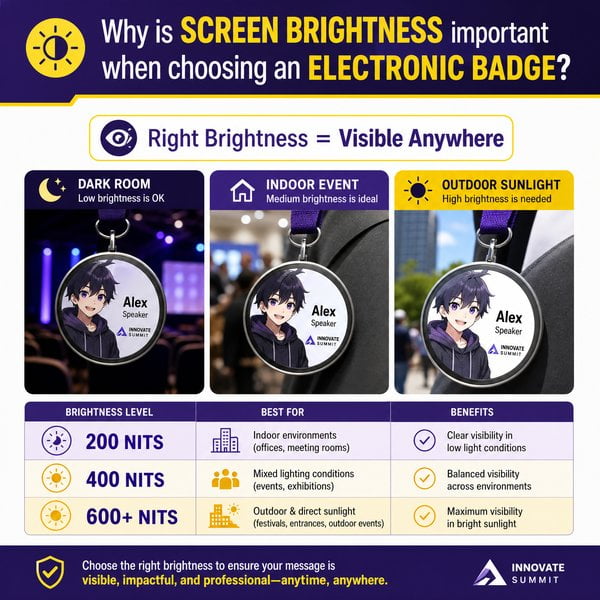
Why Is Screen Brightness Important When Choosing an Electronic Badge?
In the rapidly growing market of wearable technology, electronic badges have emerged as innovative tools for branding, communication, and entertainment. One of the critical factors that influence the effectiveness and appeal of an electronic badge is its screen brightness. For B2B buyers, importers, and brand owners looking to source high-quality electronic badges, understanding the importance of screen brightness can significantly impact product performance and customer satisfaction.
The Role of Screen Brightness in Electronic Badges
Screen brightness refers to the luminance emitted by the display surface, measured in nits (cd/m²). It determines how clearly the content is visible under various lighting conditions. For electronic badges, which are often used in diverse environments—from dim indoor settings to bright outdoor spaces—optimal screen brightness ensures the display is vivid and legible, enhancing user engagement.
Key Benefits of Adequate Screen Brightness
- Improved Visibility: A bright screen guarantees that videos, GIFs, and images are clearly visible, even under direct sunlight or strong indoor lighting.
- Enhanced User Experience: Brightness levels that adapt to ambient light prevent eye strain and improve comfort for prolonged viewing.
- Brand Impact: For promotional badges, vibrant displays attract more attention, increasing brand recall and marketing effectiveness.
- Versatility: High brightness supports usage in various scenarios, from conferences and trade shows to outdoor events and retail environments.
Industry Insights: Market Trends and Consumer Expectations
The global wearable technology market is projected to reach $186 billion by 2030, according to Statista, indicating robust demand for devices like electronic badges. As competition intensifies, buyers prioritize features that enhance display quality, with brightness being paramount.
Moreover, 73% of parents prioritize “safe and non-toxic” products when buying toys and wearable devices for children (NPD Group), underscoring the need for screens that are not only bright but also safe in terms of blue light emissions and eye health.
How Screen Brightness Affects Electronic Badge Performance
Choosing an electronic badge with the right screen brightness affects several performance aspects:
- Battery Life: Higher brightness generally consumes more power. Selecting devices with adjustable brightness can optimize battery longevity.
- Display Quality: Insufficient brightness results in dull or washed-out images, reducing the badge’s visual appeal.
- Environmental Adaptability: Badges with adaptive brightness sensors adjust automatically to ambient light, ensuring consistent visibility.
- Durability: Quality screens that maintain brightness without degradation over time contribute to product longevity.
Comparing Electronic Badge Screen Brightness: Toyvao’s Product Range
At Toyvao, we offer a range of electronic anime badges designed with optimal screen brightness to meet diverse market needs. Below is a comparison table highlighting key brightness features and certifications across our product tiers:
| Model | Screen Size | Brightness (nits) | Adaptive Brightness | Certifications | Battery Life |
|---|---|---|---|---|---|
| Badge Lite | 1.5 inch | 300 | No | CE, RoHS | 8 hours |
| Badge Pro | 1.8 inch | 450 | Yes | CE, RoHS, FCC | 12 hours |
| Badge Max | 2.0 inch | 600 | Yes | CE, RoHS, FCC, UL | 15 hours |
Considerations for B2B Buyers When Selecting Electronic Badges
When sourcing electronic badges, consider the following factors related to screen brightness:
- Target Use Environment: For outdoor or well-lit venues, prioritize models with higher brightness and adaptive features.
- Battery Efficiency: Balance brightness needs with power consumption to maintain reasonable battery life.
- Safety Standards: Ensure badges comply with international certifications to guarantee safe brightness levels and low blue light emissions.
- Customization Capabilities: Work with manufacturers like Toyvao for OEM/ODM options that include tailored brightness settings.
Conclusion
Screen brightness is a pivotal attribute that directly influences the usability, appeal, and durability of electronic badges. As the global wearable technology market expands, selecting badges with optimal brightness ensures superior performance and customer satisfaction. Toyvao’s electronic anime badges combine high brightness levels, adaptive technology, and stringent safety certifications to meet diverse B2B sourcing requirements.
What is the ideal screen brightness for electronic badges used outdoors?
For outdoor usage, a screen brightness of at least 450 nits is recommended to ensure clear visibility under sunlight.
Does higher screen brightness reduce battery life in electronic badges?
Yes, higher brightness levels generally consume more power, but adaptive brightness technology can help optimize battery life by adjusting brightness based on ambient light.
Are Toyvao electronic badges certified for safety and quality?
Yes, Toyvao badges come with multiple international certifications such as CE, RoHS, FCC, and UL, ensuring they meet high safety and quality standards.
Can screen brightness settings be customized on Toyvao electronic badges?
Yes, Toyvao offers OEM/ODM customization services allowing clients to adjust screen brightness settings to suit specific market or environmental needs.
How does screen brightness affect user engagement with electronic badges?
Higher screen brightness enhances visibility and vibrancy, attracting more attention and improving brand recognition and user interaction with the badge.
Ready to Source from Toyvao?
Contact us today for factory-direct pricing, OEM/ODM customization, and fast global shipping.
WhatsApp: +86 186 8106 4480
Email: sales@toyvao.com
Website: toyvao.com
