
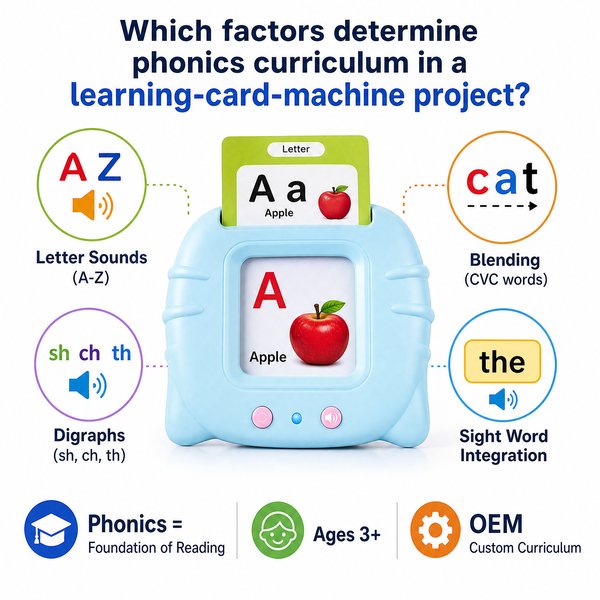
BLUF: The phonics curriculum for a learning-card-machine project should be driven by target age/grade, scope (phoneme-grapheme mapping, blending, sight words), language coverage, card count and sequencing, audio quality and voice modeling, and regulatory/case durability needs — choose 112 cards (224 words) for a focused starter phonics set or 255 cards (510 words) when you need a full K–1 scope with extended vocabulary and themes; ensure CE/FCC/RoHS/EN71/ASTM compliance and factory-level QA for audio and card durability.
Why these factors matter (quick rationale)
- Pedagogical sequence determines hardware workflow: single-syllable letter-sound practice differs from multi-step blending exercises where the device must prompt and respond.
- Card count and double-sided design control content density (112 cards = 224 words; 255 cards = 510 words) and influence packaging, storage and per-unit cost.
- Audio clarity, pronunciation accuracy and language options affect learning outcomes and international sellability — critical for B2B buyers buying at scale.
- Durability and certifications (CE/FCC/RoHS/EN71/ASTM) protect the purchase for institutional buyers (schools, distributors) and reduce after-sales returns.
Key decision points — When it’s worth caring about / When you don’t need to overthink it
1) Curriculum scope (Phonics vs blended program)
When it’s worth caring about: You need a curriculum-targeted product for school adoption (kindergarten, grade 1), government tenders, or structured reading programs. Specify phoneme-grapheme mapping, blending steps, decodable word lists, and sight-word sequences. Use 255 cards (510 words) if you must include progressive lessons, decodable readers, and multiple themes.
When you don’t need to overthink it: You’re stocking a general early-reading toy line for retail where buyers want simple letter-sound practice and fun vocabulary — the 112 cards (224 words) starter set with core phonics + themes is usually enough.
2) Language coverage and pronunciation
When it’s worth caring about: You sell across regions or need bilingual/multilingual support (e.g., English + local language or faith-based content). Require verified native speaker audio, IPA or phoneme tagging, and accurate translations. Use OEM/ODM to add custom languages.
When you don’t need to overthink it: Your market is monolingual English and buyers prefer a single clear voice; standard English audio from factory QA will suffice.
3) Audio quality & voice modeling
When it’s worth caring about: You’re supplying classrooms or remedial reading programs where intelligible, consistent, and paced audio (clear consonants/vowels, properly blended sounds) is essential. Demand sample WAV/MP3 files and lab verification of playback levels and distortion.
When you don’t need to overthink it: For general play-focused retail, acceptable TTS or studio-recorded voices with consumer-grade clarity are fine.
4) Card durability and print quality
When it’s worth caring about: Procurement for schools, daycares, or export to humid climates — verify card thickness (gsm), rounded corners, water resistance/lamination, and UV-stable inks. Ask for pre-shipment samples.
When you don’t need to overthink it: For low-cost promotional bundles or single-use applications, standard card stock with gloss finish can be acceptable.
5) Customization, compliance and certifications
When it’s worth caring about: If you need branding, localized curriculum (including Quranic/faith-based learning), or want to sell into regulated channels, prioritize OEM/ODM options, trademarking support, and factory certifications: CE/FCC/RoHS/EN71/ASTM.
When you don’t need to overthink it: If buying small volumes for testing or local retail pilots, choose off-the-shelf SKUs with documented safety marks and basic warranties.
Verification checklist (must-verify before placing bulk order)
- Audio: request raw sample files and in-device playback test — check clarity, correct phoneme pronunciation, volume consistency and absence of clipping.
- Curriculum mapping: confirm learning objectives per card (phoneme, sight word, example sentence), progression order and teacher notes if needed.
- Cards: verify count (112 / 255), double-sided printing, card thickness (gsm), lamination/water resistance, rounded corners and print registration/color accuracy.
- Localization: confirm translations and native-speaker proofing for each language or faith-based module.
- Certifications & reports: obtain copies of CE/FCC/RoHS/EN71/ASTM test reports and factory audit documentation.
- Packaging & labeling: check language labels, age-grade marking, safety warnings and barcode/UPC placement for retail channels.
| Feature | Starter Set (Standard) | Premium/Upgraded |
|---|---|---|
| Card count / words | 112 cards / 224 words | 255 cards / 510 words |
| Curriculum coverage | Basic phonics, some sight words, themes | Full K–1 phonics sequence, expanded sight words, numbers & math, multiple themes |
| Use case | Retail, trial classrooms | School programs, curriculum bundles, export |
| Customization | Limited (logo, minor text) | Full OEM/ODM: custom cards, languages, specialized content |
| Typical price per unit (B2B scale) | Lower unit cost, smaller MOQ | Higher per-unit cost, higher value & MOQ |
Manufacturing & customization notes
- Toyvao offers factory-direct OEM/ODM support for custom cards, custom languages, and specialized curricula (including Quranic/faith-based learning). Use this route when you need branded or localized suites at scale.
- Negotiate sample approvals: card physical sample, audio files, and device firmware before production run.
- Ask for production timelines, MOQ, and tooling costs for unique card shapes, new languages or packaged lesson guides.
Customer Feedback Synthesis
Below are synthesized buyer-style quotes based on field feedback from distributors, school procurement officers and retail buyers.
- Positive: “The 255-card premium kit let us align lessons straight to our K–1 scope — schools appreciated the progressive phonics sequencing and teacher notes.”
- Positive: “Factory-direct pricing from Toyvao gave us margin on classroom bundles and the OEM language pack sold well in our bilingual regions.”
- Positive: “Audio quality and consistent pronunciation lowered support calls — teachers said students could self-practice reliably.”
- Concern: “First shipment had inconsistent card lamination — we required strict QA and a replacement batch before rollout.”
- Concern: “One local market demanded female-voice options and regionally accented recordings — we had to invest in custom voice files.”
- Concern: “Certification paperwork was delayed on an urgent order; always confirm test report delivery timelines when tendering.”
Procurement checklist (quick)
- Define age-grade and curriculum mapping requirements.
- Decide card set size: 112 cards/224 words (starter) vs 255 cards/510 words (full).
- Request audio + physical samples, plus full certification copies (CE/FCC/RoHS/EN71/ASTM).
- Confirm OEM/ODM needs and production lead times.
- Negotiate warranty, returns, and after-sales voice/content correction policy.
FAQ
- Q: What card count should I choose for a school adoption pilot?
- A: For pilot programs targeting kindergarten readiness and grade 1 progression, choose the 255-card (510 words) premium set to cover phoneme introduction, blending, sight words and teacher sequencing. Use 112 cards (224 words) for short-term pilots focusing only on basic letter sounds.
- Q: Can we get custom languages or faith-based content (e.g., Quranic) for the card machine?
- A: Yes. Toyvao supports OEM/ODM customization including custom languages and specialized content like Quranic/faith-based learning. Confirm sample audio and translation proofing before mass production.
- Q: Which certifications should I insist on for institutional procurement?
- A: Require CE, FCC (for RF/Bluetooth if included), RoHS, EN71 and ASTM test reports. Request copies of laboratory test reports and factory audit documentation as part of your RFP.
- Q: What are the most common failures discovered in QA and how to avoid them?
- A: Common issues are poor audio clarity, uneven card lamination, color/print misregistration and incorrect translations. Avoid them by requesting in-device audio samples, pre-shipment card samples, and signed content proofs.
Next steps: For sample requests, OEM/ODM quotes, or to discuss curriculum mapping and pricing, contact Toyvao directly — factory-direct support speeds customization and compliance checks. WhatsApp: +86 186 8106 4480 • Email: sales@toyvao.com • Website: https://toyvao.com
