Answer: A story player is primarily an audio device designed to play narrated stories, songs, and soundscapes for children, while a story projector combines audio playback with visual projection—casting pictures, animations, or text onto a wall or ceiling to create a synchronized audio-visual storytelling experience. In short: story players focus on sound and interactivity; story projectors add a visual layer to engage sight as well as hearing.
Key differences at a glance
- Primary output: audio-only (story player) vs audio + projected visuals (story projector)
- Typical price range: $10–$80 for story players; $50–$200+ for story projectors
- Battery life: often 8–20 hours for audio players; 3–12 hours for projectors depending on LED brightness
- Hardware complexity: simpler speaker and controls vs speaker + LED/optical engine, lenses, and sometimes motion components
- Best use: bedtime audio, car/portable listening (player) vs bedtime or shared-room visual storytelling (projector)
Audio vs visual focus
Story player (audio-first)
- Outputs narrative through built-in speakers (typically 0.5–3 W) or headphone jack/Bluetooth.
- Content delivered via preloaded memory (4–32 GB), microSD cards, Bluetooth streaming, or Wi‑Fi downloads.
- Interaction methods include buttons, touch panels, story cards, QR codes, or voice commands.
- Ideal for young kids who benefit from imagination-led storytelling and for portable use in cars, travel, or nap time.
Story projector (audio + visual)
- Adds a projection system—usually an LED light source with simple optics—that displays static images, slides, or simple animations on ceilings/walls.
- Small toy projectors often have brightness in the 20–300 lumen range and resolutions from 240p to 720p; they typically project image sizes from 30–150 inches diagonal depending on distance.
- Visuals may be synchronized with audio narration to show characters, scenes, or text as the story plays.
- Best for shared bedtime routines, group settings, or children who respond strongly to visual storytelling.
Hardware and technical differences
- Speakers: story players may include higher-quality, power-efficient speakers for clearer speech; projectors must balance audio with power-hungry LEDs and cooling.
- Power and battery: audio players commonly use batteries that allow 8–20 hours playback; projectors usually offer shorter runtimes (3–12 hours) due to lighting.
- Storage & connectivity: both can support microSD (up to 128 GB in many designs), Bluetooth, and Wi‑Fi. Story projectors often require more processing power for video/image decoding.
- Durability & safety: both should use low-heat LEDs, rounded child-safe enclosures, and comply with toy safety standards.
Content, interactivity, and learning value
- Story players: often emphasize language development, imagination, and listening skills. Many provide multi-language libraries, sleep timers, and voice-record features for personalization.
- Story projectors: support visual literacy and attention by pairing images with narration. Visuals help early learners identify characters, colors, and scenes, aiding comprehension.
- Interactivity: both can include interactive elements—story players with button-based branching stories; projectors with remote control or rotating story discs. Some advanced models support AI narration, app control, or record-your-own-story functionality.
Practical buying tips for parents and B2B buyers
- For age 0–3: prioritize simple controls, robust build, and soothing audio; a story player often suffices.
- For ages 3–7: consider a projector if your child enjoys picture-based stories; ensure images are non-stimulating for bedtime.
- Check battery specs (mAh) and real-world playback hours; look for replaceable batteries or USB-C charging.
- Verify audio specs (speaker wattage), storage options, and content sources (preloaded vs subscription).
- Safety and compliance: request CE, FCC, RoHS, CPSIA or EN71 certificates for markets you sell in.
- Price vs features: expect to pay $10–30 for basic audio players, $30–80 for interactive audio devices, and $50–200+ for projectors with higher brightness/resolution.
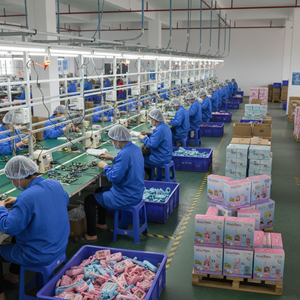
- OEM/ODM buyers: ask suppliers about MOQ (typical toy MOQ 500–2,000 units), sample lead time (2–4 weeks), and production lead time (often 45–90 days).
Which should you choose?
- Choose a story player if you need portability, longer battery life, and a focus on auditory learning or if your budget is limited.
- Choose a story projector if you want a richer multi-sensory bedtime ritual, group storytelling, or visual reinforcement of narrative content.
For OEM/ODM sourcing of kids story machines, contact Toyvao at sales@toyvao.com or WhatsApp +86 186 8106 4480.