
When sourcing early educational toys, B2B buyers and educational brands are increasingly focusing on inclusivity. The global market for special education tools is expanding rapidly, and electronic learning devices are at the forefront of this growth. For children with Autism Spectrum Disorder (ASD) and speech delays, traditional learning methods can sometimes be overwhelming. As a leading manufacturer in Shenzhen, Toyvao Factory has engineered talking flash card machines that serve not just as toys, but as effective therapeutic tools. This guide explores the technical design, cognitive benefits, and market potential of talking flash cards for neurodivergent children.
Why Are Talking Flash Cards Effective for Speech Therapy?
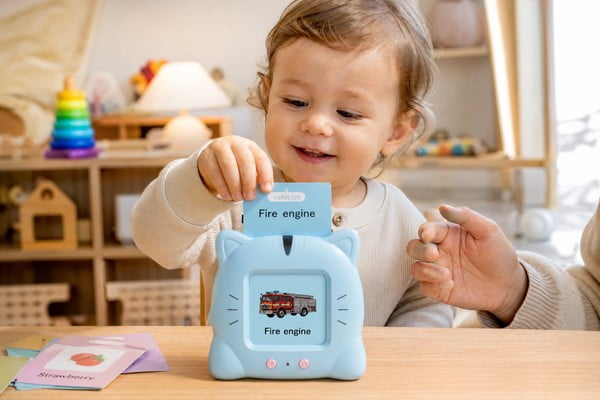
Speech therapy requires consistent, engaging, and multi-sensory approaches. According to the American Academy of Pediatrics (AAP), early intervention is crucial for children with developmental delays [1]. Talking flash cards provide a unique combination of visual and auditory stimuli that align with evidence-based therapeutic practices.
Multi-Sensory Engagement
Children with autism often process information differently. The Toyvao talking flash card machine utilizes a dual-sensory approach:
1. Visual: High-contrast, clear illustrations on the flashcards.
2. Auditory: Crisp, clear pronunciation of words, paired with relevant sound effects (e.g., animal noises or vehicle sounds).
This simultaneous visual and auditory input helps reinforce neural pathways, making it easier for children to associate words with their meanings.
Repetition Without Frustration
Repetition is a cornerstone of speech therapy. However, human therapists and parents can experience fatigue. A talking flash card machine offers endless, consistent repetition without any emotional variation or frustration. The child can insert the card as many times as needed to hear the word, allowing them to learn at their own pace in a low-pressure environment.
What Technical Features Make Toyvao Devices Suitable for Special Needs?
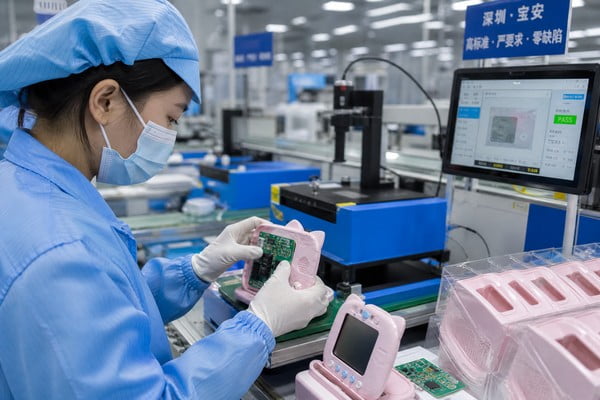
Designing a device for neurodivergent children requires careful consideration of sensory sensitivities and physical ergonomics. Toyvao Factory integrates specific technical features to ensure our products are both safe and effective.
Acoustic Standards and Sensory Friendly Design
Children with ASD can be hypersensitive to sound. Our devices adhere to strict acoustic standards:
– 16kHz Sampling Rate: Ensures high-fidelity, natural-sounding voice output, which is essential for accurate speech modeling.
– Volume Control (EN71/ASTM Compliant): The maximum volume is capped at 85dB to protect sensitive hearing, with adjustable settings to accommodate different sensory thresholds [2].
Ergonomic and Durable Hardware
Motor skill delays often accompany speech delays. The physical design of the Toyvao machine is optimized for easy handling:
– No-Screen Design: Reduces overstimulation and prevents the blue light exposure associated with tablets and smartphones, aligning with World Health Organization (WHO) guidelines on screen time for young children [3].
– Easy Insertion Mechanism: The card slot is designed with a wide tolerance, allowing children with developing fine motor skills to insert cards easily.
– Durable Build: Constructed with drop-resistant ABS plastic to withstand rough handling.
How Does the Market for Special Education Toys Compare?
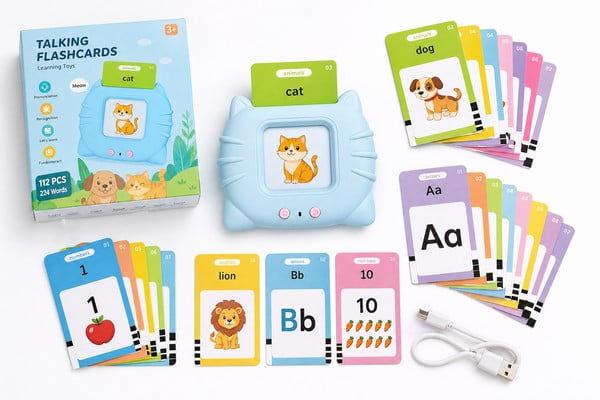
For B2B buyers, understanding the market landscape is essential for making informed sourcing decisions. The demand for inclusive educational toys is driven by both parental awareness and institutional purchases (schools and therapy centers).
Feature Comparison: Standard vs. Special Needs Optimized
| Feature | Standard Educational Tablet | Toyvao Talking Flash Card Machine | Benefit for ASD/Speech Delay |
|---|---|---|---|
| Interface | Touchscreen | Physical Cards | Tactile engagement; zero screen-time |
| Audio Quality | Variable | 16kHz, 16-bit mono | Clear speech modeling |
| Volume Limit | Often unregulated | Capped at 85dB (EN71) | Prevents auditory overload |
| Feedback Loop | Complex gamification | Direct Action-Reaction | Predictable, low-anxiety interaction |
| Durability | Fragile glass/plastic | High-impact ABS | Withstands drops and tantrums |
According to Grand View Research, the educational toy market is seeing a significant shift towards screen-free, interactive learning tools that cater to diverse learning needs [4]. Sourcing specialized devices like the Toyvao talking flash card machine allows brands to tap into this high-growth, high-loyalty niche.
Why Should Educational Brands Partner with Toyvao Factory?
Choosing the right manufacturing partner is critical when developing products for sensitive demographics. Toyvao Factory offers unparalleled expertise in OEM/ODM manufacturing of early educational hardware.
Quality Control and Certification
We maintain rigorous quality control systems. Our products are fully certified, meeting international safety standards including CPSC, ASTM F963, and EN71 [5]. We utilize PCM dual-IC protection boards and high-quality Li-Po cells (UN38.3/MSDS certified) to ensure absolute battery safety.
Customization for Specific Therapeutic Needs
Through our ODM services, we can customize the vocabulary sets, languages, and even the voice actors to suit specific therapeutic programs or regional accents. Whether you are an Amazon FBA seller or a specialized educational institution, Toyvao provides the technical foundation to build a trusted brand.
Conclusion
Talking flash cards are more than just a trend; they are a scientifically backed tool that provides tangible benefits for children with autism and speech delays. By combining screen-free tactile interaction with high-fidelity audio, these devices offer a safe, effective, and scalable solution for early intervention.
Ready to source premium talking flash cards for your educational brand?
Partner with Toyvao Factory for industry-leading quality and customization.
Contact Us Today:
– Email: info@toyvao.com
– WhatsApp: +86 186 8106 4480
References
[1] American Academy of Pediatrics (AAP). “Identifying Infants and Young Children With Developmental Disorders in the Medical Home: An Algorithm for Developmental Surveillance and Screening.” Pediatrics, https://publications.aap.org/pediatrics/article/118/1/405/69666/Identifying-Infants-and-Young-Children-With
[2] ASTM International. “ASTM F963-17 Standard Consumer Safety Specification for Toy Safety.” https://www.astm.org/f0963-17.html
[3] World Health Organization (WHO). “Guidelines on physical activity, sedentary behaviour and sleep for children under 5 years of age.” https://www.who.int/publications/i/item/9789241550536
[4] Grand View Research. “Educational Toys Market Size, Share & Trends Analysis Report.” https://www.grandviewresearch.com/industry-analysis/educational-toys-market
[5] Consumer Product Safety Commission (CPSC). “Toy Safety Business Guidance & Small Entity Compliance Guide.” https://www.cpsc.gov/Business–Manufacturing/Business-Education/Toy-Safety-Business-Guidance-and-Small-Entity-Compliance-Guide
Related Articles
Useful Resources
