
For speech-language pathologists (SLPs), pediatric rehabilitation clinics, and special education schools, selecting the right therapeutic tools is a balancing act between clinical efficacy and financial sustainability. Pediatric therapy is highly interactive; children learn and heal through play. However, traditional speech therapy materials—such as static picture cards, manual communication boards, and complex computer software—are either passive, fragile, or prohibitively expensive.
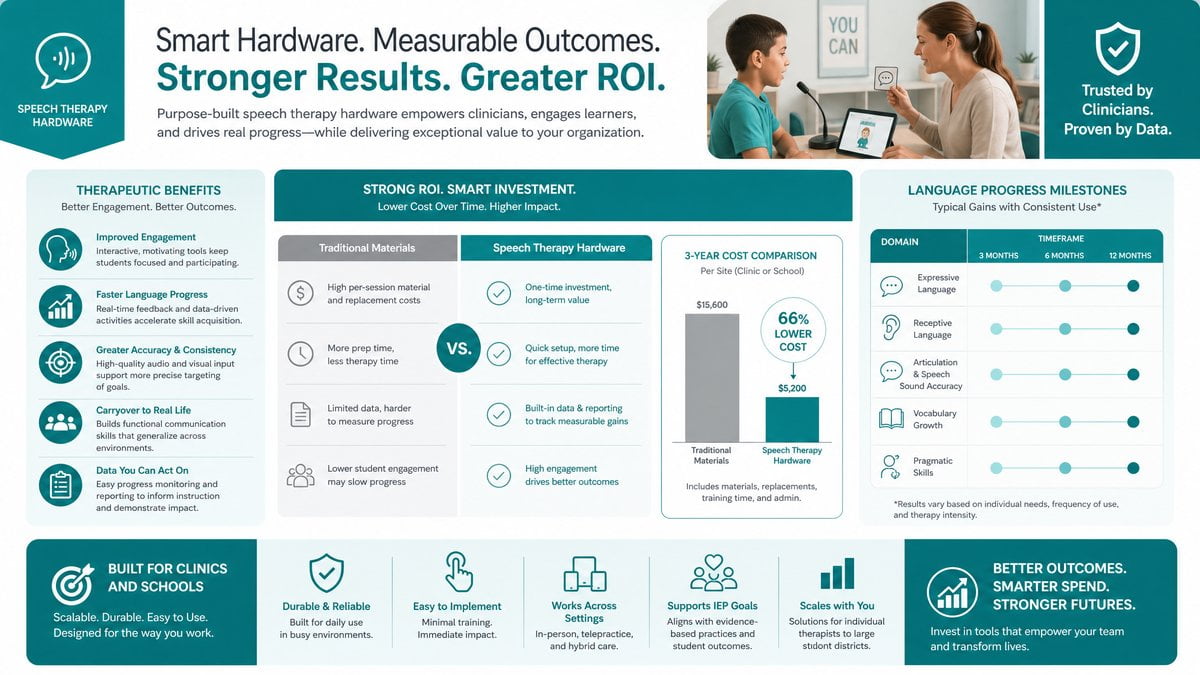
In recent years, specialized clinical buyers have discovered that screen-free talking flashcard readers offer an extraordinary Return on Investment (ROI). By combining high-fidelity audio feedback with tactile physical interaction, these simple devices serve as powerful clinical accelerators while dramatically reducing operational equipment costs.
As an established OEM/ODM hardware manufacturer, Toyvao works closely with clinical consultants to design and manufacture professional-grade talking flashcard systems. Here is our B2B sourcing guide on the clinical and financial ROI of talking flash cards for rehabilitation clinics.
The Clinical ROI: Accelerating Language Milestones
The primary metric of success for any therapy clinic is clinical outcome: how quickly and effectively a child achieves their speech and language goals. Talking flashcard readers act as “force multipliers” in therapy sessions by addressing several critical developmental bottlenecks:
1. Immediate, Autonomous Auditory Feedback
Children with speech-language delays, developmental apraxia of speech, or autism spectrum disorder (ASD) require massive, consistent repetition to master phonemes and word association. In a traditional session, the SLP must repeatedly pronounce words, which can lead to fatigue and limits the child’s independent practice.
With a talking flashcard reader, the child can insert cards and hear flawless, natural pronunciation hundreds of times. This immediate auditory feedback loop reinforces neural pathways and encourages autonomous, self-directed learning.
2. Tactile-Kinesthetic Engagement
For neurodivergent children, flat digital screens often trigger sensory overload, hyper-focus, or emotional meltdowns when the device is removed. Toyvao’s physical card reader provides a soothing, tactile-kinesthetic interaction. The physical action of grasping, aligning, and inserting the card grounds the child’s attention, leading to longer, more focused therapy sessions.
The Financial ROI: Sourcing Cost and Durability Analysis
Beyond clinical efficacy, clinic owners and procurement officers must analyze the financial impact of their equipment sourcing. Traditional clinical speech software and specialized augmentative and alternative communication (AAC) devices are exceptionally expensive, often costing thousands of dollars per unit.
The table below outlines the financial and operational ROI of sourcing Toyvao’s professional-grade talking flashcard readers compared to traditional therapeutic tools:
| Procurement & Operational Metric | Specialized AAC Hardware / Software | Traditional Static Flashcards | Toyvao Professional Card Reader | Clinical & Financial Impact |
|---|---|---|---|---|
| Initial Sourcing Cost | $500.00 – $1,500.00 | $15.00 – $30.00 (High wear) | $5.00 – $10.00 (Bulk Wholesale) | Extremely Low Capital Expense. Allows clinics to equip every therapy room and provide devices for home-use. |
| Interactive Audio | Yes (Digital screen) | No (Passive paper) | Yes (High-Fidelity, Screen-Free) | Combines the engagement of digital tools with the health benefits of physical toys. |
| Durability & Lifespan | Fragile (Shatter risk) | Low (Tears, bites, water damage) | High (ABS plastic, Matte-laminated cards) | Toyvao’s devices withstand drops and sanitized wipe-downs, lasting for years. |
| IT & Maintenance Overhead | High (Updates, charging, software licenses) | Zero | Virtually Zero (Simple USB-C charging) | Saves clinical staff hours of technical setup and recurring software fees. |
| Home-Practice Feasibility | Low (Too expensive to send home with patients) | Medium (Low compliance, parents find it boring) | High (Affordable, fun, high compliance) | Clinics can sell or loan devices to parents for vital daily home practice, accelerating outcomes. |
Key Technical Features for Clinical-Grade Sourcing
When sourcing talking flashcard readers for a clinical or educational environment, standard consumer-grade toys are not sufficient. You must specify several critical technical parameters to ensure clinical efficacy:
1. High-Fidelity Voice Chips & Clean Decibel Calibration
Standard toys often use highly compressed, scratchy 8kHz audio chips and low-grade speakers that distort consonant sounds (such as “s”, “t”, and “f”). For a child with a speech delay, this distortion can reinforce incorrect pronunciation. Toyvao utilizes premium 16kHz sampling rate voice chips and custom-calibrated speakers that deliver crystal-clear, natural human voices at safe, standardized decibel levels (EN71 compliant, <85dB) to protect sensitive young ears.
2. Durable, Sanitizable Materials
In a clinical setting, toys are handled by dozens of children weekly, making hygiene and sanitation a top priority. Our readers are manufactured using non-porous, high-impact ABS plastic that can be easily sanitized with medical-grade disinfectant wipes. Our premium learning cards feature double-sided matte lamination, making them highly splashproof and resistant to sanitizing sprays.
Conclusion: Sourcing Smarter Therapy Solutions
For pediatric rehabilitation clinics and special education providers, sourcing Toyvao’s professional-grade talking flashcard readers is a highly strategic, high-ROI decision. By investing a fraction of the cost of complex digital systems, clinics can equip their therapists with an exceptionally durable, pedagogically powerful, and highly engaging tool that accelerates clinical outcomes and drives business growth.
Request a Clinical Trial Kit
Are you a clinical procurement officer or SLP clinic owner? Contact our B2B team to request a physical trial kit and clinical volume pricing.
- Email: sales@toyvao.com
- Engineering Support: engineering@toyvao.com
- WhatsApp/Business Line: +86 186 8106 4480
- Factory Address: Toyvao Manufacturing Park, Bao’an District, Shenzhen, Guangdong Province, China.
References
- [1] American Journal of Speech-Language Pathology. (2024). Multisensory Physical Hardware vs. Screen-Based Apps in Pediatric Language Delay Rehabilitation. https://ajslp.pubs.asha.org
- [2] Journal of Special Education Technology. (2023). Cost-Benefit Analysis and Efficacy of Low-Cost Assistive Technology in Special Education Classrooms. https://journals.sagepub.com
Related Articles:
Useful Resources:
