
Executive Summary
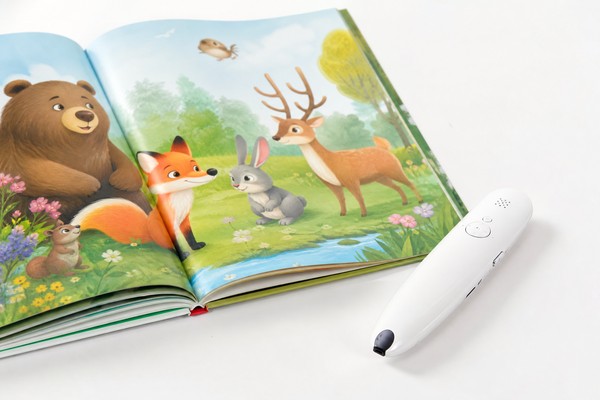
This guide explains protective packaging and retail display options for Picture Book Reading Pens (also called Story Pens, Talking Book Pens, OID Reading Pens). It evaluates three primary retail/fulfillment packaging strategies — Bulk Kits (loose-pack or kit boxed for institutional buyers), Blister Packs (carded or clamshell for retail and anti-theft), and Gift Boxes (premium retail or e-commerce presentation). The guide provides technical packaging specs, cost ranges, logistics impacts, compliance and safety requirements, and a step-by-step decision framework for B2B buyers (brand owners, distributors, mass retailers, and educational buyers).
Key conclusions:
– For low-price mass retail with high theft risk, thermoformed PET/PVC blister on backing card is lowest landed cost per visible retail-ready unit: packaging + assembly typically $0.35–$1.50/unit, MOQ 1,000–5,000.
– For premium retail or gift positioning where unboxing and perceived value matter, rigid or magnetic gift box with foam/EVA insert is recommended: packaging cost $1.50–$6.00/unit depending on print, finish and insert complexity; MOQ 500–2,000.
– For institutional/education channels (bulk shipments to schools, NGOs, libraries), bulk kits (minimal retail packaging, inner cartons, protective inner padding) minimize cost per functional unit: packaging cost $0.10–$0.60/unit, easier palletization, and fewer secondary display constraints.
– Packaging choice affects supply chain: cartonization, pallet density, volumetric freight, minimum order quantities, tooling lead times, and compliance testing (drop, compression, UN38.3 for batteries). Expect packaging to add 5–25% to unit cost when fully landed (packaging+assembly+freight+waste).
This guide provides the specs to evaluate suppliers, cost models to compare options, safety/compliance checklists, and a decision path for channel-specific choices.
What Is Picture Book Reading Pen and Who Uses It
Picture Book Reading Pens are handheld electronic devices sized and styled for children (typically 120–180 mm long, 20–40 mm diameter, weight 40–150 g depending on battery). They contain an optical/infrared reader, speaker, microphone (optional), storage (8–32 GB typical), and may include battery types: rechargeable Li-ion (3.7 V, 300–1,200 mAh) or replaceable alkaline/NiMH AAA cells.
Primary end-users and buyer personas:
– Brand owners and OEMs that design story pens and sell branded titles
– Importers and distributors supplying toys and educational products to retail chains
– Mass-market retailers and supermarkets requiring shelf-ready packaging and anti-theft features
– Specialty toy stores and bookstores prioritizing presentation and premium packaging
– Education buyers (schools, libraries, NGOs) procuring bulk kits for classroom use
– E-commerce sellers requiring parcel-safe packaging and efficient RMA handling
Packaging serves two roles: protective (prevent damage in transit and handling) and presentational (retail shelf appeal or gift positioning). For education buyers, functionality and cost dominate; for retail channels, merchandising, theft resistance, and shelf-fit are critical; for gifting/e-commerce, unboxing experience and perceived value dominate.
Why Demand Is Growing
Three market drivers are increasing demand for optimized packaging solutions for reading pens:
– Growth in interactive educational toys: Global demand for educational electronics for ages 0–8 has increased ~6–8% CAGR in recent years. Packaging must balance cost, safety compliance and retail readiness.
– Channel diversification: Brands sell to brick-and-mortar, e-commerce, and educational institutions simultaneously. Single SKUs are often repackaged by channel — requiring multiple packaging SKUs or modular pack solutions.
– Sustainability and regulation pressure: Retailers and regulators in EU/UK and some US states require recyclable packaging, reduced plastic, and clearer disposal labeling. This forces change from PVC clamshells to PET, CPET, molded pulp and FSC-certified paperboard.
Packaging is no longer just containment: it is a supply chain variable affecting cost per unit, damage rates, theft/loss, and customer perception.
Key Technology Differences
Packaging technology choices affect protection, visibility, production speed, tooling cost, recycling, and theft resistance.
Materials and manufacturing technologies:
– Thermoformed Blister (PET/PVC)
– Material: PET, PVC, or PET-G; thickness 0.5–1.2 mm typical.
– Manufacturing: thermoforming from sheet; low tooling cost ($300–$2,000 depending on complexity).
– Pros: high visibility, low unit cost at scale, good product retention.
– Cons: PVC contains chlorine (recycling/chemical concerns), less rigid than clamshell, limited tamper resistance.
– Clamshell (injection or thermoformed)
– Material: PET, PS, or PP; thickness 0.6–2.0 mm.
– Manufacturing: either fold-over thermoform or injection molded.
– Pros: high theft resistance, durable, re-closable.
– Cons: higher tooling cost if injection molded ($2,000–$10,000), heavier and higher freight volume.
– Backer Card with Blister Seal
– Backer: 250–350 gsm C1S or C2S board, silicone coating, UV or aqueous coating; printing up to 4C+spot.
– Blister sealed to card by heat or cold glue.
– Euro-slot or hole punch for hanging.
– Molded Pulp/Inserts
– Material: recycled kraft pulp, 1–4 mm walls; density 200–600 kg/m3.
– Pros: sustainable, cushion, low cost, compostable.
– Cons: lower aesthetic finish, higher moisture sensitivity.
– Foam/EVA Inserts
– Material: EPE (expanded polyethylene) or EVA foams; densities 20–70 kg/m3; thickness 3–20 mm.
– Pros: precision fit, premium feel, shock absorption.
– Cons: cost, not always recyclable in standard streams.
– Rigid Boxes (two-piece or magnetic)
– Board thickness: 1.5–3.0 mm; covered with printed paper, soft-touch laminate, or fabric.
– Production: higher tooling and setup, longer lead time, MOQ typically 500+.
– Pros: premium presentation, durability for retail.
– Cons: highest unit cost, significantly increases carton dimension and weight.
– Folding Cartons (paperboard)
– Material weights: 250–450 gsm with SBS or CCNB.
– Common finishes: matte/UV varnish, aqueous coating, embossing.
– Pros: good printability, lower cost vs rigid.
– Cons: limited interior protection without inserts.
Freight and palletization technologies:
– Shelf-ready packaging (RRP) and retail-ready packaging (RRP/SRP) use perforated master cartons that convert into a display tray. Corrugated board flute types (B, C, BC, E) and Edge Crush Test (ECT) ratings (32–44 lbs/inch) determine stack strength. Typical master carton weight target: 15–25 kg.
Compliance tech:
– Battery packaging must be designed to comply with UN38.3 and IATA regulations for air transport. This affects how batteries are packed: terminals taped, separate packaging for lithium cells, and labeling.
Key Features and Specifications to Evaluate
When selecting packaging for reading pens, evaluate the following specifications and acceptance criteria.
Physical dimensions and tolerances
– Pen protective cavity internal dimensions: length +3–5 mm clearance, diameter +2–3 mm clearance.
– Overall pack dimensions: aim for slim depths to reduce volumetric freight; typical retail blister card: 220 x 115 x 30–40 mm.
– Master carton sizing: design for full layers with minimal voids; target master carton dimensions multiples of pallet footprint (e.g., for 40 x 48 inch pallet).
Materials and thickness
– Blister thickness: PET 0.6–1.0 mm for retail pens; >1.0 mm for higher theft resistance.
– Cardboard/backer weight: 250–350 gsm C1S with water-resistant coating in humid shipping lanes.
– Corrugated board flutes: B-flute for printability and cushion with 3.2 mm thickness; C-flute for stacking strength 4.0 mm.
– Rigid box board: 1.8–2.5 mm for medium-weight phones/pens; thicker if including heavier battery packs.
Protection and retention
– Shock performance target: survive a 1.0 m drop test (retail parcel) for individual packaged units; survive ISTA 1A for individual-pack shipments.
– Compression: master cartons designed to carry 5–8 layers on pallet; choose ECT rating 32–44 to support stack heights.
– Moisture resistance: include polyethylene inner bags or desiccants if storing/transporting in humid climates.
Visual and merchandising
– Window size: ensure at least 40–60% of product face visible for recognition; window edges at least 6 mm from artwork to maintain structural integrity.
– Card printing: CMYK + 1 spot for color-critical branding; varnish or aqueous coating with minimum 6–8 working days for printing run.
– Hanging features: euro slot 6–7 mm diameter with 12–14 mm depth for standard pegs.
Sustainability and recyclability
– Material codes: PET(1), PP(5), corrugated (20), molded pulp recyclable/bio-based. Avoid PVC where possible due to recycling limits and chemical concerns.
– Certificates: FSC for paper, ISCC for recycled polymer content, and compliance statements for recyclability.
Tooling and lead time
– Thermoformed blister molds: $300–$2,000; lead time 7–14 days for sample, production 7–21 days depending on volume.
– Injection molds for clamshells: $2,000–$10,000; 4–8 weeks lead time.
– Rigid box die-cut tools: $300–$1,500; sample lead time 7–14 days.
– Printing plate setup for carton: $100–$400 per color.
Assembly and labor
– Manual sealing vs automated: manual heat-seal or staple adds $0.05–$0.20 per unit labor; automated blister sealing machines reduce per-unit cost for high volume but require capex or co-packer services.
Regulatory and marking
– Battery labeling: UN numbers, Lithium battery handling labels, State of Charge labeling if necessary.
– Toy safety markings: CE, UKCA, ASTM/CPSIA tracking labels for the US market: permanent tracking label on product or packaging with batch, production date, lot number.
Pros and Cons
Bulk Kits (Institutional / Education)
Pros
– Lowest packaging cost per unit: $0.10–$0.60/unit.
– Easy palletization, reduced dimensional weight for shipping.
– Faster assembly; lower tooling and artwork costs.
– Better for direct-to-classroom or NGO distribution where branding/presentation is less critical.
Cons
– Poor retail shelf appeal; not suitable for open retail channels.
– Higher individual unit handling at store level; more SKUs for re-boxing by retailers.
– Higher perceived value loss if returned as retail returns.
Blister Packs (Carded or Clamshell)
Pros
– High product visibility; good for impulse shelf sales.
– Moderate cost: $0.35–$1.50/unit depending on materials and print.
– Euro-slot compatibility for peg display; theft deterrence if sealed.
– Quick production and low upfront tooling for thermoformed blisters.
Cons
– Plastic-heavy; sustainability concerns and retailer restrictions in certain markets.
– Card seal can be difficult for customers and can cause product damage if over-sealed.
– Not ideal for premium/unboxing experience.
Gift Boxes (Folding or Rigid)
Pros
– Premium perceived value; suitable for gifting and specialty retail.
– Better protection with foam or molded inserts; good for e-commerce.
– Branding opportunities: emboss, foil, soft-touch, magnetic closure.
Cons
– Highest per-unit packaging cost: $1.50–$6.00+.
– Increases carton dimensions and volumetric freight; higher shipping cost.
– Longer lead times, higher MOQ (typically 500–2,000).
General tradeoffs
– Theft vs presentation: tighter, sealed packs reduce shrink but increase customer friction.
– Sustainability vs protection: molded pulp reduces plastic but may need thicker corrugate to achieve similar protection.
– Cost vs damage rate: cheaper packs increase damage/return rates, raising total cost of ownership.
Step-by-Step Decision Guide
Use this decision logic to pick packaging for your reading pen SKU:
Step 1 — Determine target channel(s)
– Mass retail (supermarket, big-box): Blister (sealed) or clamshell for theft resistance and peg/shelf fit.
– Specialty bookstores/toy stores: Folding cartons or premium gift boxes if price point >$20.
– E-commerce/direct-to-consumer: Gift box with internal foam or robust mailer plus outer shipping carton to avoid returns.
– Education/institutional: Bulk kits in inner cartons designed for palletized shipping.
Step 2 — Define price point and margin constraints
– Low priced pens (<$15 retail): aim for packaging <10% of retail price; blister/backer typically fits.
– Mid-range ($15–$35): folding carton with window or clamshell acceptable; consider moderate insert for protection.
– Premium (> $35): rigid gift box with foam; packaging may be 10–25% of COGS.
Step 3 — Decide on protection level
– If product has fragile speaker, microphone, or exposed screen, use foam/EVA or molded pulp to absorb 1.0 m drop.
– If battery installed, ensure secure retention and battery terminal protection.
Step 4 — Sustainability constraints
– If selling into EU or to retailers with sustainability policies, avoid PVC; use PET, molded pulp, or fully paper-based displays.
– Confirm recyclability claims and obtain FSC/PEFC certification where required.
Step 5 — Logistics and freight optimization
– Calculate volumetric weight: Freight weight = max(actual weight, volume (m3) × 200–333 kg/m3 for ocean vs air). Design packaging to reduce empty space.
– Target master carton weight 18–22 kg for manual handling and container stow.
Step 6 — Compliance and testing
– Schedule ISTA 1A or 2A tests for single pack shipments; ISTA 3A for mixed pallet shipments.
– If including lithium battery, require UN38.3 and IATA compliance documentation.
Step 7 — Pilot run and inspection
– Produce 200–500 sample units. Perform incoming QC at origin: dimensional check, print color match (Delta E <3 for Pantone), blister seal tensile force, drop, and functional test after environmental exposure.
Step 8 — Finalize supplier and scale
– Select supplier based on total landed cost including tooling amortization, assembly labor, freight, compliance testing, and scrap rates. Re-run cost model for 1,000; 5,000; 20,000 units to compare per-unit price.
Pricing and Cost Analysis
This section provides representative cost ranges and a method to compute the true landed packaging cost.
Representative per-unit packaging cost ranges
– Bulk kit (loose pen + minimal bag + inner carton): $0.10–$0.60
– Blister pack (thermoformed PET on printed backer card): $0.35–$1.50
– Clamshell (thicker PET, sealed): $0.50–$2.50
– Folding carton with window and simple insert (SBS 300 gsm + die-cut): $0.60–$2.00
– Rigid gift box with foam/EVA insert, full-color print, soft-touch lamination, magnetic closure: $1.50–$6.00+
Tooling and setup amortization (per unit)
– Thermoform die: $300–$2,000; amortize over MOQ. Example: $1,000 tool cost / 10,000 units = $0.10/unit.
– Injection mold: $2,000–$10,000; $5,000 / 20,000 units = $0.25/unit.
– Rigid box die setup: $500–$2,000; $1,000 / 5,000 units = $0.20/unit.
Assembly labor and co-packer fees
– Manual sealing/assembly: $0.05–$0.30/unit depending on complexity.
– Co-packer automated sealing: $0.02–$0.10/unit plus setup fees.
Freight cost impact (example)
– Example product with blister pack dims per unit: 220 × 115 × 40 mm = 0.001012 m3.
– Air freight volumetric: airline uses 167 kg/m3. Volume-based weight = 0.001012 × 167 = 0.169 kg. If actual weight 0.150 kg, chargeable = 0.169 kg.
– Ocean freight uses container space; maximize per-pallet cube. Example: 40 ft container holds ~22 pallets (stacked), calculate units per pallet based on master carton layout.
Damage/Return cost
– Good packaging target damage rate ≤1%. If product MSRP $25, average replacement cost to buyer (product+pack+shipping+RMA handling) ~ $10–$15. Each percentage point increase in damage rate costs $0.10–$0.15 per unit sold.
Total landed packaging cost formula (per unit)
– Unit Packaging Cost (materials) + Tooling amortization + Assembly labor + Additional freight cost due to packaging volume + RMA/damage uplift percentage.
Example calculation
– Blister pack materials $0.55 + tooling amortization $0.08 + assembly $0.10 + extra freight due to volume $0.05 + RMA uplift (0.5% × $12 replacement) = $0.06 => Total = $0.84/unit.
Breaking even between options
– Compare the total landed packaging cost and expected benefits (lower shrinkage, higher sell-through, premium price uplift). If a gift box increases conversion by 15% at e-commerce and allows $6 higher ASP, the extra packaging cost may be justified.
MOQ, lead time and cashflow
– Higher customization (foil, embossing, magnetic closure) increases MOQ and consumes cash for tooling and inventory. Plan 90–120 days for complex gift boxes vs 20–45 days for simple blister packs.
Competitive Landscape
Supplier types and geographies
– China (Guangdong, Zhejiang, Jiangsu): highest capacity for thermoforming, carded blister, folding cartons; low unit cost; lead times 20–45 days for production + sea freight.
– Vietnam: rising supplier for folding cartons and assembly; competitive labor costs and improved compliance; recommended for mid-sized runs.
– Poland/Italy: European producers for high-end rigid boxes and strict sustainability standards; suitable for EU retailers needing short lead times and local compliance.
– USA co-packers: regional assembly and fast shipping for e-commerce/retail replenishment; higher cost but low transit times and better control over battery compliance.
Service offerings
– OEM packaging houses: provide end-to-end — design, tooling, print, thermoforming, assembly, and compliance tests.
– Specialized toy packaging firms: expertise with EN71 and CPSIA requirements; recommend for large toy brands.
– Co-packing and fulfillment centers: provide automation and packaging on-demand, especially useful for omnichannel SKU differentiation (same core product repackaged for different channels).
Market trends
– Retailers increasingly enforce sustainability specs: many European retailers require maximum 10–20% plastic content and prefer mono-material packaging. This shifts demand to molded pulp and PET windowed cartons.
– Private label brands in mass channels demand lower packaging costs and higher theft resistance; bundles and shelf-ready trays are more common.
– E-commerce sellers demand box-in-box protection and efficient return logistics.
Supplier selection criteria
– Compliance track record (EN71, REACH, CPSIA), ISO 9001, FSC certification for paper, and audits (BSCI).
– Capacity for MOQ and seasonal peaks.
– Transparency on CO2 footprint and recycled content if required by retailers.
What Buyers Say
Common feedback from B2B buyers distilled from category interviews and sourcing projects:
Positive patterns
– Blister packs deliver consistent sell-through in outlets where customers need to see the product; damage rates low when blister thickness is ≥0.8 mm and backer gsm ≥300.
– Gift boxes improve conversion for premium SKUs and lower returns from online channels when adequate internal retention (foam/EVA) is used.
– Bulk kits reduce landed cost dramatically for education programs; buyers appreciate consolidated master cartons and batch labeling.
Recurring issues and complaints
– Poorly sized cavities cause snapped tips or cosmetic scratches in pens during shipping. Buyers require ±1–2 mm cavity tolerance and soft contact surfaces (EVA or soft paint) to prevent abrasion.
– Backer printing mismatches (Delta E >5) causing brand quality issues; insist on FOGRA or Pantone proofing.
– Blister cards delaminate in humid ports unless water-resistant coatings are used.
– Tooling costs not disclosed upfront; check for hidden die charges and plate replacement costs.
– Battery packaging non-compliance causing freight holds at origin; buyers now insist on documentation (UN38.3 test reports, MSDS) before booking freight.
Negotiation insights
– Tooling amortization is negotiable; suppliers frequently include tooling discounts for repeat orders or increased volumes.
– Consolidating assembly with pen assembly at the same factory reduces cross-dock handling and unit cost by $0.05–$0.15/unit.
Safety, Maintenance and Compliance
Regulatory framework and testing to enforce
– Toy safety standards:
– EU: EN71 parts 1–3 (mechanical/physical, flammability, migration of certain elements) and EN62115 for electrical toys if applicable.
– US: ASTM F963 and CPSIA (tracking label and lead/phthalate limits). CPSIA requires a permanent or semi-permanent tracking label containing manufacturer, location and date of production.
– Chemical safety:
– REACH in EU (SVHC limits for inks, adhesives).
– Phthalates limits per EN71-9 and US CPSC.
– Batteries and transport:
– Lithium battery shipments require UN38.3 test reports, battery packaging per IATA DGR, and correct labeling. Alkaline batteries generally exempt but terminals must be protected.
– Packaging waste and recyclability:
– EU Packaging Directive and Extended Producer Responsibility (EPR) require recyclable packaging and reporting; many retailers ask for proof and recyclability labeling.
– Labeling:
– Country of origin and manufacturer information; CE/UKCA marks for toy safety in respective markets.
– Recycling codes and disposal instructions per local law.
Recommended testing and QA
– ISTA 1A/2A for single parcel and unit transport; ISTA 3A for mixed case/pallet shipments.
– Drop test: 1.0 m single drop for parcel; 1.2 m for loose retail environments.
– Compression test: simulate stacked pallets; ensure master cartons withstand expected stack height (calculate using ECT rating and desired safety factor).
– Environmental test: 48–72 hours at high humidity (85% RH) to validate blister adhesion and product function.
– Compatibility test: ensure inks, adhesives and laminates do not cause corrosion or print migration onto product surfaces (color fastness).
Maintenance and RMA handling
– Establish returns policy and instruct customers on packaging for returns. Recommend return packaging guidelines that protect the pen (use original inner insert or padded mailer).
– Secure spares for inserts and spare packaging to replace defective packaging during initial runs.
Materials to avoid or minimize
– PVC where possible due to limited recyclability and chemical concerns.
– Heavy-metal inks and phthalate-containing plastics to meet EN71 and CPSIA.
– Mixed-material constructs that hamper recycling (e.g., laminated PET/Paper combinations that cannot be separated).
Frequently Asked Questions
What is the typical MOQ for each packaging type?
– Thermoformed blister: MOQ commonly 1,000–5,000 units depending on supplier.
– Folding carton with standard print: MOQ 3,000–10,000 for full-color litho-laminated runs; digitally printed samples possible at 200–500.
– Rigid gift boxes: MOQ 500–2,000 due to setup and tool costs.
– Bulk kits: MOQ as low as 200–500 for repackaging if using local co-packer.
How much does packaging affect shipping costs?
– Packaging can increase volumetric freight by 10–80% depending on pack depth and master carton efficiency. For air freight, volumetric weight often increases charges even when product is light.
How to ensure compliance for batteries?
– Request UN38.3 test reports, MSDS, and manufacturer declaration. For Li-ion, terminals must be taped/insulated and packages labeled; consult IATA DGR for current requirements.
Which option is best for multi-channel distribution?
– Consider a modular approach: a base bulk pack for education and a secondary detachable sleeve or overwrap converting the same inner pack into retail-ready packaging. This reduces SKUs while meeting channel needs.
How long are lead times?
– Simple blister/card packs: 2–6 weeks including printing and assembly for typical runs.
– Complex gift boxes and rigid boxes: 8–14 weeks due to board procurement, die tooling, and finishing.
Can packaging be customized for localization?
– Yes. Common approach: standard artwork plate with variable data printing for language, barcode and regulatory text. Variable print runs for backer cards or sleeve labels are cost-effective.
What are typical damage rates?
– Good packaging aims for ≤1% damage on mixed pallet shipments. Inadequate packaging in humid or rough-handling lanes can push damage to 3–8%.
Are there green alternatives to blister packs?
– Yes: molded pulp inserts combined with fully paperboard windowed cartons or PET windows with mono-material designs. But need to consider moisture sensitivity and print quality.
Contact Toyvao
For sourcing assistance, sample procurement, supplier audits, and custom packaging quotations for Picture Book Reading Pens (Story Pens, OID Reading Pens), contact Toyvao:
- Email: sales@toyvao.com
- Website: https://www.toyvao.com
Provide the following when you contact Toyvao to expedite a quote:
– Target channel(s) (mass retail, specialty, e-commerce, education)
– Expected annual volume and initial order quantity
– Product dimensions and weight (including battery type)
– Desired packaging type(s) and finish (e.g., blister PET 0.8 mm + 300 gsm backer; rigid gift box w/ EVA insert)
– Sustainability requirements (FSC, recycled content, no PVC)
– Any compliance/regulatory needs (EN71, CPSIA, UN38.3)
– Target FOB/CIF port and desired lead time
Toyvao will provide a comparative cost model with tooling amortization, assembly cost, sample timeline, and recommended packaging spec sheet aligned to your sales channels.
