
Executive Summary
This guide compares three technical approaches used in picture book reading pens (also called story pens, talking book pens, or OID reading pens): OID dot recognition (optical positional dot pattern), printed QR-code hotspots, and RFID/NFC tags. It is written for B2B buyers — publishers, toy brands, OEM/ODM purchasers, and manufacturing procurement teams — who need to select the right technology for interactive reading products at scale.
Key conclusions:
– OID dot recognition offers the highest granularity (word/phrase level), the best offline user experience (low latency and robustness), and strong anti-piracy mapping options, but requires specific printing and mapping workflows and higher camera processing in the pen.
– QR-code systems are the lowest-cost, simplest to integrate into existing print workflows, and easy to author, but they are coarse (hotspot-level), visually intrusive unless designed into artwork, and less robust to scanning angle, dirt, or lamination.
– RFID/NFC provides immediate contactless detection with good robustness and privacy options, but embedding tags increases production cost and complexity and limits hotspot density unless you accept higher per-unit manufacturing cost.
This guide provides technical comparison metrics, feature checklists, cost ranges (hardware, per-book production, content mapping), procurement decision steps, safety and compliance checklists, buyer feedback themes, and frequently asked questions to support a procurement decision for OEM/ODM volume purchasing.
What Is Picture Book Reading Pen and Who Uses It
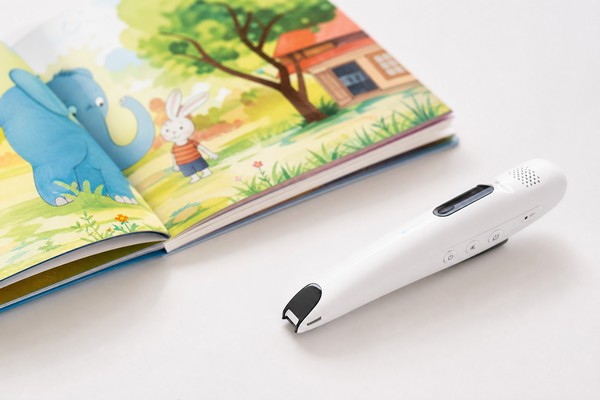
A Picture Book Reading Pen is a handheld electronic tool that converts a tactile “tap” on printed book content into synchronized audio: narration, word pronunciation, sound effects, or interactive responses. Common synonyms: story pen, talking book pen, OID reading pen. Typical components include: an input sensor (camera/optical sensor, barcode/QR decode, or RFID reader), microcontroller (MCU) or SoC for decoding/mapping, storage (NAND/flash), an audio DAC and amplifier, speaker and/or headphone output, battery, and user controls.
Primary users:
– Children (age 0–12) using educational storybooks and language-learning picture books.
– Publishers that want to add audio interactivity to physical books.
– Toy brands looking to add literacy-enhancing products.
– Educational institutions and libraries procuring accessible reading tools.
– OEM/ODM partners producing reading-pen hardware for private label brands.
Use cases:
– Read-aloud narration tied to specific words/illustrations.
– Pronunciation practice (tap a word/object to hear pronunciation).
– Multilingual audio switching.
– Games/quizzes integrated into printed pages.
– Accessibility: audio for visually impaired readers.
Why Demand Is Growing
Three market drivers push demand for reading pens:
– Early literacy and language learning gains: tactile, multimodal learning (touch + sound) increases engagement and retention in preschool and early elementary groups.
– Digital fatigue and hybrid content: parents and schools want tangible media with digital features without full-screen devices. Pens deliver interactive audio while keeping the physical book in the loop.
– Accessibility and inclusion: immediate audio support helps readers with dyslexia or visual impairment; some markets require accessible educational materials.
Commercial drivers for buyers:
– New revenue streams for publishers through premium interactive editions.
– Product differentiation for toy and kids-tech brands.
– Low barrier to user adoption compared with app-based solutions (no smartphone required).
Operational pressures that influence technology selection:
– Unit cost sensitivity for mass-market children’s products.
– Print manufacturing capabilities of existing suppliers.
– After-sales support capacity for firmware and content updates.
– Regulatory compliance for toys/electronics in target markets.
Key Technology Differences
This section compares the three sensor/mapping approaches on technical parameters important to procurement.
Optical Identification (OID Dot Pattern)
– How it works: Pages printed with a dense, non-repeating microscopic dot pattern. Pen contains a small CMOS camera and image-processing module that decodes local dot coordinates to an absolute position (page ID + X/Y). Each coordinate maps to an audio clip in pen memory or linked by ID.
– Positional resolution: Typical printed dot pitch 0.3–0.5 mm; position accuracy generally ~0.3–1.0 mm depending on print quality, pen optics, and algorithm.
– Latency: Local decoding in pen; typical detection-to-playback latency <100–200 ms.
– Granularity: Supports word/phrase/character-level mapping across the whole page.
– Printing: Requires a prepress overlay of the dot pattern. No embedded electronics in book.
– Robustness: Tolerates tilting and some occlusion; sensitive to extreme dirt/smudges or low-contrast printing but can be laminated with high-quality printing.
QR Code (Printed 2D Barcode)
– How it works: Pages include visible QR codes or other barcodes positioned near hotspots. Pen decodes QR (camera or dedicated decoder) and triggers associated audio stored locally or via network.
– Positional resolution: Hotspot-level only (each QR corresponds to a clip or ID). To get word-level interactivity you need many small codes, which is visually disruptive.
– Latency: Decoding time 150–500 ms depending on camera, lighting, and algorithm.
– Printing: Simple — standard CMYK printing; no special prepress except placement rules.
– Robustness: Susceptible to glare/lamination, angle, and partial occlusion. Codes are easily copied or photographed.
– Visual impact: Codes are visible and require design integration to avoid aesthetic degradation.
RFID / NFC Tags
– How it works: Passive RFID/NFC tags embedded in page or binding communicate with an RF reader in the pen when in range (typically 1–5 cm for NFC).
– Positional resolution: Typically per-page or per-hotspot, depending on number and placement of tags. Fine-grained hotspot density requires many tags.
– Latency: Immediate read, typically <50–200 ms.
– Printing/manufacturing: Requires insertion or lamination of tags; changes book assembly and increases BOM and assembly complexity.
– Robustness: Very tolerant to dirt and orientation; tags have long service life but physical embedding can wear if not properly protected.
– Security: Tag types range from unsecured read-only IDs to secure, encrypted tags that resist cloning (cost increases with security level).
Other relevant technical differences
– Power and battery: OID requires a camera and image processing (higher power draw). QR decoding is camera-based too, but QR-centric pens can use simpler optics and lower CPU load if scanning less frequently. RFID readers draw power when polling but can sleep between reads. Expect OID/QR pens to need higher-capacity batteries (1000–2000 mAh) for day-long use.
– Storage: Required storage depends on content resolution and bitrate. A rule of thumb: MP3 at 128 kbps = ~1 MB/min; 4 GB ≈ 45 hours of audio.
– Firmware and SDK: OID requires mapping and decoding SDKs; QR implementations rely on open standards and simpler mapping; RFID needs tag programming tools and middleware.
Key Features and Specifications to Evaluate
Hardware specifications
– Sensor type and resolution:
– OID: CMOS camera resolution typically 320×240 to 640×480 px; optics with 10–20 mm working distance; LED illumination (white/IR).
– QR: Camera resolution similar; decoding library support for QR versions up to Version 40.
– RFID: Supported standards (NFC Type A/B/ISO14443, HF 13.56 MHz, or UHF 860–960 MHz); read range and power.
– Processor/SoC: MCU clock and DSP capacity to handle image decoding, audio playback, and TTS. Examples: ARM Cortex-M4/M7 for basic decoding; application-class SoCs for advanced TTS or wireless.
– Memory:
– RAM: 16–256 MB depending on processing needs (image buffers for OID require more).
– Flash storage: 128 MB to 32 GB; typical commercial pens ship with 512 MB–4 GB.
– Audio:
– Codec support: MP3, AAC, WAV (PCM), OGG.
– Bitrates supported and default recommended: 64–128 kbps MP3 for voice; higher for music/effects.
– Speaker: 0.5–2.5 W amplifier, 0.5–3 inch speaker sizes depending on desired volume/clarity.
– Outputs: headphone jack (3.5 mm), Bluetooth A2DP optional.
– Power:
– Battery type: Li-ion or Li-poly, typical capacities 600–2200 mAh.
– Charging: Micro-USB or USB-C; charge time 2–4 hours.
– Runtime: Continuous playback ~4–12 hours depending on battery size and sensor power usage; standby multiple days.
– User interface: Buttons, LED indicators, touch-sensitive areas, voice prompts.
– Connectivity: USB for file transfer; optional Wi-Fi or Bluetooth for OTA updates and cloud sync.
Software and content pipeline
– Authoring tools: Mapping software for OID that links coordinates to audio, QR code generation tools, RFID tag programming utilities.
– Content formats: File naming and directory conventions; indexing files for quick lookup. Evaluate support for variable bitrate handling, multi-language tracks, and audio chunking.
– SDKs & APIs: Availability of pen SDKs (C/C++, Android/iOS wrappers), sample code, documentation, and support SLA is critical for integration.
– Update mechanisms: USB, microSD, Bluetooth, Wi‑Fi OTA for firmware and content updates.
Production and print requirements
– OID dot overlay file formats (PDF/X with overlay layer), required dot density and printing resolution (e.g., 1200 dpi prepress recommended).
– QR code size and quiet zone requirements; recommended minimum code size for reliable reading in pen optics (usually 6–10 mm square for small pens).
– RFID insertion methods, tag type and placement tolerances, lamination and binding guidelines to avoid antenna detuning.
Service and support
– Sample timelines, MOQ for pens, and lead times.
– Warranty terms, spare parts availability, repair vs replacement strategy.
– Training for content mapping workflows and integration.
User experience metrics
– Tap-to-sound latency: target <200 ms for natural feel.
– Detection rate: >98% successful tap recognition under normal conditions.
– Audio sync accuracy: for OID targeted under 50 ms jitter between tap and audio playback start.
– Durability: shock drop rating (e.g., 1.5 m drop), IP rating if required.
Pros and Cons
OID Dot Recognition
– Pros:
– Highest spatial granularity: supports word-level mapping across full page.
– Seamless, minimal visual intrusion — dot pattern can be visually unobtrusive.
– Excellent offline performance and low latency when implemented locally.
– No electronics or tags in the book; printing-only cost increment.
– Can implement anti-piracy linking (unique IDs per print run) and complex mapping.
– Cons:
– Requires camera and image-processing hardware in pen (higher BOM power/processing).
– Prepress and printing must include dot pattern overlay and quality control.
– Sensitive to printing quality, extreme soiling, and poor contrast.
– Higher development complexity for mapping pipeline and SDK integration.
QR Code
– Pros:
– Lowest prepress and printing barrier — can be generated quickly and printed with any CMYK process.
– Simple authoring workflow; easy to link to cloud or local audio IDs.
– Cheap to prototype and iterate.
– Cons:
– Visible codes affect aesthetics unless integrated by design.
– Coarse granularity unless printing many small codes (which is impractical).
– Less robust to lamination/glare and oblique angles.
– Easy to copy, photograph, and misuse if anti-piracy is a concern.
RFID / NFC
– Pros:
– Robust detection in varied lighting and when pages are soiled.
– Immediate recognition latency and relatively simple mapping architecture.
– Supports secure/encrypted tags for anti-cloning when required.
– Cons:
– Adds per-unit tag cost and changes manufacturing/assembly (insertion, routing).
– Hotspot density limited by number of tags you can economically embed.
– Physical durability depends on tag encapsulation; improper embedding can lead to tag failure.
– Some regulatory and material compatibility constraints depending on substrate and printing/lamination process.
Step-by-Step Decision Guide
This stepwise checklist guides procurement teams through selecting the appropriate technology.
Define product requirements
– Desired interactivity level:
– Word-level and synchronized highlighting across entire page → OID.
– Page-level or a few hotspots per page → QR or RFID.
– Aesthetic requirements:
– Invisible/imperceptible tech in artwork → OID or RFID embedded carefully.
– Codes are acceptable visually → QR.
– Durability and use environment:
– Heavy wear, outdoor, messy use → RFID or rugged OID printing and lamination.
– Energy / battery life constraints:
– Low-power mandate → RFID or optimized QR; OID consumes more power.
Estimate cost sensitivity
– Very price-sensitive mass-market products (large volumes, single-language, simple interactions): QR or low-end RFID.
– Mid- to premium-tier interactive books that justify higher content production cost: OID often delivers perceived higher value.
Assess print supplier capabilities
– Can your printer output high-resolution dot overlays and maintain registration and contrast? If not, QR/RFID may avoid retraining.
– Can your binder/assembler insert RFID tags reliably? Plan a pilot run.
Prototype and user testing
– Build prototypes for realistic use scenarios: children’s handling, rapid tapping, lamination, angled use.
– Measure tap-to-sound latency, detection failure rates, false-positives, and battery runtime.
Map content workflow and costs
– For OID: determine mapping labor per page (time × rate). For QR: cost to generate codes and batch link. For RFID: programming tags and per-unit tagging cost.
– Decide whether audio will be recorded human voice or TTS; TTS simplifies updates and translation but may impact perceived quality.
Review compliance and shipping logistics
– Battery shipping (UN38.3), toy directive compliance in target markets (EN71, ASTM F963, CCC, etc.).
– Radio regulations for RFID/NFC (regional transmitter rules).
Choose supplier and negotiate
– Require references and existing case studies in the same market segment (children’s educational products).
– Ask for SDKs, sample code, maintenance SLA, and support for firmware OTA.
– Confirm MOQ, lead times, defects per million (DPM) targets, and accept/reject criteria for print/tag integration.
Plan for after-sales and content updates
– Define method for content updates (USB, microSD, Bluetooth, Wi‑Fi, or replacement cartridges).
– Confirm capacity for future language packs and firmware updates.
Pricing and Cost Analysis
Costs are summarized in three buckets: hardware, per-book production, and content production/operation. Numbers are indicative ranges for typical OEM/ODM procurement at scale (MOQ 3k–30k). Actual pricing depends on required features, certifications, and supplier margins.
Hardware (pen) cost estimates (parts + assembly, FOB China, for OEM volumes)
– QR-only camera/decoder basic pen: $6–$18 per unit.
– RFID/NFC pen (HF reader, antenna, MCU): $7–$22 per unit.
– OID dot-recognition pen (CMOS camera, optics, DSP/SoC): $12–$45 per unit.
Factors that increase cost: higher-capacity storage (increase $2–$8 per additional GB), Bluetooth/Wi‑Fi modules ($4–$10), better speakers ($1–$5), metal housings/robust enclosures ($2–$6), certifications (adds $3–$10 per unit in amortized cost).
Per-book production incremental cost
– OID: Printing prepress and dot overlay: $0.01–$0.10 per book at scale if integrated into offset print runs; initial prepress/setup $100–$1,200 depending on number of titles and supplier.
– QR: Negligible incremental printing cost; cost to generate codes and layout $20–$200 per title for design/integration.
– RFID: Per-unit tag cost:
– Passive NFC/HF tag inlay: $0.05–$0.30 per tag in bulk.
– Rugged or secured tags with encapsulation or adhesives: $0.30–$1.50 per tag.
– Additional assembly/insertion labor and tooling: $0.05–$0.50 per unit.
Embedding many tags per book multiplies per-unit cost — e.g., 10 tags adds $0.5–$15 per book.
Content production and mapping
– Voice recording (studio + talent + editing):
– Per hour of finished audio: $100–$800 (depends on language, talent).
– For a 20-page children’s book with ~20–30 minutes total audio: $100–$1,000 per title depending on talent/scale.
– Mapping labor:
– OID (word-level): $200–$1,500 per title depending on pages and mapping granularity and whether autolinking tools reduce manual work.
– QR: minimal mapping cost — generate code, link to file — $20–$300 per title.
– RFID: mapping cost similar to QR per title plus programming cost per unit (tag programming $0.01–$0.10 per tag in bulk).
– TTS processing: Per-language batch TTS generation negligible at scale (cloud services billed $1–$20 per hour of audio), but may require audio cleanup and QA.
Total example BOM + book + content (per unit, amortized)
– Low-cost QR product (mass market): Pen $8 + book incremental $0.00 + content $0.50 (amortized) = ~$8.50 unit cost.
– OID premium product: Pen $20 + book $0.02 + content & mapping $1.50 (amortized) = ~$21.52 unit cost.
– RFID hybrid: Pen $15 + book tags $0.40 + content $0.50 = ~$15.90 unit cost.
Pricing guidance (retail suggested ranges)
– Entry-level QR pen + book bundles: $15–$35.
– Mid-range RFID or basic OID bundles: $35–$60.
– Premium OID multi-language or feature-rich devices: $60–$120.
These figures are illustrative; conduct supplier-specific quotes, include tooling amortization, packaging, logistics, duties, and margin assumptions for final pricing.
Competitive Landscape
Technology providers and market roles
– OID-specialist suppliers: Companies that provide dot-pattern technology, pen OEMs with optimized camera+decoder modules, and content mapping platforms. These vendors deliver end-to-end solutions: pattern generation, pen firmware/SDK, and content mapping tools.
– Barcode/QR integrators: Low-cost camera module suppliers and barcode decoding libraries. Many low-cost pen OEMs and hobbyist products use off-the-shelf camera modules and open-source QR libraries.
– RFID ecosystem: NFC tag manufacturers (inlays), antenna integrators, and reader module suppliers. Many large-scale book manufacturers partner with RFID integrators for embedding systems.
– Content & platform vendors: Providers that create authoring environments, cloud-hosted audio libraries, and LMS integrations for educational customers.
Supplier selection criteria
– Proven experience with children’s products and relevant safety certifications.
– Availability of developer SDKs, sample code, and QA procedures.
– Localization capabilities for content (voice talent networks).
– Manufacturing capacity and willingness to support low MOQ pilots.
– After-sales support, spare parts, firmware OTA capabilities, and warranty handling.
Market dynamics
– Increasing pressure to move beyond simple read-aloud; buyers expect connected features (updates, analytics) while parents still want device simplicity and data privacy.
– Established players dominate premium segments with proprietary OID ecosystems; mid-tier and low-end markets see many entrants using QR and NFC to hit price points.
– Publishers often choose technology based on existing print and manufacturing capabilities rather than purely technical superiority.
What Buyers Say
Feedback themes from publishers, brands, and procurement teams based on field experience:
Reliability and UX
– Buyers consistently rate tap-to-sound latency and detection accuracy as the most critical features. Anything above 200–300 ms is perceived as lag.
– OID pens deliver the most natural UX but only when print quality and pen optics are well-matched.
Costs and manufacturability
– RFID raises logistical complexity: embedding tags in each book and assuring tag reliability multiplies QA steps.
– QR is loved by designers for its simplicity but criticized for visual intrusion and inconsistent user experience in practice (glare, lamination issues).
Content workflow and support
– Mapping workloads are underestimated. Buyers often budget too little time and cost for OID mapping unless automation tools are supplied.
– SDK maturity affects time-to-market: well-documented SDK with examples reduces integration time by weeks.
Service and warranty
– Timely firmware updates and an accessible support pipeline are decisive in supplier selection.
– Buyers expect spare part availability and predictable lead times for replacement units.
Regulatory support
– Buyers emphasize the need for supplier responsibility in ensuring compliance (EN71, FCC, CE, CPSIA) rather than handling complex certifications internally.
Safety, Maintenance and Compliance
Safety standards and regulations to review
– Toy safety: EN71 series (EU) — mechanical and physical properties (EN71-1), flammability (EN71-2), chemical properties (EN71-3). ASTM F963 (US) considerations for toys.
– Electrical safety: IEC 62368-1 for audio/electrical equipment where applicable.
– Radio compliance: FCC Part 15 (US), RSS (Canada), CE EMC and RED (EU) for devices with RF modules (Bluetooth, Wi‑Fi, RFID).
– Battery shipping and safety: UN38.3 testing for Li-ion shipment; IEC 62133 for battery safety.
– Chemical compliance: RoHS (EU), REACH (EU), and regional heavy metal limits (CPSIA in the US).
– Accessibility and content privacy: GDPR or local data protection rules if any personal data or analytics are collected via connected systems.
Durability and hygiene
– Design for drop resistance (1–1.5 m) and child-safe parts; ensure no small detachable parts that create choking hazards.
– Surface finish tolerates cleaning agents used in childcare settings (use materials resistant to bleach wipes; test coating).
– Replaceable outer shells or serviceable batteries can extend product life and reduce returns.
Maintenance and repair
– Provide clear cleaning instructions: avoid immersing pens in water; use damp cloths and mild detergents; avoid alcohol on painted areas if specified.
– Design for field-replaceable batteries or provide clear recycling instructions compliant with local e-waste regulations.
– Plan spare parts inventory for speakers, buttons, and housings. Define repair vs. replacement economics in warranty policy.
Quality assurance for print and tags
– For OID: implement incoming inspection for dot pattern density, contrast, registration, and lamination compatibility. Establish fail criteria (e.g., minimum contrast ratio).
– For RFID: test read rates across production batches, check antenna detuning caused by cover materials, and validate tag placement tolerance.
– For QR: validate code size, quiet zone, and print contrast under intended device camera optics.
Frequently Asked Questions
What technology gives the most “natural” reading interaction?
– OID dot recognition. It supports word-level tapping across the entire page with low latency when pen hardware and print quality are matched.
Can a smartphone app replace a reading pen?
– Phone apps can replicate many features using the phone camera or NFC. However, parents and schools prefer dedicated pens for child safety, offline use, and simpler UX (no device lockouts, no updates needed). Phone apps add dependency on OS compatibility and parental device availability.
How many audio hours can a pen store?
– Approximate values: MP3 at 128 kbps ≈ 1 MB/min. So 512 MB ≈ 8–9 hours; 4 GB ≈ 45 hours. Adjust bitrates for voice (64–96 kbps) to increase capacity.
How does OID printing affect my current print workflows?
– OID requires a prepress overlay of the dot pattern in high-resolution PDF/X output and consistent ink density. Most commercial offset printers can incorporate this step; confirm proofing, registration, and lamination compatibility before a mass run.
What are realistic lead times?
– Prototype pen samples: 4–8 weeks.
– Pilot batch (1k–5k units): 6–12 weeks.
– Full production with book printing and assembly: 10–20 weeks depending on certification and tooling.
Can I update audio after books are printed?
– Yes, if the pen supports content updates via USB/Bluetooth/Wi‑Fi or if the pen streams content from a cloud service. For RFID, tags can be linked via pen-side mapping and do not require reprinting; for QR you can point codes to cloud URLs. Offline OID pens require reprogramming in the pen or using local content packages.
Which is more secure against piracy?
– OID can be made more secure with unique mapping per print run and non-public mapping files. RFID security depends on tag type (secure encrypted tags available). QR content is trivially copied by photographing codes or accessing linked URLs.
How many hotspots per page can I have?
– OID: effectively unlimited within print resolution limits (word-level hundreds per page).
– QR: limited to visible codes; practical limits are small (1–10 per page) unless design allows dense code placement.
– RFID: limited by number of tags you embed; typically 1–10 tags per book is practical.
What authoring tools do I need?
– OID: coordinate mapping software that binds XY coordinates to audio IDs and exports mapping files for mass programming.
– QR: standard code generation and batch linking scripts.
– RFID: tag UID programming tools and a database mapping UIDs to audio files per unit or globally.
Contact Toyvao
For OEM/ODM inquiries, technical datasheets, sample requests, or to discuss pilot programs, contact Toyvao:
- Website: https://www.toyvao.com
- Sales email: sales@toyvao.com
- Technical support / SDK inquiries: support@toyvao.com
- Business development / procurement: bizdev@toyvao.com
- Office hours: Mon–Fri 09:00–18:00 (CST)
Typical response time for RFPs and quotation requests: 48–72 hours. Include estimated order quantity, required features (sensor type, battery life, storage, connectivity), desired certifications, and target markets to receive a tailored quote and lead-time estimate.
