
When sourcing early educational electronics from China, B2B buyers frequently face a critical decision: should they choose Original Equipment Manufacturing (OEM) or Original Design Manufacturing (ODM)? For talking flash cards, this choice fundamentally dictates your product’s time-to-market, R&D costs, and competitive moat. As a specialized factory in Shenzhen, Toyvao has observed that understanding these models is the first step toward building a successful brand in the highly competitive early childhood education sector.
What Are the Core Distinctions Between OEM and ODM in Toy Manufacturing?
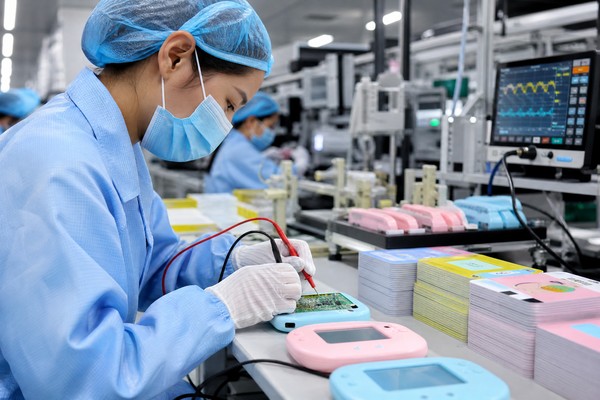
In the context of talking flash card machines, the distinction between OEM and ODM centers around who owns the intellectual property and who handles the initial engineering.
Original Equipment Manufacturing (OEM) implies that the buyer provides the complete design, including PCB layouts, CAD models for the plastic housing, and specific acoustic requirements. The factory simply executes the manufacturing process according to these strict specifications. According to industry reports, OEM allows for maximum brand differentiation but requires substantial upfront R&D investment [1].
Original Design Manufacturing (ODM), on the other hand, means the factory has already developed the core product architecture. Buyers select an existing model—such as a pastel cat-shaped or bear-shaped flash card reader—and customize it with their brand logo, packaging, and perhaps a specific set of localized flashcards. This approach significantly reduces time-to-market and engineering risk, making it the preferred choice for 65% of new educational toy brands entering the market [2].
Why Should Importers Consider ODM for Their First Product Launch?
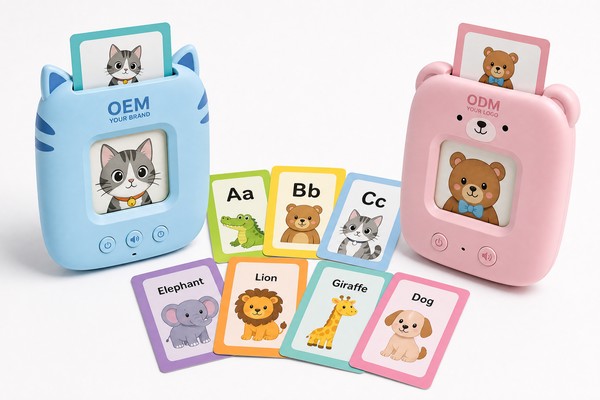
For startups and Amazon FBA sellers, launching a new electronic toy involves significant regulatory and engineering hurdles. Choosing an ODM model for talking flash cards offers several strategic advantages:
- Accelerated Time-to-Market: Developing a custom PCB with a 16-bit audio decoding chip and PCM battery protection can take 3-6 months. An ODM product is already engineered and tested, allowing brands to launch within 30-45 days.
- Reduced Tooling Costs: Plastic injection molds for a new toy housing can cost between $3,000 and $10,000 depending on complexity. ODM eliminates this upfront capital expenditure because the factory owns the molds.
- Pre-Certified Compliance: Reputable ODM factories like Toyvao ensure their base models already meet international safety standards, such as EN71, ASTM F963, and FCC regulations [3].
How Does OEM Provide a Competitive Moat for Established Brands?
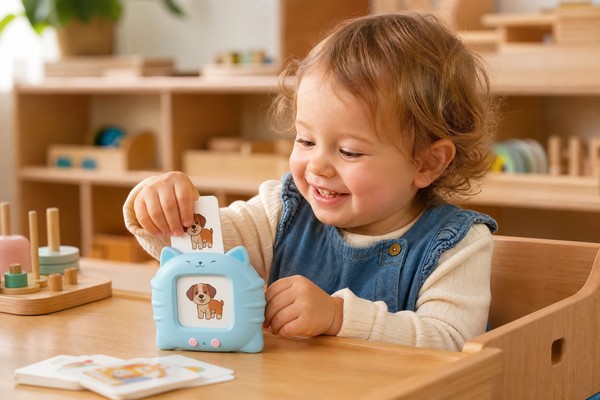
While ODM is excellent for speed and cost-efficiency, established educational brands often transition to OEM to secure a long-term competitive advantage. By investing in proprietary designs, brands can integrate unique features that competitors cannot easily replicate.
For instance, an OEM project might involve integrating Bluetooth connectivity, proprietary voice recognition algorithms, or unique tactile feedback mechanisms designed specifically for children with autism or speech delays [4]. Furthermore, owning the design patents prevents other sellers from sourcing the exact same product, thereby avoiding price wars on platforms like Amazon.
What is the Cost and Timeline Comparison Between OEM and ODM?
Understanding the resource allocation required for each model is crucial for strategic planning. The following table outlines the typical differences when sourcing talking flash cards from a Shenzhen factory:
| Parameter | OEM (Custom Design) | ODM (White Label) |
|---|---|---|
| R&D Lead Time | 3 – 6 Months | 0 Days (Ready to Manufacture) |
| Tooling/Mold Cost | $3,000 – $10,000+ | $0 (Included in Unit Cost) |
| Minimum Order Quantity (MOQ) | 3,000 – 5,000 Units | 500 – 1,000 Units |
| Intellectual Property | Owned by Buyer | Owned by Factory |
| Compliance Certification | Buyer’s Responsibility (Factory Assists) | Factory Pre-Certified |
| Unit Cost | Generally Lower at High Volumes | Slightly Higher (Amortized R&D) |
How to Choose the Right Manufacturing Partner in China?
Whether you opt for OEM or ODM, selecting a factory with deep expertise in early educational electronics is paramount. A reliable partner should offer transparent communication, robust quality control (such as 100% audio testing and battery safety checks), and a clear understanding of international compliance.
At Toyvao, we specialize in both OEM and ODM manufacturing of talking flash cards. Our engineering team ensures every product features a 16kHz sampling rate for crystal-clear audio and utilizes UN38.3 certified Li-Po batteries with PCM dual-IC protection boards. We partner with global brands to deliver safe, engaging, and high-quality educational toys.
Ready to start your custom talking flash card project? Contact Toyvao today for a comprehensive manufacturing consultation.
Email: sales@toyvao.com
WhatsApp: https://wa.me/8618681064480
Display Phone: +86 186 8106 4480
References
[1] Grand View Research. (2023). Educational Toys Market Size, Share & Trends Analysis Report.
[2] The Toy Association. (2024). Manufacturing Trends in the Global Toy Industry.
[3] Consumer Product Safety Commission (CPSC). (2023). Safety Standards for Children’s Electronics.
[4] American Academy of Pediatrics (AAP). (2022). The Role of Interactive Toys in Early Speech Development.
Related Articles
Useful Resources
