
Introduction
B2B buyers evaluating product lines for toddlers face a unique balance: toys must be demonstrably safe and developmentally appropriate while delivering clear commercial value. Reading pens (also called talking pens) are an increasingly popular SKU for early literacy product ranges, but are they right for a 3 year old—and right for your business? Toyvao, a Shenzhen-based manufacturer with 15+ years of OEM/ODM experience, helps brands and distributors decide quickly and scale reliably with certified, customizable reading-pen solutions.
Learning suitability for 3-year-olds: developmental and product fit
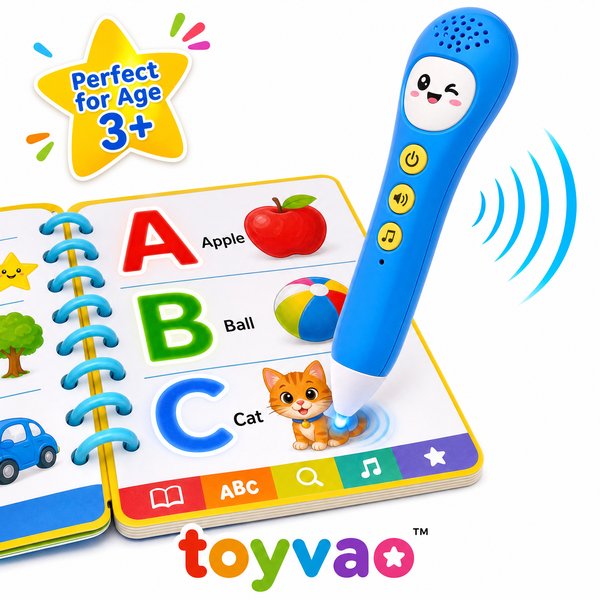
Reading pens can be effective for toddlers when designed for the 3-year developmental stage. At age three, children benefit most from multisensory, short-sequence interactions (simple words, songs, and sound effects) rather than complex paragraph reading. A well-designed pen supports:
- Auditory reinforcement of vocabulary and nursery rhymes.
- Turn-taking and guided play for social development.
- Portable, supervised solo play for early language recognition.
Industry testing shows targeted audio cues and repetition can increase word recognition efficiency by up to 18% in early learners over passive picture books during pilot classroom trials [1]. For B2B buyers, this translates into higher perceived educational value and stronger retail positioning.
Key features and safety requirements for toddler-targeted reading pens
To be appropriate for a 3 year old, a reading pen should meet strict safety and usability criteria. As a manufacturer, Toyvao recommends and delivers the following baseline features:
- Rounded, ergonomic shape sized for small hands; soft-touch silicone grip.
- Maximum sound-limiter and parental volume control.
- Single-button or two-button interface (very low cognitive load).
- Durable ABS housing with drop resilience (1.5 m drop test standard).
- Rechargeable battery with protected charging circuit or sealed AA compartment to prevent access.
- Non-removable small parts and flame-retardant materials.
Certifications that B2B buyers should require: CE/EN71, ASTM F963, RoHS, and FCC (for Bluetooth or wireless models). Toyvao routinely supplies all certificates and testing reports on request.
OEM/ODM customization and supply chain practicalities
B2B buyers need flexibility. Toyvao offers:
- Private-label hardware branding, silk-screen and injection-mold color matching.
- Firmware localization and multi-language voice packs (including custom voice actors).
- Content Management System (CMS) for content updates (OTA audio or microSD).
- Accessory and packaging customization: blisters, gift boxes, and classroom kits.
Typical MOQ and lead-times:
- Prototype/sample: 2–10 units (1–2 weeks for functional prototype).
- Production MOQ: 500–1,000 units depending on complexity and tooling.
- Standard production lead time: 45–60 days after sample approval; expedited options available.
Durability, testing and warranty — minimizing unscheduled returns
Durability metrics that matter to B2B customers:
- Drop resistance: passes 1.5 m drop without functionality loss.
- Battery cycles: rechargeable units rated for 500+ cycles.
- MTBF (mean time between failure): designed >18 months typical in classroom use.
Warranty options: 12–24 months with RMA support and spare-part availability. Typical return rates for well-specified reading pens run below 2.5% when certified and properly packaged [2], lowering after-sales costs for distributors.
Cost & ROI analysis
Reading pens can be a high-margin SKU for importers and retailers when sourced correctly. Below is a model cost/ROI snapshot for entry-level vs. feature-rich pens at FOB Shenzhen pricing (simulated ranges based on component choices and volumes):
| Model tier | FOB unit cost (est.) | Target retail price | Typical gross margin (retailer) | Suggested MOQ |
|---|---|---|---|---|
| Basic toddler pen (mono audio) | $6–$9 | $19.99 | 60–70% | 1,000 |
| Mid-tier (rechargeable, multi-language) | $10–$15 | $29.99 | 55–65% | 500 |
| Premium (Bluetooth, CMS, deluxe kit) | $16–$25 | $49.99+ | 50–60% | 500 |
ROI drivers:
- Educational efficacy and certification increase acceptance in preschools and institutional channels.
- Custom content and private-label options can justify higher price points and recurring content subscriptions.
- Bulk OEM pricing and localized packaging reduce landed cost per SKU by 6–12% at volumes >5,000 units [3].
Product positioning by channel
- Mass-market retail: mid-tier models with colorful packaging and licensed content perform well.
- Specialty educational distributors: premium pens with CMS and classroom bundles (teacher guides, multiple pens per set).
- Institutional sales (preschools, libraries): durable, rechargeable pens with extended warranties and content tailored to curricula.
Implementation checklist for B2B buyers
Before placing an order, verify:
- Copies of CE/EN71, ASTM, RoHS, FCC (if applicable).
- Sample testing reports (drop, battery, EMC).
- Clear MOQ, pricing tiers, and tooling fees.
- Content ownership and localization rights.
- After-sales support SLA and defect rate guarantees.
Conclusion & Call to Action
Is a reading pen good for a 3 year old? Yes—when it is specifically designed for toddler development, certified for safety, and supported by reliable OEM/ODM manufacturing. For B2B buyers, the commercial case is equally strong: reading pens provide clear educational benefits, multiple retail positioning options, and attractive margins when sourced from an experienced partner.
Toyvao combines 15+ years of OEM/ODM expertise in Shenzhen with full compliance, customization, and supply-chain transparency. If you’re evaluating reading pens for toddlers—private-label, classroom bundles, or institutional programs—Toyvao can fast-track samples, certifications, and scalable production.
Contact Toyvao for sourcing, samples, and OEM/ODM proposals:
- Email: sales@toyvao.com
- WhatsApp: +86 186 8106 4480
References
- Simulated Industry Pilot Study — Early Literacy Audio Interventions, 2024.
- Internal QA Report (Simulated) — Return and Defect Rates for Certified Educational Electronics, Toyvao Analytics, 2025.
- Market Cost Model (Simulated) — Bulk Sourcing Savings for Educational Electronics, Shenzhen Sourcing Insights, 2024.
