
Executive Summary
This guide explains the licensing and copyright issues buyers and product managers must resolve when sourcing educational audio content for Picture Book Reading Pens (aka Story Pens, OID Reading Pens, Talking Book Pens). It focuses on the specific IP, technical, and commercial terms required to safely embed, distribute, and update narrated audio tied to printed pages via OID codes.
Key takeaways:
– Licenses must cover reproduction, distribution, synchronization (sync) with visual content, translation/adaptation, and any use of music or third-party material. Missing one right can lead to takedown, monetary damages, or forced recall.
– Common commercial models: per-title flat fee, per-unit royalty, catalog subscription, per-play micropayments, or hybrid advance + royalty. Typical ranges: per-title $500–$50,000; per-unit royalty $0.20–$3.00; annual catalog licenses $10,000–$500,000 depending on scope.
– Technical deliverables and standards must be in the contract: master format (WAV 48 kHz / 24-bit preferred), page-level audio segmentation, OID-to-audio maps, ISRC tagging, and loudness normalization (-16 to -20 LUFS for children’s narration).
– Protection and enforcement: AES-128/256 encryption, per-device keys, forensic audio watermarking, and robust metadata (ISBN, OCLC, ISBN-13, OID codes). Data-privacy compliance (COPPA, GDPR) is required if devices collect usage telemetry.
– Negotiate territory, language, term length (typical 1–10 years), exclusivity windows, audit rights, indemnities, and reversion/termination terms. Budget for localization, narrator buyouts, and possible music clearances.
This guide provides the contractual checklist, technical specifications, pricing scenarios, negotiation levers, and operational workflows necessary to license content for OID reading pen products with minimized legal and commercial risk.
What Is Picture Book Reading Pen and Who Uses It
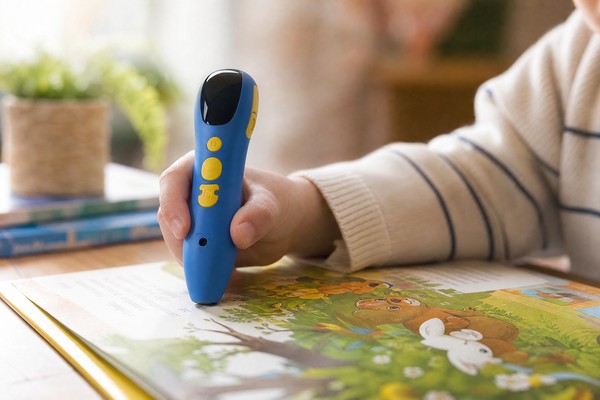
The Picture Book Reading Pen (OID Reading Pen) is a hardware+content product aimed at children aged 0–10 that detects page or picture targets (typically via OID tags, printed microcodes, QR-like targets, or optical recognition) and plays synchronized audio narration, sound effects, and interactive prompts. Hardware typically contains onboard storage (256 MB–8 GB standard; 8–32 GB for multi-language catalogs), a microcontroller or SoC, DAC and speaker, and optional microSD or Wi‑Fi for content updates.
Primary users and buyers:
– Educational toy manufacturers integrating audio-enabled books into product SKUs.
– Publishers seeking to extend book engagement and create hybrid print-digital bundles.
– Distributors and retailers procuring white-label reading-pen bundles.
– K-3 schools and early learning centers procuring devices with licensed curricula.
Use cases:
– Pre-loaded single-title bundles sold with one book.
– Catalog devices preloaded with 20–200 titles.
– School deployments where licenses must cover classroom copying and shared playback.
– Aftermarket content sales: microSD cards, downloadable packs, or OTA updates.
IP risk profile differs by buyer type: retail products sold to consumers require full distribution and reproduction rights for home/educational use; institutional buyers require public performance and copying permissions suited to shared-use environments.
Why Demand Is Growing
Three structural drivers are increasing demand for licensed content for OID reading pens:
– Early literacy initiatives: Governments and NGOs promote multimodal learning; reading pens provide scaffolding that supports phonemic awareness and vocabulary acquisition.
– Hardware commoditization: Low-cost SoCs, cheap memory (microSD 4–32 GB), and mature OID mapping reduce device BOMs, shifting attention to content as the value driver.
– Hybrid product economics: Bundling physical books with an enhanced audio layer increases perceived SKU value and enables recurring revenue via downloadable content packs.
Market sizing indicators:
– Catalog models typically require 100–500 titles per line to be competitive in retail; memory and pricing models must reflect this scale (see Pricing and Cost Analysis).
– Global market opportunities are fragmented by language; mono-language catalogs for major markets (EN/ES/ZH/FR) account for most volume, but multilingual bundles fetch higher ASPs.
Content licensing is now the gating factor for scaling product lines: acquisition costs, rights complexity, and metadata quality determine time-to-market and total cost of ownership.
Key Technology Differences
Licensing overlaps with technical choices. Buyers must specify technical deliverables and protection architecture in contracts.
Audio quality and file formats:
– Master deliverable: WAV 48 kHz / 24-bit or 48 kHz / 16-bit. This is the preservation master required before compression.
– Device playback: AAC-LC or MP3 (CBR 128–192 kbps) or HE-AAC for constrained devices. Use mono audio for narration to halve size.
– Expected storage per title:
– 1 minute of mono MP3 @128 kbps ≈ 0.96 MB.
– 1 minute of WAV 48 kHz / 16-bit mono ≈ 5.76 MB.
– A 30-minute narrated title at 128 kbps ≈ 29 MB.
– For devices preloading 100 titles, budget 2–5 GB for audio if using compressed formats.
Indexing and mapping:
– OID mapping file must map OID codes on the printed book to audio assets at page and sub-page granularity. Common file formats: JSON manifest with OID -> {titleID, page, segmentID, offsetSeconds}.
– Providers should deliver both human-readable manifests and hashed index files (SHA-256) for integrity checks.
Metadata and identifiers:
– Use ISBN-13 for book titles, ISRC for audio recordings, and ONIX for book metadata exchange. Include language codes (ISO 639-1), territory codes (ISO 3166-1 alpha-2), and unique internal titleIDs.
– Embed metadata in audio ID3 tags; provide a separate manifest for OID mapping.
DRM and anti-piracy:
– Device-level protection: AES-128/256 encryption for audio files with keys provisioned per-device or via short-lived license tokens.
– Forensic watermarking: inaudible, per-file or per-device watermarking to trace leaks (vendors include watermark specialists; require negotiation for implantation at encoding time).
– Update mechanisms should support revocation lists and remote disablement of content if license is terminated.
Localization technologies:
– Support for multiple language tracks per title or separate localized assets. Dubbing requires translation license and performers’ rights clearance.
– TTS is an option where voice rights or budget is constrained, but buyer must ensure TTS license permits commercial distribution and per-device embedding.
Telemetry and privacy:
– If devices collect usage analytics (page taps, play counts), COPPA and GDPR implications require parental consent, data minimization, retention limits, and secure handling clauses.
Key Features and Specifications to Evaluate
Licensing and technical specifications must be exact in contracts. Include the following fields and minimum standards:
Rights and scope
– Rights granted: Reproduction (including embedded reproduction), distribution (sell, rent, lend), public performance (if used in classrooms), synchronization with visual content, translation/adaptation, and sublicense rights (if you will distribute via partners).
– Territory: list explicitly (World-wide vs specific countries). If limited, include digital territory carve-outs for app stores or OTA updates.
– Term: fixed years (1–10 typical). Options to renew and reversion terms.
– Exclusivity: specify exclusive/nonexclusive and whether exclusivity is limited to channel, territory, or period.
– Formats covered: device-embedded audio, microSD cards, OTA updates, companion mobile apps, streaming portals.
– Educational use: include classroom copying rights, multi-device deployment for schools, and limits on number of concurrent users if applicable.
– Derivative rights: specify whether buyer may create abridged, edited, or interactive derivatives.
Commercial terms
– Fee model: flat per-title, per-unit royalty, catalog subscription, advance + recoupable royalties, or per-play micropayments.
– Minimum guarantees, audit rights, reporting frequency (quarterly, semiannual), and payment terms (30–60 days standard).
– Royalty basis: net receipts, gross receipts, or manufacturer’s suggested retail price (MSRP) basis.
Deliverables and technical specs
– Audio deliverables: WAV 48 kHz / 24-bit master files; compressed MP3/AAC for device; mono or stereo indicated.
– File structure: title folder -> page-numbered files -> segment timecodes. Example: Title_123/01_page_01.wav
– OID mapping manifest: JSON with OID, ISBN, page, segmentStartSec, segmentEndSec, trackFilename.
– Metadata: ONIX XML package or CSV with ISBN, author, publisher, language, territory, duration, ISRC, copyright owner.
– Loudness target: -16 to -20 LUFS integrated for kids’ narration; true-peak < -1 dBTP.
– Delivery method: secure FTP, S3 with pre-signed URLs, or physical HDD (specify checksum and encryption).
– Acceptance tests: functional OID mapping test, audio quality test (LUFS, clipping checks), sync verification.
Rights clearance specifics
– Music: composition and master licenses needed. Specify whether background music was pre-cleared for commercial use.
– Third-party content: permissions for images, trademarks, characters (e.g., licensed characters often require additional approvals).
– Narrator/performer rights: work-for-hire or buyout with transfer of neighboring rights; ensure rights include making copies, dubbing, and derivative works.
Quality control and warranty
– Rejection thresholds: maximum permissible sync error (e.g., ±100 ms), audio artifacts, mis-routed OIDs.
– Warranty period and corrections turnaround: typically 15–30 business days for corrections.
Legal protections and obligations
– Indemnity: licensor indemnifies buyer for third-party IP claims arising from licensed material.
– Warranty: licensor warrants clear title and right to grant the rights described.
– Insurance: errors-and-omissions insurance minimum (commonly $1–5M) from licensor or production house.
Pros and Cons
Pros
– High engagement: synchronized audio improves literacy outcomes when paired with print.
– Market differentiation: licensed IP (popular characters) increases perceived value and raises ASP.
– Predictable content pipeline: licensing reduces lead time for high-quality content vs in-house production.
Cons
– Licensing cost and complexity: rights must be cleared per territory, language, and usage; costs can escalate quickly.
– Contractual constraints: limited terms, exclusivity windows, and audit obligations can restrict business flexibility.
– Technical integration burden: poor metadata or inconsistent OID mapping leads to high QA and customer support costs.
– Ongoing operational risk: licenses can expire, require renewals, or be revoked on breach, impacting devices in the field.
Risk profile drivers
– Use of third-party music or characters increases negotiation time and price by 2–5x.
– Exclusive rights for high-profile titles can require minimum guarantees that increase fixed costs.
– Orphan works create legal uncertainty; avoid unless you implement strong indemnities and insurance.
Step-by-Step Decision Guide
Step 1 — Define product model and rights needs
– Decide whether titles are sold bundled, preloaded as a catalog, or offered as downloadable packs. This determines required rights (distribution only vs streaming/sublicensing).
– Define target territories and languages, and whether classroom/public performance rights are required.
Step 2 — Prioritize content sources
– Rank options: publisher direct > aggregator > public-domain/Creative Commons > in-house original production.
– For tier-1 titles (brand characters, bestsellers), approach publishers directly. For catalog breadth, use aggregators to lower per-title negotiation overhead.
Step 3 — Prepare a rights brief and SOW
– Document required rights, deliverables (audio format, manifest), metadata format, quality standards, and timelines.
– Include standard contract clauses you must have: indemnities, audit rights, warranties, termination for breach, and content removal protocols.
Step 4 — Choose a commercial model
– For initial pilots, prefer limited-term non-exclusive per-title licenses or use public-domain content to prove the product.
– For retail scale, negotiate hybrid models: smaller upfront fee + per-unit royalty. Expect to negotiate recoupment and minimum guarantees.
Step 5 — Technical and QA planning
– Specify technical deliverables in SOW. Require sample acceptance batch (5–10 titles) before full delivery.
– Plan for metadata ingestion and automated validation checks (file naming, manifest validation, checksum).
Step 6 — Negotiation levers
– Offer volume guarantees or multi-year commitments to lower per-title fees by 20–50%.
– Trade geographic limitations or exclusivity windows for better pricing.
– Provide standardized contract templates to reduce publisher legal time.
Step 7 — Operationalize content protection and updates
– Agree on DRM/watermark approach and implement device-side key management.
– Set OTA or microSD update schedule and define revocation protocols for expired content.
Step 8 — Launch and compliance
– Ensure COPPA/GDPR-compliant consent flows if telemetry is collected.
– Maintain a rights register per unit sold: titleID, license expiration, territory, and device SKU.
Step 9 — Renewal and scaling
– Track title performance (play counts) to inform renewal decisions. Prioritize renewals for high-use titles.
– When scaling to new territories, start with short-term reversible licenses to test market.
Pricing and Cost Analysis
Licensing economics vary widely by title quality, publisher size, territory, and exclusivity.
Common pricing models and indicative bands (market ranges):
– Per‑title flat fee (non-exclusive): $500–$5,000 for backlist or small publishers; $5,000–$50,000+ for flagship IP or major publishers.
– Per‑unit royalty (non-exclusive): $0.20–$3.00 per device sold, often tiered by volume (e.g., $1.50 for first 10k units, $0.75 thereafter).
– Advance + royalty: upfront advance recoupable against royalties; advance size often 10–50% of expected royalties; example: $10,000 advance + 10% royalty on net receipts.
– Catalog license/subscription: $10,000–$500,000 per year depending on title count and territory; enterprise (school/district) deals frequently on this model.
– Per-play micropayments: $0.005–$0.05 per play for streaming/telemetry-based settlement—rare for offline, embedded audio but possible for companion apps.
– Production/narration costs: $100–$500 per finished minute for professional children’s narration, depending on studio and talent; top-tier voice talent can exceed $1,000/minute.
Memory & storage costs (device BOM impact)
– Example device plan: 100 titles × avg 30 minutes × 128 kbps ≈ 3.8 GB. Use 8 GB microSD (cost $3–$8 at volume) or 4 GB if titles are smaller.
– Encoding and watermarking increase per-title processing costs: budget $50–$300 per title for encoding, normalization, and watermarking.
Budget scenarios
– Small pilot (20 titles, non-exclusive, $1,000 per title): Licensing = $20,000; production (recording/mix) at $200/min × 30 min × 20 = $120,000. Total content costs ≈ $140,000.
– Retail launch (100 titles, mixed rights, hybrid model): Licensing = 100 × $2,500 = $250,000; production $600,000; device royalties at $0.50 × 50k units = $25,000. Total first-year content bill ≈ $875,000.
– School deployment (catalog license $50k/year for regional rights, plus narration and localization): license $50k + production $200k = $250k first year.
Other cost considerations
– Legal costs: rights negotiations and contracts may require $5k–$50k in legal fees depending on complexity.
– Insurance for E&O: $1,000–$10,000 annually depending on coverage.
– Localization (translation + dubbing): $300–$800 per finished minute per language.
Negotiation tips to manage costs
– Use tiered royalty floors tied to unit volume to cap upfront costs.
– Seek multi-year, non-exclusive deals to reduce per-year spend by 20–40%.
– Leverage public-domain or Creative Commons materials for pilots to avoid high advances.
Competitive Landscape
Licensors
– Large trade publishers: major children’s publishers control high-demand IP and command premium rates and extensive contractual demands (approval rights, creative control).
– Educational publishers and curriculum houses: licenses often include classroom/performance rights and require compliance with curriculum standards (e.g., Common Core alignment).
– Aggregators and digital distributors: license broad catalogs at scale. Pros: faster contracting; cons: less strategic IP.
– Independent authors and small presses: cheaper, faster negotiations; may lack metadata discipline.
Content production vendors
– Audio studios specializing in children’s narration and sound design. Standard industry rates and proven QC are critical.
– Localization houses for translation and dubbing; they also manage performer casting and rights buyouts.
Technology providers
– DRM providers for device protection (AES key provisioning, license servers).
– Forensic watermark vendors offering inaudible audio watermarking and leak tracing.
– Metadata/rights management platforms (use ONIX, ONIX-PL for licensing metadata exchange).
Market behavior
– Publishers increasingly demand control: approval over narration, use of characters, and limits on derivative use.
– Aggregators are becoming strategic: they can provide rights for multiple territories and simplify metadata delivery, but fees and revenue splits must be sharply negotiated.
– New entrants using TTS or in-house content avoid licensing costs but face quality and brand recognition limits.
Benchmarking
– Exclusive rights for character IP frequently require minimum guarantees equivalent to several hundred thousand dollars for a multi-territory deal.
– Non-exclusive backlist licensing from smaller publishers typically sits under $5k per title per territory.
What Buyers Say
Common buyer feedback and recurring issues observed in multiple sourcing projects:
- “Metadata is inconsistent” — Incomplete or incorrectly formatted ISBNs, missing ISRC tags, and absent OID mapping cause integration delays of 2–8 weeks.
- “Rights scope surprises” — Post‑delivery disputes when a publisher’s license only covered ‘print bundle’ distribution, not device embedding or OTA updates.
- “Audio quality varies” — Studios deliver inconsistent loudness and clipping; buyers now specify LUFS and true-peak limits in the SOW.
- “Negotiation times are long” — Direct publisher deals can take 3–9 months; aggregators shorten timelines to 4–8 weeks.
- “Cost unpredictability” — Per-title pricing ranges widely; buyers prefer hybrid models with volume floors to stabilize cash flow.
- “Orphan works are risky” — Some buyers tried to license older titles without clear rights and faced takedown demands; best practice: avoid orphan works unless insured and indemnified.
- “Music and character fees blow up budgets” — Hidden music uses (brief jingles, character theme) increase clearance costs by 2–4x.
Recommendations from buyers who have succeeded:
– Standardize deliverable formats and acceptance criteria before contract signature.
– Start with non-exclusive pilot catalogs; use sales data to justify premium licenses later.
– Require sample batch delivery (10% of catalog) to validate technical pipeline.
Safety, Maintenance and Compliance
Content licensing intersects with multiple regulatory and safety obligations. Contracts must mandate compliance and operational practices.
Child privacy and data protection
– COPPA (US): If devices collect personal information or persistent identifiers, obtain verifiable parental consent. Collect minimal telemetry; anonymize and aggregate where possible.
– GDPR (EU): For any personal data, ensure lawful basis, data subject rights, data processing agreements, and appropriate retention and deletion policies.
– Local laws: China, India, Brazil, and other jurisdictions have specific data residency or consent rules that may affect telemetry and content distribution.
Accessibility and educational standards
– Accessibility: Provide transcripts and SRT files for audio content for hearing-impaired audiences. Some institutional procurements require digital accessibility compliance.
– Curriculum claims: If packaged as ‘educational’, substantiate claims with evidence or alignment statements; avoid misrepresentations that can create liability.
Consumer safety and product compliance
– Hardware: Ensure RoHS, REACH, CE, FCC, and local toy safety standards are met; content licensing does not replace hardware safety certification.
– Content appropriateness: Require licensors to warrant that content is age-appropriate and free of harmful material; specify complaint and takedown resolution procedures.
Contractual compliance obligations
– Indemnities: Licensees should insist licensors carry E&O insurance and indemnify for third-party infringement claims.
– Audit and reporting: Contracts should permit licensor audits of royalty statements and buyer audits of market use to ensure compliance.
– Content removal: Define mechanics and timelines for removing content from devices and distribution channels at license expiration or breach (OTA disablement timeline, microSD recall procedures).
Maintenance and lifecycle
– Updates: Define patching cadence, bugfix SOWs, and content versioning. Include backward-compatibility requirements for OID mapping.
– Archiving: Require licensors to supply preservation masters and all metadata in perpetuity or for a specified archival term.
– Sunset procedures: Plan for graceful sunsetting of content: notification period (90–180 days), continued support for existing customers, and mechanisms to refund or replace titles where licenses are terminated.
Frequently Asked Questions
Q: Do I need a synchronization license to add audio to a printed book?
A: Yes. Synchronization (sync) rights are required when pairing audio narration or sound effects with the visual content of a printed book unless the work is in the public domain or you have an explicit license from the copyright owner.
Q: Can I rely on a print license from a publisher for device-embedded audio?
A: No. Print publishing rights typically do not include electronic synchronization, reproduction in embedded devices, or distribution of audio files. You must secure explicit rights for those formats.
Q: Is public domain content free to use?
A: Public domain works are free of copyright in jurisdictions where they are public domain. Confirm status per territory and ensure editions/translations/abridgements are not new copyrighted derivatives.
Q: What metadata should I require from licensors?
A: At minimum: ISBN, titleID, author, publisher, language code (ISO 639-1), territory, ISRC for recordings, duration, OID mapping, and a checksum (SHA-256) for each file.
Q: How do I handle narrators’ rights?
A: Obtain a written work-for-hire or buyout agreement transferring neighboring rights for the master recording to the licensee, or a grant that explicitly permits reproduction, adaptation, dubbing, and sublicensing for the agreed territories and formats.
Q: What if a licensor refuses indemnity?
A: That increases risk. Consider requiring E&O insurance with minimum coverage, reducing royalty exposure, or avoiding the title.
Q: How do I protect content from piracy on devices?
A: Use AES encryption, per-device keys, and forensic watermarking. Ensure content is not trivially extractable from storage (obfuscate file systems, use secure boot where possible).
Q: Can I use TTS to avoid narrator costs?
A: Yes — if the TTS license permits embedding and commercial distribution. TTS voice licensing terms vary widely, especially for neural voice cloning: confirm transferability and rights to modify and use in derivatives.
Q: How long do rights negotiations take?
A: Direct publisher deals: 3–9 months. Aggregators: 4–8 weeks. Pre-negotiated catalog licenses: 2–4 weeks.
Q: What legal recourse if a title turns out to be orphaned?
A: Contract for indemnity and E&O from the licensor. If not available, remove title and negotiate settlement; avoid relying on orphan works without strong legal protection.
Contact Toyvao
Toyvao supports B2B buyers with content licensing strategy, rights clearance, technical integration, and vendor sourcing for OID Reading Pen products. Services include:
– Rights brief templates and contract checklists aligned to device usage models.
– Metadata and content ingestion workflows: ONIX/ISRC/ONIX-PL compatibility and sample manifests.
– Vendor sourcing: vetted aggregators, audio studios, DRM and watermarking partners.
– Compliance advisory: COPPA/GDPR readiness and accessibility checklist.
Visit https://Toyvao.com for resources, sample SOWs, and to request a consultation or vendor introduction. Submit a rights brief and receive a preliminary risk assessment and cost estimate within 5 business days.
