
Executive Summary
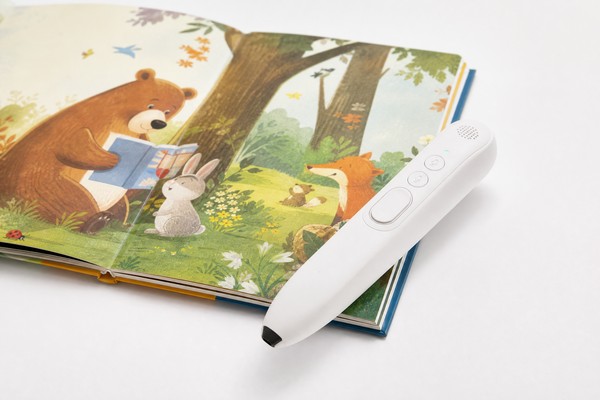
Picture Book Reading Pens (also called Story Pens, Talking Book Pens, or OID Reading Pens) are small handheld electronic devices that convert printed codes or touched points on a book into pre-recorded audio. They combine solid-state memory, a microcontroller, a speaker, microphones, and often rechargeable lithium batteries and wireless modules. Cross-border shipments of these devices present a specific set of logistics, customs, regulatory and cost risks: uncertain HS classification, battery/dangerous-goods constraints, product-safety compliance (toy/electrical standards), preferential-origin paperwork, and documentation accuracy that affects valuation and duty.
This guide gives procurement and logistics managers the practical information needed to move picture book reading pens across borders with minimal clearance delays, predictable landed cost, and regulatory compliance. It covers likely HS code options and the decision criteria for classification, the documentation checklist (including battery and safety declarations), duty and VAT/GST considerations for major markets, key compliance standards (EN71, CE, FCC, IEC 62133), and an operational step-by-step decision flow for buyers and sellers. It also addresses common commercial pitfalls (wrong HS, missing UN 38.3 battery evidence, incomplete invoice details), sample cost impact scenarios, and where to obtain binding rulings or confirmations.
Use this guide to: reduce customs holds, avoid fines and retrospective reassessments, negotiate correct Incoterms, and design a compliant shipment plan that incorporates testing and labeling lead times.
What Is Picture Book Reading Pen and Who Uses It
Product description
– Function: Handheld electronic pen that, when tapped on a pre-printed picture book or special dot-coded surface, plays recorded narration, sound effects, words, or translations. Some models also record, play back user recordings, connect to apps via Bluetooth, or stream content via Wi‑Fi.
– Typical hardware: MCU (ARM Cortex‑M class), flash memory 4–64 MB or higher (some on-board SD or eMMC), mono speaker (0.5–3 W), microphone, rechargeable lithium-ion/polymer battery (100–1000 mAh), charging circuitry (micro‑USB or USB‑C), push buttons, LED indicator. Weight typically 30–120 g; dimensions typically 120–170 mm length, 20–35 mm diameter.
– Packaging: Individual retail boxes often include pen, USB charging cable, 1–3 sample storybooks. Bulk shipments may be loose-packed in master cartons or palletized in 20/40 ft containers for sea freight.
Who buys and uses them
– Primary buyers: toy wholesalers, educational publishers, curriculum buyers, e-commerce retailers, distributors targeting children’s educational products, NGOs for literacy programs.
– End users: children age ranges 2–10, parents, bilingual/ESL programs, preschools.
– Sales channels: retail stores, online marketplaces (Amazon, Alibaba, Target/Walmart for US), institutional procurement (schools, libraries).
Business importance
– High SKU complexity: model variants tied to language packs and licensed content. Content licensing affects customs classification (goods vs. bundled digital service).
– Battery presence and electronics change logistics compared with plain paper books — higher paperwork and possible air-mode restrictions.
– Regulatory scrutiny: falls at intersection of “toys” safety rules and “electrical equipment” requirements.
Why Demand Is Growing
Market drivers
– Technology-enabled learning adoption: increasing uptake of blended physical-digital early literacy products in emerging and developed markets.
– Content localization: publishers rapidly deploy multilingual packs, generating regular reorders and cross-border shipments to local distributors.
– E-commerce penetration: international sellers list reading pens on marketplaces, increasing small‑parcel cross-border movement that demands correct duties and paperwork to avoid consumer returns and transit delays.
– Government and NGO literacy programs: bulk procurements for educational development, especially in low- and middle-income countries.
Logistics implications of growth
– More frequent small-batch shipments (samples, MOQ-limited runs) and high-volume container loads coexist, requiring dual logistics strategies.
– Greater frequency increases exposure to classification disputes, anti-dumping checks, and seasonal rush surcharges.
– Battery rules and safety compliance create predictable chokepoints: manufacturers and exporters that pre-certify and document compliant shipments see shorter release times.
Key Technology Differences
Why technology matters to customs and carriers
– Battery type and capacity determine whether a shipment is classified as dangerous goods for air and sea, and whether special packing and documentation are required.
– Presence of radio modules (Bluetooth/Wi‑Fi) triggers telecom and radio type approvals (FCC/IC/NCC/CE R&TTE history).
– Memory/recording capability affects whether the device is treated as a “toy” or an “electronic recording/processing device” under tariff classification.
Primary technology variants and their logistic impact
– Non-rechargeable alkaline battery models
– Logistic impact: fewer restrictions; often not classified as dangerous goods. Fewer carrier limitations; can move in air with standard paperwork.
– Rechargeable lithium-ion/polymer battery installed in device
– Logistic impact: may be subject to UN 38.3 testing evidence and IATA/IMDG rules; state-of-charge limits (<30%) may apply for passenger aircraft; many carriers require pre-approval for cargo aircraft. Incorrect handling can result in refused load or expensive rework.
– Models with removable, separately packed batteries
– Logistic impact: significantly higher documentation and label requirements; may require packing-in-equipment (UN 3481) or separate battery packages (UN 3480).
– Wireless-enabled models (Bluetooth/Wi‑Fi)
– Logistic impact: require radio approvals (FCC accreditation or local equivalent) and may require labelling and documentation to show certification; lack can block market entry.
– Offline-only models (no wireless)
– Logistic impact: less regulatory friction; still subject to toy/electrical safety requirements.
Key Features and Specifications to Evaluate
Technical specifications to collect pre-shipment
– Battery specification: chemistry (Li-ion/Li‑polymer vs alkaline), nominal capacity (mAh), voltage (V), whether removable. Provide exact cell model numbers and UN classification if available.
– Power adapter or charging cable details: output voltage/current (V/A), plug type, separate packing?
– Radio modules: chip vendor and module FCC ID / CE / IC certification numbers.
– Memory capacity: internal flash size, or external SD capacity; presence of removable storage.
– Firmware update mechanism: over USB, over-air (OTA), or none.
– Speaker power and SPL rating (if audio levels are relevant for acoustic/EMC testing).
– Dimensions, gross/net weight, units per retail carton, retail cartons per master carton, master cartons per pallet — required for packing list and freight unitization.
Commercial specifications affecting customs and freight
– Unit declared value (FOB or EXW), currency.
– Country of origin for components and final assembly (important for preferential tariff claims).
– Incoterm selected (FOB, CIF, DDP, DAP) — defines responsibility for duties, VAT, and customs clearance.
– HS code and tariff classification rationale (most commonly contested item).
– Certificates available: EN71 test reports, IEC/EN 62133, FCC MD, CE/EMC, RoHS, REACH, CPSIA/ASTM reports.
Operational specifications for carriers
– Packaging dimensions and palletization details (CBM per pallet).
– Dangerous goods classification and UN number for battery shipments if applicable.
– Temperature or humidity constraints for storage in transit (rare but relevant for some audio components).
Pros and Cons
Pros of cross-border procurement of reading pens
– Cost advantages: manufacturers in China and Southeast Asia typically offer lower unit costs and flexible MOQ.
– Speed to market: production cycles 30–60 days from order to shipment for many OEM runs.
– Content and language flexibility: manufacturers often support localized audio packs and white-labeling.
Cons and logistics risks
– Tariff and classification uncertainty: inconsistent HS classifications across jurisdictions can produce surprise duties and penalties.
– Lithium battery transport complexity: airline refusals, special packaging, and carrier surcharges increase costs and transit risk.
– Regulatory lead time: lab testing for toys and electronics (EN71, IEC 62133, FCC) can add 3–6 weeks and cost $2,000–$6,000 per model per market lab.
– After-sales support and returns: cross-border RMA handling for electronics is more expensive; spare parts may be delayed.
– Content licensing and IP: copyrighted audio content crossing borders can complicate customs valuation and licensing.
Step-by-Step Decision Guide
This step-by-step checklist is for procurement managers preparing an incoming shipment.
Step 1 — Product classification assessment (HS code)
– Collect full product technical specification, photos, intended use statements, packaging samples, and marketing materials.
– Evaluate functional primacy: Is the device principally a “toy” (for play/learning) or primarily an “electronic data/recording apparatus”? If designed and marketed as a toy for children and falls under toy safety norms, HS 9503 (toys) is commonly used. If positioned as an electronic learning aid with substantial data-processing capability (e.g., an e-reader-style pen with extensive connectivity), HS 8471 or electrical apparatus headings could be relevant.
– Obtain a preliminary classification from your freight forwarder or customs broker and document the rationale. For certainty, apply for binding classification: US Binding Ruling (CBP), EU Binding Tariff Information (BTI), UK Binding Tariff, or local equivalent.
Step 2 — Determine duty and VAT/GST exposure
– Once HS is selected, obtain specific duty rates for destination (MFN vs. preferential). Factor in potential additional tariffs (anti-dumping, Section 301, etc.) based on country of origin.
– Calculate VAT/GST and local import taxes. Determine whether customs value calculation includes CIF (cost + insurance + freight) or different bases.
Step 3 — Select Incoterm strategically
– For first shipments to a new country, prefer DDP (delivered duty paid) if you want turnkey and predictable landed cost for buyers; this shifts compliance risk to seller and speeds market entry.
– For repeat buyers with established customs agents, DAP/FOB can be used to optimize cash flow and reduce seller cost.
Step 4 — Compliance & testing
– Schedule product safety testing early: EN71 parts 1–3 (EU toy safety), EN 62133 (battery safety), IEC 62368-1 (electrical safety) or ASTM F963 and CPSIA (US).
– For models with wireless: secure relevant radio approvals (FCC ID for US, EU CE declarations, IC for Canada).
– For batteries: obtain UN 38.3 test report, IEC/EN 62133 certificate, and supplier declarations of conformity.
Step 5 — Prepare documentation
– Minimums: Commercial Invoice (detailed description, unit value, HS code, country of origin, Incoterm), Packing List (weights, dimensions, carton counts), Bill of Lading / Air Waybill, Certificate of Origin (if claiming preferential tariff), Safety certificates (test reports), Battery test reports, Export licenses (if any), Insurance policy.
– For US exports $2,500+ or requiring license: file Electronic Export Information (EEI) via AES.
Step 6 — Plan for battery shipping constraints
– Confirm battery type and whether they are installed or shipped separately. If lithium-ion installed in equipment, follow applicable UN/ICAO/IATA/IMDG instructions; obtain carrier acceptance.
– Notify freight forwarder and carrier, attach necessary labels and documentation; prepare for extra handling fees.
Step 7 — Book transport and customs brokerage
– Use experienced freight forwarders who handle electronics and lithium battery shipments. Consider consolidators for small parcels and bonded consolidation to reduce per-unit cost.
– Pre-pay duties and taxes or arrange buyer payment agreements to avoid release delays.
Step 8 — Pre-alert and arrival handling
– Provide the importer/agent with commercial invoice, packing list, and test certificates at least 48 hours before arrival. For high‑value consignments, consider customs bond or pre‑clearance.
Step 9 — Post-arrival compliance
– Retain test reports, supplier declarations, and invoices for audit window (typically 3–5 years depending on jurisdiction).
– If importer of record is different from buyer, ensure correct registration for WEEE/Battery producer obligations where required.
Pricing and Cost Analysis
Elements in landed-cost calculation
– Unit cost (EXW/FOB)
– Packing and labeling (per-unit and per-carton costs)
– Freight: air (express) vs sea (LCL/FCL) — air is charged by volumetric weight; sea by CBM
– Insurance: usually 0.1–0.5% of cargo value under ICC A depending on coverage
– Customs duty: percentage based on HS code and origin (0–12% typical range, but subject to local rules and additional tariffs)
– VAT/GST: recoverable in many B2B scenarios but cashflow impact at import
– Customs brokerage, handling charges: broker fees $30–$150 per shipment, plus local charges (THC, terminal, security)
– Battery surcharges and dangerous goods handling: carriers add surcharges; express couriers may add $15–$100 per parcel, air cargo carriers add several hundred dollars per shipment
– Peak-season surcharges, detention/demurrage, storage
Sample scenarios (indicative)
– Small parcel sample shipment (1 pen + 1 book) from China to USA via courier:
– Product value $25, courier door-to-door $35–$60, duty potential 0–4% (often de minimis $800 for US imports), VAT/GST none at federal level in US; bank of small surcharges may apply. Total landed ~$60–$100.
– Sea freight bulk (40′ HQ container) — 10,000 units, FOB Shenzhen $4.50/unit ($45,000 FOB)
– Sea freight (40′ HQ) $2,000–$6,000 depending on market ($0.20–$0.60/unit)
– Insurance ~0.2% = $90
– Duties (assume 3%) = $1,350
– Local charges, customs & broker, inland, palletization = $0.50–$1.00/unit
– Approx landed per unit before VAT: $4.50 + $0.30 + $0.135 + $0.75 = ~$5.685/unit (excluding VAT)
– Air freight 200 kg pallet to EU (express) — volumetric method may increase cost. Air freight can be $4–$8/kg plus handling — resulting per unit costs that render air uneconomic for large volumes.
Key cost levers to control
– Consolidate to FCL shipments to reduce per-unit freight.
– Optimize packaging density to reduce CBM and sea freight cost.
– Pre-certify products to avoid detention and testing delays which incur storage costs.
– Negotiate DDP or DAP terms based on who absorbs customs uncertainty.
Competitive Landscape
Manufacturing regions
– China remains the dominant OEM hub (Guangdong/Guangxi/Jiangsu provinces) with integrated supply chain for plastic injection, electronics, and audio content duplication. Vietnam and Bangladesh are growing for lower-labor packaging and assembly but have less electronics capability.
– Taiwan and South Korea supply higher-end module components (microcontrollers, audio chips).
– Component sourcing (batteries, Bluetooth modules) concentrated among a small set of suppliers — consider supply chain concentration risk.
Supplier types
– OEM factories producing white-label pens with variable units: MOQ commonly 1,000–5,000 units for basic models; sample availability for testing.
– ODM with product development: produces custom firmware or hardware updates — useful for branded releases and content-laden variants.
– Contract manufacturers (CM) handling packaging and fulfillment for DDP deliveries: best for buyers wanting turnkey solutions for specific countries.
Logistics service providers
– Forwarders with dangerous goods and children’s product experience reduce clearance times and handle commercial documentation accurately.
– Full-service trade compliance consultants assist with Binding Rulings, product classification, and local producer responsibilities (WEEE, battery take-back).
Market competition drivers
– Speed to market for new language packs and content: publishers prefer suppliers who can localize voice recordings rapidly.
– Price vs. compliance tradeoff: lower-cost suppliers may underreport battery or radio certifications; this saves upfront costs but risks import penalties and market rejection.
What Buyers Say
Common buyer feedback themes (aggregated from marketplaces, procurement forums, and logistics partners)
– “Battery paperwork is the biggest source of delay.” Buyers report 60–80% of shipment holds for these devices relate to missing UN 38.3 battery test or improper Dangerous Goods declaration.
– “HS code inconsistency caused surprise duties.” Multiple buyers report different duty rates for the same product across customs brokers — a binding tariff ruling solved many disputes.
– “DDP simplifies roll-out but costs more.” For retailers launching new SKUs, DDP shipments reduced returns and customer complaints despite 5–12% higher landed cost.
– “Content licensing occasionally causes customs questions.” When packaging includes copyrighted audio on flash memory or SD cards, customs in some countries requests proof of licensing or invoice breakdown of content vs hardware value.
– “Small parcel returns are expensive.” Cross-border RMAs of electronic pens are prohibitively costly for low-price units; many buyers require local warranty stock or repair partners.
Operational best practices reported by high-performing buyers
– Standardize on suppliers that provide a single documentation pack per model: test reports, UN 38.3, supplier declaration, radio approvals, and declared HS code with rationale.
– Use a dedicated customs broker experienced with children’s products and lithium batteries.
– Prefer 40′ FCL shipments where annualized volumes exceed 8–10k units to reduce per-unit freight and marginal customs handling.
Safety, Maintenance and Compliance
Regulatory pillars by major market
European Union
– Toy Safety Directive 2009/48/EC and EN 71 series (EN 71-1 mechanical/physical, EN 71-2 flammability, EN 71-3 migration of certain elements). CE marking required.
– EMC & electrical safety: EN 55032/55035 (EMC), EN 62368-1 or previously EN 60065 for electrical safety.
– Batteries: Battery Directive 2006/66/EC and EN/IEC 62133 for rechargeable cells. Obligations for producer registration, WEEE (2012/19/EU) compliance for EEE, and labeling.
– RoHS (2011/65/EU + amendment 2015/863) restrictions on hazardous substances in electronic parts.
United States
– Consumer Product Safety Improvement Act (CPSIA): limits for lead and phthalates; requires tracking labels and Certificates of Conformity.
– ASTM F963 is the toy safety specification; for electrical components also consider FCC Part 15 for radio emissions.
– Lithium battery safety: UN 38.3 testing evidence expected by carriers; specific transport rules per DOT/IATA apply.
Canada
– Canada Consumer Product Safety Act (CCPSA). Radio approvals via ISED; battery transportation rules similar to IATA/IMDG.
Australia
– AS/NZS standards parallel EU for battery and electrical safety; ensure product registration where required.
Key tests and lead times
– EN71 battery and mechanical tests: 2–4 weeks typical per lab per model, cost $1,000–$3,000 per test battery depending on complexity.
– IEC 62133 (battery safety): 3–6 weeks, $1,500–$4,000 per cell type.
– EMC and electrical safety tests (EN/IEC 62368-1): 2–6 weeks, $2,000–$6,000.
– FCC testing for radio modules: 2–4 weeks if module-certified; $1,500–$5,000 if full device testing required.
Battery shipping compliance
– UN Manual of Tests and Criteria, Part III, 38.3: mandatory for all lithium cells/batteries transported internationally. Carriers typically require a copy of the UN 38.3 test summary from manufacturer.
– IATA DGR and IMDG Code: classify shipments as UN 3480 (lithium-ion batteries) when shipped separately, UN 3481 when packed with or contained in equipment. Carriers often require state-of-charge and other declarations; some require <30% SoC for air shipments (especially passenger aircraft).
– Labeling: Class 9 lithium battery handling labels, cargo aircraft only labels if applicable, and handling documents (Dangerous Goods Declaration if required).
Maintenance and after-sales compliance
– Warranty handling: battery aging and safety recalls — manufacturer must have protocol to handle defective batteries under consumer protection laws.
– Spare parts: disposal and recycling obligations in certain markets (WEEE, Battery Directive).
– Local repair: recommended to stock spare battery units or work with a certified repair partner to avoid large returns.
Record retention
– Maintain test reports, CBIs, supplier declarations, and shipment records for at least 3–5 years (varies by market) for customs audits and safety agency inquiries.
Frequently Asked Questions
What HS code should I use for picture book reading pens?
– There is no universal single HS code. Two common approaches: classify under HS 9503 (toys — “other toys” or “electronic toys”) when designed and marketed primarily for children and play; or classify under electronic apparatus headings (e.g., 8519/8471 or 8543) if functionality centers on data/recording or computing. Obtain a binding tariff classification from the destination customs authority for certainty.
How are duties calculated?
– Customs use the HS code and country of origin to determine the rate. Customs value is generally the transaction value (price paid or payable) plus adjustments (shipping, insurance, commissions) depending on jurisdiction. VAT/GST is then applied on the customs value plus duty. Preferential origin claims (USMCA, bilateral FTAs) require validated Certificates of Origin.
Do I need UN 38.3 for lithium batteries?
– Yes. UN 38.3 testing and documentation are required for most international carriers to accept lithium cells/batteries. For air transport, IATA requires evidence and compliance with specific Packing Instructions. If batteries are not present (alkaline only), these rules generally do not apply.
What documentation must I include in the commercial invoice?
– Exact product description, model numbers, HS code (recommended), country of origin, unit and total value, Incoterm, net/gross weight, number of pieces, packaging description, supplier and buyer names and addresses, payment terms.
Should I ship DDP or FOB?
– For first-time entries into a market, DDP reduces customs risk and import friction but increases seller responsibilities and cost. For established buyers with customs capabilities and volume, FOB/DAP can be more cost-effective.
How long will certification and testing delay production?
– Testing packages typically require 3–8 weeks from sample receipt to report issuance depending on lab capacity and test scope. Factor this lead time into product launch schedules.
What are typical penalties for incorrect battery documentation?
– Carriers can refuse carriage; customs can detain and return or destroy shipments; fines vary by jurisdiction and severity. Additionally, unexpected storage, demurrage, and re-export costs can exceed initial penalties.
How to handle returns and warranties?
– Local repair hubs, authorized service partners, or stocking spare batteries reduce cross-border RMA costs. Consider a local repair and spare-parts provisioning plan for high-volume markets.
Contact Toyvao
For tailored assistance on classification, duty estimation, DDP logistics setup, or supplier vetting for picture book reading pens, contact Toyvao’s sourcing and compliance team:
– Visit: https://www.toyvao.com/contact
– Email: sourcing@toyvao.com
– Request items to provide for rapid review: product spec sheet, photos, sample commercial invoice, battery datasheet (if applicable), marketing copy/packaging images.
Toyvao can help prepare documentation bundles for customs, coordinate testing labs for EN/IEC/FCC reports, and arrange freight forwarders experienced with lithium battery shipments and children’s products.
