Choosing a supplier for bulk talking flash card sets is no longer only about hardware price or shipping lead times. The long-term commercial value for distributors, private-label brands, and educational licensors lies in the supplier’s curriculum and content-development capability — the engine that turns a toy into a learning product that sells, scales, and retains users.
Why curriculum capability matters for B2B buyers
Talking flash card sets compete in an educational toy market projected to reach $34.5 billion by 2028, driven by demand for high-quality learning experiences (Grand View Research). For importers and brand owners, partnering with a vendor that offers robust curriculum development means faster time-to-market, higher conversion from demo to sale, and greater lifetime value per unit.
Business outcomes tied to content quality
- Higher sell-through: Pedagogically sound content boosts perceived value and reduces return rates.
- Differentiation: Customized curricula enable private-label brands to avoid commodity pricing pressure.
- Regulatory & safety alignment: Content aligned to age-ranges and learning standards reduces compliance risk and marketing friction.
Key components of strong content-development capability
A trusted supplier’s content capability should be multidisciplinary: curriculum design, language experts, voice talent, audio engineering, and a scalable content management workflow.
Checklist: What to verify during supplier selection
- Pedagogical approach — phonics-first, whole-language, bilingual scaffolding, or thematic units.
- Assessment & progression — built-in difficulty levels and measurable milestones that increase repeat engagement.
- Localization — native-script audio, dialect variants, and culturally-appropriate imagery.
- IP & licensing — clear ownership and rights for use, modification, and resale in target markets.
- Content update process — OTA (over-the-air) or SD-card workflows for content refreshes and seasonal releases.
How curriculum capability reduces total cost of ownership (TCO)
Buying cheap hardware with weak content creates hidden costs: high marketing spend to explain learning outcomes, faster product obsolescence, and poor repurchase rates. A supplier that provides ready-to-deploy, standards-aligned curricula enables:
- Lower marketing costs — education-first assets simplify retailer sell-in and downstream promotion.
- Faster retailer acceptance — dealers and distributors prefer products with teacher guides and measurable outcomes.
- Upsell opportunities — sequenced content packs and subscription models that increase ARPU (average revenue per user).
Data-driven reasons to prioritize tactile curriculum products
Learning science matters in buying decisions. Children who use tactile learning tools show 40% better retention versus screen-based learning (Journal of Educational Psychology). For B2B buyers selling to parents and preschools, this data point directly supports premium pricing for well-designed talking flash card sets.
Additionally, 73% of parents rank “safe and non-toxic” as their top criterion when buying toys (NPD Group). Suppliers that couple curriculum excellence with certified, non-toxic materials reduce purchase friction and accelerate adoption in conservative markets.
Comparison: Product tiers and content capabilities
| Tier | Typical BOM Price | Curriculum Scope | Localization | Certifications | OEM/ODM Support |
|---|---|---|---|---|---|
| Basic | Low | Single-level vocabulary sets (300 words) | Single language, limited dialect | CE/ROHS | Minor branding only |
| Standard | Mid | Multi-level phonics & numbers (800+ items), teacher guide | 2–4 languages, basic localization | CE/ROHS, CPC | SKU customization, custom audio |
| Premium | High | Full curriculum mapping, assessment, subscription content | Full localization, cultural adaptation | All major markets + safety testing | Full OEM/ODM, content licensing, LMS integration |
Practical steps to evaluate a supplier’s curriculum capability
- Request sample lesson plans and measurable learning objectives per card set.
- Ask for a content roadmap: update frequency, seasonal modules, and platform compatibility.
- Validate voices and audio quality: request sample WAV/MP3 files recorded in the target dialects.
- Demand case studies: evidence of improved retention or classroom adoption, preferably with metrics.
- Confirm IP and licensing terms in writing — who owns the content and what rights you get.
Red flags to avoid
- No documented learning outcomes or curriculum alignment.
- One-size-fits-all audio with poor pronunciation or mechanical voices.
- Lack of an update mechanism — static content limits product life cycle.
- Unclear IP ownership or TOUs that restrict your regional sales.
Supply chain & market considerations
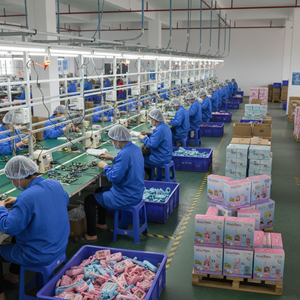
China remains the global sourcing hub for toys; its toy export value exceeds $38 billion annually (China Customs). When sourcing talking flash cards from Shenzhen or other hubs, prioritize vendors that combine manufacturing capacity with in-house educators and content studios. This integrated model shortens iteration cycles and reduces quality disputes that inflate landed cost.
ROI example for distributors
Compare two SKUs sold at the same retail price: a generic audio card set vs. a curriculum-backed set with measurable outcomes. The curriculum-backed set typically yields higher sell-through, lower return rates, and recurring revenue from content updates — factors that convert into a 10–30% higher margin over 24 months for many distributors.
Why does curriculum alignment increase retailer acceptance?
Retail buyers and educational channels require clear learning outcomes and teacher-facing materials; alignment reduces buyer hesitation and supports category merchandising decisions.
Can I rebrand supplier-developed curricula for private-label products?
Yes, most OEM/ODM suppliers provide rebranding and customization options, but you must confirm IP transfer or licensing terms in the contract.
What content formats should a supplier support?
Look for support for audio (high-bitrate WAV/MP3), image assets (vector or high-res PNG), LMS-compatible CSV metadata, and OTA update packages for scalability.
How important is localization for global rollouts?
Localization is crucial; localized audio and culturally-relevant imagery improve adoption and reduce negative feedback. Suppliers that offer multiple language tracks accelerate market entry.
Does strong curriculum capability justify a higher unit cost?
Yes. Strong curriculum increases sell-through, enables premium pricing, and supports recurring revenue from updates—improving ROI and shortening payback periods.
Ready to Source from Toyvao?
Contact us today for factory-direct pricing, OEM/ODM customization, and fast global shipping.
WhatsApp: +86 186 8106 4480
Email: sales@toyvao.com
Website: toyvao.com