
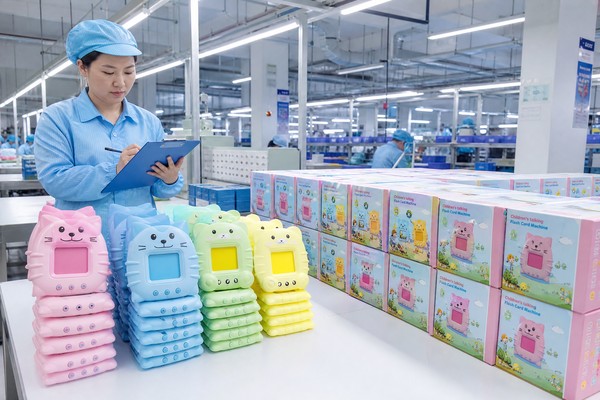
When sourcing early educational electronics like talking flash cards, understanding the Minimum Order Quantity (MOQ) is a critical step for B2B buyers, Amazon FBA sellers, and educational brands. The MOQ directly impacts your initial capital investment, inventory turnover, and overall supply chain strategy. At Toyvao, a Shenzhen-based factory specializing in children’s educational talking flash cards and walkie-talkies, we frequently guide clients through the complexities of order volumes. This comprehensive guide breaks down what MOQs you should expect, why they exist, and how to optimize your sourcing strategy.
Why Do Toy Factories Enforce MOQs?
MOQs are not arbitrary numbers set by manufacturers to frustrate buyers. They are deeply rooted in the economics of mass production, raw material sourcing, and operational efficiency. Understanding the “why” behind MOQs can help you negotiate better terms and plan your procurement effectively.
Raw Material Sourcing Constraints
The primary driver of MOQs is the supply chain of raw materials. To manufacture a talking flash card machine, we need ABS plastic resin, printed circuit boards (PCBs), speaker components, batteries, and the flashcards themselves (usually 300gsm or 350gsm copperplate paper). Suppliers of these raw materials impose their own MOQs on us. For example, a custom paper printing factory might require a minimum run of 5,000 decks to offset the setup costs of offset printing plates [1].
Production Line Setup Costs
Setting up an assembly line requires significant time and labor. Calibrating the injection molding machines, programming the IC chips with specific audio files, and configuring the automated testing equipment (ATE) all incur fixed costs. If the production run is too small, these setup costs disproportionately inflate the per-unit price, making the product uncompetitive in the market.
Quality Control and Certification Amortization
Maintaining rigorous quality control standards, such as EN71, ASTM F963, and FCC compliance, requires extensive testing. The cost of third-party laboratory testing is fixed per batch or product model [2]. Spreading these certification costs over a larger production run (e.g., 3,000 units) significantly reduces the cost per unit compared to a small run of 500 units.
What Are the Typical MOQs for Talking Flash Cards?
The MOQ you encounter will vary significantly based on the level of customization you require. We categorize MOQs into three primary tiers: Standard Wholesale, OEM (Original Equipment Manufacturer), and ODM (Original Design Manufacturer).
Tier 1: Standard Wholesale (White Label)
If you are purchasing existing, off-the-shelf models with standard packaging and pre-loaded audio content, the MOQ is typically very low. This is ideal for market testing or small e-commerce sellers.
- Expected MOQ: 100 to 500 units.
- Customization: None, or perhaps a simple logo sticker on standard packaging.
- Lead Time: 7 to 15 days (often available in stock).
Tier 2: OEM (Custom Branding and Packaging)
OEM is the most common tier for Amazon FBA sellers and private label brands. In this scenario, you use our existing hardware molds but customize the external branding, packaging, and potentially the flashcard content or language.
- Expected MOQ: 1,000 to 3,000 units.
- Customization: Custom logo printing on the device (silkscreen or pad printing), custom full-color retail box, customized manual, and potentially custom audio/card content (if the IC capacity allows).
- Lead Time: 25 to 35 days.
Tier 3: ODM (Completely Custom Design)
If you want a completely unique product—a new outer shell shape (e.g., a specific animal or mascot), unique electronic features, or proprietary educational content—you are looking at an ODM project. This involves creating new plastic injection molds and developing custom PCB layouts.
- Expected MOQ: 5,000 to 10,000+ units.
- Customization: 100% custom design from the ground up.
- Lead Time: 45 to 60+ days (including mold making and prototyping).
MOQ and Cost Structure Comparison
To illustrate how customization impacts MOQ and pricing, here is a simplified comparison matrix based on typical Shenzhen manufacturing standards:
| Sourcing Model | Expected MOQ | Tooling/Setup Costs | Per-Unit Cost (Estimate) | Ideal Buyer Profile |
|---|---|---|---|---|
| Standard Wholesale | 100 – 500 | $0 | Highest (Retail-minus) | Dropshippers, Market Testers |
| OEM (Custom Packaging) | 1,000 – 3,000 | $200 – $500 (Printing plates) | Medium (Wholesale) | Amazon FBA, Private Label Brands |
| ODM (New Mold/Design) | 5,000 – 10,000+ | $3,000 – $8,000+ (Injection molds) | Lowest (at scale) | Established Educational Brands, Large Retailers |
How to Negotiate MOQs with Chinese Manufacturers?
While MOQs are generally firm due to the constraints mentioned above, there is often room for negotiation, especially if you can demonstrate long-term value to the factory.
Strategy 1: Pay a Higher Per-Unit Price
If you cannot meet the MOQ of 1,000 units for an OEM order, you can offer to pay a premium for a smaller run (e.g., 500 units). The factory may agree if the higher price covers their setup inefficiencies. However, this will impact your profit margins.
Strategy 2: Standardize Components
Reduce customization to lower the MOQ. For example, use our standard device color but customize the packaging. Or, use our standard English audio cards but add your logo to the device. The closer you stay to our standard bill of materials (BOM), the more flexible we can be with the MOQ.
Strategy 3: Phased Rollout (The “Test Order” Approach)
Propose a smaller initial test order with a contractual commitment to a larger second order if the product sells well. At Toyvao, we sometimes accommodate serious B2B buyers with a lower initial MOQ to help them validate the market, knowing that a successful launch will lead to substantial reorders.
Conclusion
Understanding MOQs is essential for building a profitable and scalable educational toy brand. By aligning your customization needs with the appropriate MOQ tier, you can optimize your cash flow and establish a strong partnership with your manufacturing partner. At Toyvao, we pride ourselves on transparency and flexibility, working closely with our clients to find the right balance between customization and order volume.
Ready to start your custom talking flash card project? Contact Toyvao today for a detailed quotation and MOQ assessment.
Contact Us:
Email: sales@toyvao.com | WhatsApp: +86 186 8106 4480
References
[1] Grand View Research. “Educational Toys Market Size, Share & Trends Analysis Report By Product (Motor Skills, Academic), By Age Group, By Distribution Channel, By Region, And Segment Forecasts, 2023 – 2030.” Grand View Research, 2023.
[2] U.S. Consumer Product Safety Commission (CPSC). “Testing and Certification.” CPSC.gov, https://www.cpsc.gov/Business–Manufacturing/Testing-Certification.
Related Articles
- Minimum Order Quantity (MOQ) Custom Toy Manufacturing China
- Talking Flash Cards
- Private Label vs OEM vs ODM Toy Sourcing Model
Useful Resources
