
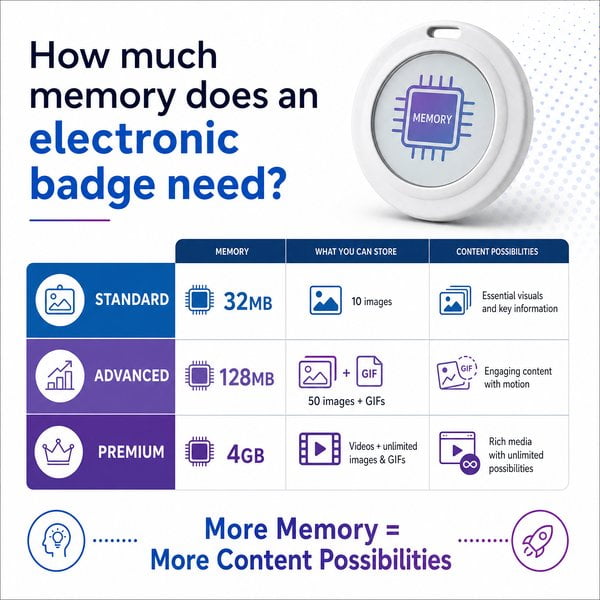
How Much Memory Does an Electronic Badge Need?
Electronic badges, also known as digital or anime badges, have revolutionized wearable technology by enabling users to display dynamic content such as videos, GIFs, and images directly on a compact touch-screen device. For manufacturers, distributors, and brand owners in the wearable tech market—which is projected to reach $186 billion by 2030 according to Statista—understanding memory requirements is crucial for delivering high-quality products that meet customer expectations. This article explores how much memory electronic badges need, factors influencing memory capacity, and how to optimize storage for diverse use cases.
Understanding Electronic Badge Memory Requirements
Memory in an electronic badge refers to the built-in storage capacity that holds multimedia files displayed on the device. These files typically include animations, short videos, GIFs, and images, which are uploaded via a companion smartphone app. The memory capacity directly impacts the number, quality, and length of content that can be stored and displayed without requiring frequent updates.
Key Factors Influencing Memory Needs
- Type of Content: Video files require significantly more memory than static images or GIFs. For example, a 10-second 480p video can occupy 5-10 MB depending on compression, whereas a high-resolution image may only need 1-3 MB.
- Number of Displayed Items: Badges designed to cycle through multiple animations or videos need greater memory than those showing a single image or animation.
- Resolution and Quality: Higher resolution content enhances visual appeal but demands more storage. Most wearable badges balance quality with memory constraints by using compressed formats like MP4 or GIF.
- Firmware and System Files: A portion of the badge’s memory is reserved for operating system firmware, user interface software, and security features.
Typical Memory Configurations for Electronic Badges
Electronic badges on the market generally come with memory ranging from 8 MB to 64 MB, tailored to different product tiers and user needs. Here is a comparison table summarizing typical configurations:
| Memory Size | Suitable Content Types | Typical Use Case | Ideal User |
|---|---|---|---|
| 8 MB | Few low-res GIFs/images | Basic badges with single animation | Entry-level consumers, budget buyers |
| 16 MB | Multiple GIFs and low-res videos (5-10 sec) | Standard badges with moderate content | Casual users, event giveaways |
| 32 MB | Multiple videos and images, higher resolution | Premium badges with diverse content | Brand promotions, collectors |
| 64 MB+ | Longer videos, HD content, extensive libraries | High-end badges with advanced multimedia | Corporate gifts, specialized marketing campaigns |
Why Memory Size Matters for B2B Buyers
When sourcing electronic badges, businesses must align memory capacity with their product positioning and target customer needs. Over-provisioning memory inflates costs, while under-provisioning leads to poor user experience, frequent content updates, and customer dissatisfaction.
Given the rapid growth of the wearable technology market, expected to reach $186 billion by 2030, manufacturers must optimize memory specifications to balance price, performance, and content versatility. Furthermore, as China remains a dominant force in toy and wearable exports—with a toy export value exceeding $38 billion annually—leveraging factory-direct partnerships can ensure competitive pricing for custom memory configurations.
Optimizing Memory Usage: Best Practices
- Use Compressed Formats: Adopt efficient media formats like MP4 for videos and optimized GIFs or PNGs for animations to maximize content stored per megabyte.
- Limit Content Length: Short, looped animations or videos reduce memory footprint while maintaining user engagement.
- Content Rotation: Implement content scheduling or remote updates via the companion app to refresh badge content without needing excessive onboard memory.
- Firmware Optimization: Choose badges with lightweight firmware to reserve more memory space for user content.
The Role of Safety and Quality Certifications
For children’s electronic badges, especially those targeted at kids aged 3 and above, safety is paramount. Industry research shows that 73% of parents prioritize “safe and non-toxic” as the primary criterion when buying toys (NPD Group). Therefore, selecting badges with certified components, non-toxic materials, and compliance with international safety standards is essential to succeed in global markets.
Conclusion
Determining how much memory an electronic badge needs depends on multiple factors including the type and quantity of multimedia content, quality expectations, and target market positioning. Typical memory ranges from 8 MB for basic models up to 64 MB or more for premium devices capable of displaying high-quality videos and animations. For B2B buyers, balancing memory size with cost and customer expectations is key to success in the booming wearable technology sector.
By partnering with experienced manufacturers like Toyvao in Shenzhen, businesses can access customizable memory configurations, factory-direct pricing, and rapid shipping to capitalize on this expanding market.
What is the minimum memory size recommended for an electronic badge?
The minimum recommended memory size is typically 8 MB, suitable for displaying a few low-resolution images or GIFs. However, for better versatility, 16 MB or higher is preferable.
How does memory size affect the user experience of electronic badges?
Larger memory allows storage of more and higher-quality videos and animations, providing a richer and more engaging user experience without frequent content updates.
Can electronic badges update content without increasing memory?
Yes, many electronic badges support content rotation or remote updates via smartphone apps, enabling fresh content without needing additional onboard memory.
While memory chips themselves pose minimal safety risks, overall product safety depends on certified components, non-toxic materials, and compliance with safety standards, especially for children’s products.
How can B2B buyers ensure they select the right memory size for their electronic badge products?
Buyers should evaluate the intended content types, quantity, quality expectations, and budget constraints. Consulting with manufacturers for customized solutions and reviewing market trends helps optimize memory investment.
Ready to Source from Toyvao?
Contact us today for factory-direct pricing, OEM/ODM customization, and fast global shipping.
WhatsApp: +86 186 8106 4480
Email: sales@toyvao.com
Website: toyvao.com
