
For ambitious B2B distributors and educational toy brands, relying solely on Amazon is a risky strategy. Diversifying sales channels across platforms like Walmart Marketplace, Shopify, Shopee (for Southeast Asia), and TikTok Shop is essential for scalable growth. However, managing inventory for talking flash cards across multiple platforms presents significant logistical challenges. This guide explores the best inventory strategies to prevent stockouts, avoid excess storage fees, and maintain a seamless supply chain from your Chinese manufacturer to your global customers.
Why Is Multi-Platform Inventory Management Difficult?
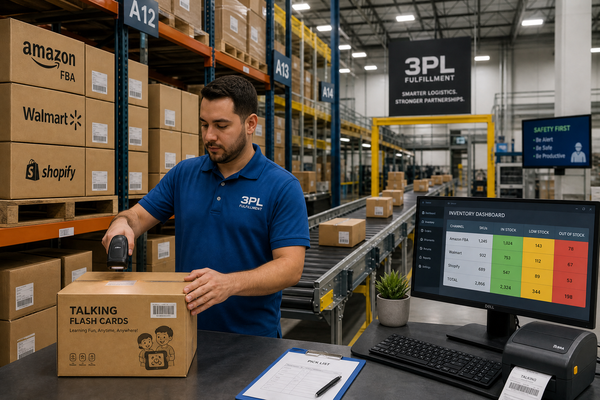
Talking flash cards are physical hardware products. Unlike digital goods, they require significant capital tied up in inventory, and they take up physical warehouse space. When selling across multiple platforms, the primary challenges include:
- Demand Volatility: A viral TikTok video might cause a sudden spike in sales on your Shopify store, draining inventory intended for Amazon FBA.
- Platform-Specific Packaging Requirements: Amazon FBA has strict barcode (FNSKU) and polybag requirements. Walmart (WFS) has different labeling standards. Sending the wrong packaging to the wrong fulfillment center results in costly rejection fees.
- Long Manufacturing Lead Times: A custom OEM/ODM order of talking flash cards from a Shenzhen factory typically takes 30-45 days to manufacture, plus 20-30 days for ocean freight. If you miscalculate inventory across platforms, you will face a two-month stockout.
What Are the Core Inventory Strategies for Multi-Channel E-Commerce?
To successfully manage multi-platform sales, B2B buyers must implement a robust inventory strategy. There are two primary approaches:
Strategy 1: The Centralized 3PL (Third-Party Logistics) Hub
Instead of sending inventory directly from the Chinese factory to Amazon FBA or Walmart WFS, the buyer ships bulk inventory to a centralized 3PL warehouse in the target country (e.g., a warehouse in California).
The 3PL acts as the central nervous system. When Amazon inventory runs low, the 3PL drips a pallet into FBA. When a Shopify order comes in, the 3PL fulfills it directly. This strategy provides maximum flexibility and prevents over-committing inventory to a single platform’s expensive fulfillment network.
Strategy 2: Factory-Level SKU Segregation
If the buyer knows their exact sales ratios (e.g., 70% Amazon, 30% Shopify), they can instruct the manufacturing factory to segregate the inventory before shipping. The factory prints Amazon FNSKU labels on 70% of the units and standard UPC labels on the remaining 30%. The factory then ships the FNSKU units directly to Amazon FBA (saving 3PL costs) and the UPC units to a standard fulfillment center.
Inventory Strategy Comparison
| Strategy | Flexibility | Storage Costs | Fulfillment Speed | Best For |
|---|---|---|---|---|
| Direct to Platform (e.g., FBA) | Low | High (Platform fees) | Fastest | Single-channel sellers |
| Centralized 3PL Hub | Very High | Medium | Fast | Established multi-channel brands |
| Factory-Level Segregation | Low | Low | Fast | Brands with highly predictable sales data |
How Does Supply Chain Visibility Impact Inventory?
Effective inventory management requires total supply chain visibility. You must know exactly where your talking flash cards are at any given moment—from raw material sourcing in China to the final mile delivery.
The World Health Organization (WHO) and global trade bodies emphasize that supply chain transparency is critical for mitigating disruptions, whether from global pandemics or port strikes [1]. B2B buyers should utilize inventory management software (like Linnworks or Skubana) that integrates directly with their sales platforms and their 3PL to provide real-time stock levels.
How Toyvao Supports Your Multi-Channel Supply Chain
At Toyvao, we understand that modern B2B buyers operate complex, multi-channel e-commerce businesses. We offer flexible manufacturing and logistics solutions to support your inventory strategy.
We provide comprehensive factory-level labeling services. Whether you need Amazon FNSKU barcodes, Walmart WFS labels, or standard retail UPCs, we ensure every unit is perfectly prepped for its specific destination before it leaves our Shenzhen facility. We also offer flexible split-shipping, allowing you to send one container to your US 3PL and another directly to a European fulfillment center. Partner with Toyvao for a manufacturing partner that understands global e-commerce logistics.
References
[1] World Health Organization (WHO). “Supply chain management and logistics.”
[2] The Toy Association. “Global Supply Chain and Logistics for the Toy Industry.”
[3] Grand View Research. “E-commerce Market Size, Share & Trends Analysis Report.”
Need a manufacturer that understands multi-channel e-commerce logistics? Contact Toyvao today!
Email: sales@toyvao.com | WhatsApp: https://wa.me/8618681064480
