
In the global educational toy market, safety is not just a regulatory requirement—it is the absolute foundation of brand trust. For electronic learning toys like talking flashcard readers, which are handled daily by toddlers as young as two years old, battery safety is the single most critical engineering checkpoint. According to the U.S. Consumer Product Safety Commission (CPSC) [1], battery-related failures, including overheating, leakage, and ingestion hazards, account for a significant portion of electronic toy recalls.
For B2B buyers, distributors, and private label brands, importing electronic toys into highly regulated markets like North America and Europe requires a deep understanding of international safety standards. Partnering with a manufacturer like Toyvao that prioritizes rigorous battery engineering and compliance ensures your products sail through customs and protect children worldwide.
Key Regulatory Standards for Toy Batteries
Before placing an order with any Shenzhen toy factory, you must verify that their products comply with the following international battery safety standards:
1. EN71-1, EN71-3, and EN62115 (Europe)
European safety standards are exceptionally strict regarding electronic toys. EN62115 specifically governs the electrical safety of toys, setting limits on operating voltages, temperatures, and electromagnetic fields. It requires that:
– Batteries must not be accessible without the use of a tool (such as a screwdriver) or two independent, simultaneous movements.
– The temperature of the toy’s surface near the battery must not exceed safe limits (typically 45°C) during continuous operation or simulated short-circuit conditions.
2. ASTM F963 (United States)
The standard consumer safety specification for toy safety in the US, ASTM F963, mandates that all battery-operated toys undergo rigorous mechanical abuse tests. This includes drop tests, torque tests, and compression tests to ensure that the battery compartment remains securely locked and does not break open, exposing the battery or small electrical parts.
3. UN38.3 and IEC 62133 (Global Transport & Battery Safety)
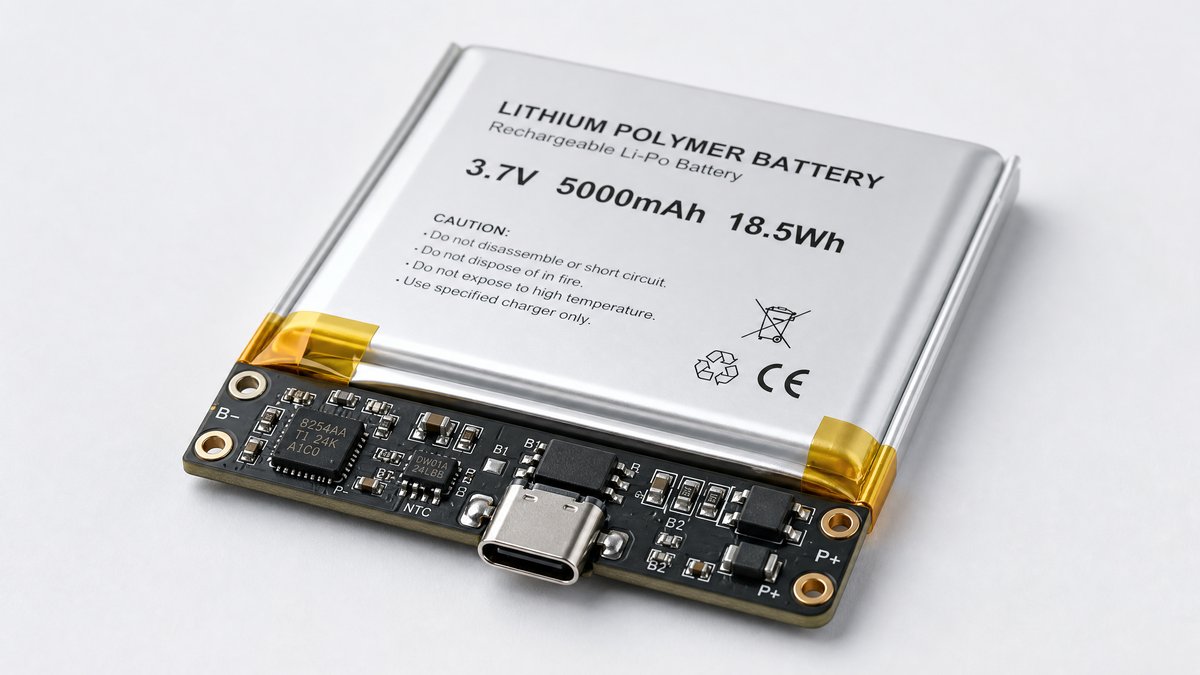
For toys utilizing rechargeable lithium-polymer (Li-Po) batteries, the battery cells themselves must be certified under IEC 62133 (safety requirements for portable sealed secondary cells) and UN38.3 (safe transport of lithium batteries). Without these certifications, air and ocean freight carriers will refuse shipment.
Lithium-Polymer (Li-Po) vs. AAA Dry Batteries: A B2B Comparison
When designing your custom talking flash cards, choosing the right battery chemistry is a critical decision. The table below compares the safety, cost, and usability of rechargeable Li-Po batteries versus traditional AAA dry cells:
| Engineering & Safety Feature | Rechargeable Lithium-Polymer (Li-Po) | Traditional AAA Dry Batteries | B2B Sourcing Impact |
|---|---|---|---|
| Power Source & Lifespan | Integrated 300mAh – 500mAh, 500+ charge cycles | External dry cells, must be replaced frequently | Li-Po offers premium user experience; AAA has lower upfront manufacturing cost. |
| Battery Leakage Risk | Zero leakage risk (Hermetically sealed pouch) | High risk of acid leakage if left unused | AAA battery acid can ruin circuits and pose severe chemical burn hazards to children. |
| Protection Circuit (PCM) | Mandatory PCM Board (Prevents overcharge/discharge) | None (Relies entirely on external device safety) | Toyvao’s Li-Po batteries include dual PCM ICs to guarantee electrical stability. |
| Ingestion Hazard | Extremely Low (Permanently sealed inside welded plastic) | Medium-High (If battery compartment screw is lost) | Ingesting small button cells or AAA batteries is a major medical emergency. Li-Po is far safer. |
| Regulatory Compliance | Requires UN38.3, MSDS, IEC 62133 | Requires heavy-metal limits testing (Lead, Cadmium) | Li-Po requires more documentation but commands a much higher retail price point. |
How Toyvao Engineers Absolute Battery Safety
At Toyvao, we do not treat safety as an afterthought. Our engineering team implements a multi-layered safety protocol for every talking flashcard reader we manufacture:
1. Dual-IC Protection Circuit Module (PCM)
Every rechargeable Li-Po battery used in Toyvao products is equipped with a custom-designed PCM board. This board contains dedicated integrated circuits that monitor voltage and current in real-time. If the voltage exceeds 4.25V (overcharge) or drops below 3.0V (overdischarge), or if a short circuit is detected, the PCM instantly cuts off power, preventing thermal runaway.
2. Welded and Screw-Secured Battery Compartments
For our dry-cell models, we use high-grade ABS plastic with reinforced brass screw inserts. This ensures that even after hundreds of battery changes, the screw threads will not strip, keeping the battery door permanently secure against curious toddlers. For our rechargeable models, the Li-Po battery is permanently enclosed inside an ultrasonic-welded inner chamber, completely isolated from the user.
3. Comprehensive Environmental Stress Testing
Before shipment, random samples from every production batch undergo extreme testing in our in-house quality control lab:
– Thermal Abuse Test: Batteries are subjected to temperatures up to 60°C to ensure thermal stability.
– Short-Circuit Simulation: We intentionally short-circuit the cells to verify that the PCM cuts power safely without overheating.
– Continuous Aging Test: Every rechargeable unit is charged and discharged continuously for 48 hours to eliminate early-life component failures.
Conclusion: Protect Your Brand with Certified Safety
As global consumers become increasingly safety-conscious, importing uncertified or poorly engineered electronic toys is a massive risk to your brand’s reputation and financial health. By sourcing your talking flashcard readers from Toyvao, you leverage our years of engineering expertise and fully certified battery systems, ensuring 100% compliance with ASTM, EN71, and EN62115.
Request Our Safety Certification Package
Our team is ready to provide complete MSDS, UN38.3, CE, and FCC test reports for your compliance review.
- Email: sales@toyvao.com
- Engineering Support: engineering@toyvao.com
- WhatsApp/Business Line: +86 186 8106 4480
- Factory Address: Toyvao Manufacturing Park, Bao’an District, Shenzhen, Guangdong Province, China.
References
- [1] U.S. Consumer Product Safety Commission (CPSC). (2025). Toy Safety Regulations and Recall Statistics. https://www.cpsc.gov
- [2] European Committee for Electrotechnical Standardization. (2024). EN 62115: Electric Toys – Safety Standards and Test Methods. https://www.cenelec.eu
