
Do you worry about losing connection when your phone has no signal in remote areas or during emergencies? That stressful feeling can make you wonder if walkie-talkies have the same weakness.
Walkie-talkies do not need cell service to work. They use radio frequencies to send and receive voice messages directly between devices, so they work even where there is no cellular network.
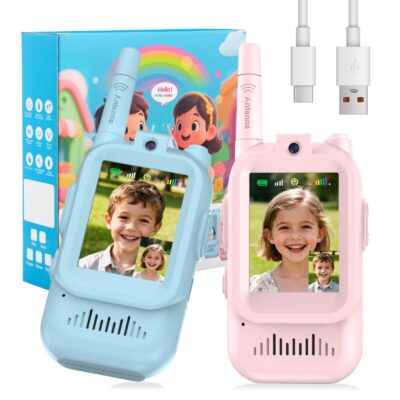
Many people think all wireless gadgets depend on phone towers and SIM cards. The truth is, walkie-talkies communicate on their own network. I realized this during a family hike in the mountains. We lost phone signal, but our walkie-talkies kept us connected the entire time. Let’s see why they work in places where cell phones fail.
How do walkie-talkies communicate without cellular networks?
It’s easy to believe all electronics talk through phone companies. But walkie-talkies are different, and their independence is a big advantage.
Walkie-talkies use radio waves to send voices directly from one device to another. They do not rely on any cell tower, internet connection, or mobile subscription.
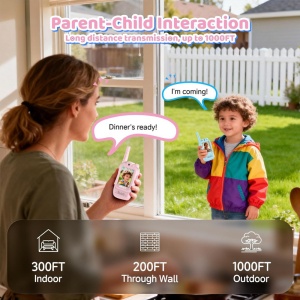
This is simple, but it makes a huge difference. When you press the push-to-talk button on a walkie-talkie, your voice is turned into a radio signal. Other walkie-talkies, set to the same channel, receive this signal instantly. There is no third party involved.
Dive deeper: What makes radio communication possible everywhere?
Years ago, I used walkie-talkies at a summer camp in the woods where there were no cell signals. Our group stayed connected over many acres. This made me realize how direct transmission works.
Let’s break down the core features:
| Feature | Walkie-Talkies | Cell Phones |
|---|---|---|
| Connection Needed | None | Cell network required |
| Range | 1-30 km (direct, varies) | Global (with towers) |
| Setup | Turn on, select channel | SIM card/plan needed |
| Latency | Instant | Slight delay (network) |
Walkie-talkies use the VHF or UHF radio bands. These frequencies let devices send signals straight to each other. Terrain, buildings, and power affect range, but you do not need any outside network. That’s why parks, ski resorts, and event staff rely on walkie-talkies. Even during power outages or natural disasters, your radios will still function as long as both units have battery.
Can walkie-talkies work with your smartphone or WiFi?
Some people want more features, such as texting, maps, or connection to a wider team. They ask if walkie-talkies can do the same smart stuff as modern phones.
Normal walkie-talkies cannot use cellular data or WiFi. But some “app-based” walkie-talkie devices or apps can mimic walkie-talkie features using internet or cell networks.
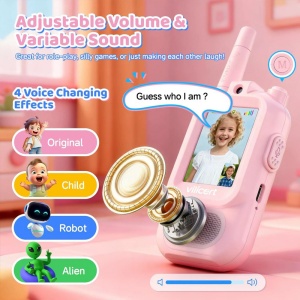
Recently, I tested some walkie-talkie apps on my phone. These need either cell data or a WiFi spot. The sound quality was good, but as soon as I lost signal, the app stopped working. Real walkie-talkies worked no matter what—even underground in a parking lot.
Here’s a table for comparison:
| Device/App | Uses Cell Service? | Works Without Signal? |
|---|---|---|
| Standard Walkie-Talkie | No | Yes |
| Walkie-Talkie App | Yes (WiFi/data needed) | No |
| Hybrid 2-in-1 Radios | Sometimes (models vary) | Varies |
You should know the difference. For simple voice, walkie-talkies don’t depend on outside networks. For smart features, your device will likely need cell service or WiFi, like a phone.
When are walkie-talkies better than cell phones?
You may rely on your smartphone for nearly everything. But walkie-talkies have unique benefits in places or moments where phone service is weak or missing.
Walkie-talkies work best for instant group communication without delays, extra costs, or dependence on outside infrastructure. They work when there is no cell service, WiFi, or internet.

One winter, my friends and I separated while snowboarding. With no cell network on the mountain, only our walkie-talkies kept us safely in touch. Emergency responders and event organizers use radios because they do not fail when phone service goes down or the crowd is too big for cellular.
| Activity | Better with Walkie-Talkies | Better with Cell Phones |
|---|---|---|
| Hiking, camping | Yes | No (no signal) |
| Public events | Yes | Sometimes |
| Long-distance travel | No (range is limited) | Yes |
| Emergencies | Yes | Sometimes |
If you need reliable, instant voice over a short to medium distance, walkie-talkies win every time.
Are there any limitations with walkie-talkies vs. cell phones?
Some users expect walkie-talkies to do everything a phone can, but that’s not their goal. It helps to know what walkie-talkies cannot do.
Walkie-talkies have a limited communication range, can only send voice, and offer no texting, mapping, or internet browsing. They also need you to be on the same channel or frequency.

Once, I tried using two walkie-talkies between my house and a friend’s a few kilometers away. Tall buildings blocked the signal. Cell phones would work fine, but walkie-talkies did not reach that far. However, in remote or local group settings, walkie-talkies were unmatched.
Here’s a direct comparison:
| Feature | Walkie-Talkie | Cell Phone |
|---|---|---|
| Range (urban/outdoor) | 1-5 km / 5-30 km | Unlimited |
| Voice calls | Yes | Yes |
| Text, apps, internet | No | Yes |
| Needs phone/network? | No | Yes |
| Cost after purchase | None | Monthly bill |
Walkie-talkies are designed for reliable, no-service voice contact. If you need media, texts, or internet, you will want your phone too.
Conclusion
Walkie-talkies work without cell service, using radio waves to connect directly—making them reliable any place, any time, regardless of phone signal.
