I sat in a classroom and watched the teachers try to call each other with their phones. Missed calls and slow replies made small problems bigger. Walkie-talkies can fix this—fast, clear voice, no waiting.
The best walkie-talkie for daycare is the Motorola T100 or T200 Series. These are easy to use, durable, offer clear sound, and have reliable range for indoor and playground communication.
When you work in childcare, every second counts—whether someone needs help or supplies. If you want stress-free group communication and safe supervision, read on with me. I’ll explain the features, usability, and what to check before you buy.
What Features Make a Walkie-Talkie Good for Daycare?
It’s stressful when batteries run out, volume is too low, or buttons confuse your team. I learned the hard way that not every walkie-talkie is built for busy daycare life.
A good daycare walkie-talkie should be lightweight, have simple buttons, offer clear sound, and use AA or AAA batteries for easy replacement. It should stand drops and spills.
What to Check Before You Buy
I test each walkie-talkie when I recommend them to clients in childcare centers. Through personal experience and feedback, these are the things that matter:
- Design simplicity: Look for large buttons, clear screen, minimal settings. Busy staff need instant talk, not setup.
- Durability: Choose models with rubber edges, tight ports, and water resistance if possible. Drops happen every day.
- Battery life: Get walkie-talkies with AA or AAA batteries for easy replacement. Rechargeable options are good, but spare batteries are better in an emergency.
- Volume: Noisy daycare rooms need loud, adjustable volume.
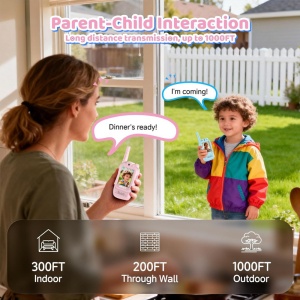
- Range: Indoors, even cheap walkie-talkies work well for up to 100 meters through walls and doors. Outdoors, reliable connection up to 800 meters is plenty for most playgrounds and parking areas.
- License-free: FRS (Family Radio Service) walkie-talkies require no paperwork and are safe for daycare use.
| Feature | Motorola T100/T200 | Cheap Imports | Smartphone Apps |
|---|---|---|---|
| Ease of use | Very easy | Some complex | Slow setup |
| Durability | High | Low | Not drop-proof |
| Battery | AA/AAA | Button cell | Recharge only |
| Range | 100–800m | 20–200m | Wi-Fi only |
| Volume | Loud/clear | Low/muffled | Depends |
| License needed | No | No | No |
Real moments in daycare are unpredictable. Strong, reliable walkie-talkies are key for fast teamwork and child safety.
Which Specific Model Is Best for Daycare Use?
I’ve given out many types of walkie-talkies to staff in my clients’ centers. I watched which ones last and work best. Motorola and Retevis do well.
Motorola T100/T200 are the top choices for daycare. They are budget-friendly, simple to use, and survive drops. FRS models cover all basic communication needs.
My Experience With Models That Last
Let me break down model options and why they fit busy daycare centers:
| Model | Strengths | Weaknesses | Best For |
|---|---|---|---|
| Motorola T100 | Reliable, simple, cheap | No privacy codes | Small daycares, playground |
| Motorola T200 | Privacy codes, longer range | A bit heavier | Big centers, outdoor use |
| Retevis RT22 | Slim, rechargeable, durable | Shorter range in buildings | Indoor-only daycare |
| Midland X-Talker T10 | Loud speaker, easy screens | Bigger size | Older children, large staff |
I’ve seen the Motorola T100 handle baptism-of-fire moments: it kept working after being thrown, dropped, and left outside in the rain. Most staff say they know how to use it within two minutes. Battery replacement is quick. The range fits the needs of most campuses and playgrounds.
Staff enjoy Motorola T200 for its privacy codes (keeps chatter with neighboring schools separate) and longer outside range—important if you have bigger grounds. Retevis RT22 is good if you want a rechargeable, slim design, though it works best in small buildings.
What Should You Avoid When Picking Walkie-Talkies for Daycare?
I bought some walkie-talkies that looked good online. Many failed when tested in real daycare settings. Some could not be heard in noisy rooms, some lost connection in the hallway.
Avoid walkie-talkies with short battery life, weak speaker volume, too many confusing buttons, or a design that cannot handle drops or spills. Stay away from models with hard-to-find replacement batteries.

Common Pitfalls and What I've Learned
Here are the problems clients report and that I’ve seen myself:
| Problem | Cause | Impact | How to Prevent |
|---|---|---|---|
| Battery dies fast | Button cell, not AA/AAA | Staff left with no comms | Only buy AA/AAA models |
| Breaks after a drop | Cheap plastic cases | Lost unit, frequent repair | Choose rubber edges |
| Can’t hear speech | Weak speaker | Missed emergencies | Test in loud areas |
| Too complex to use | Many buttons, small icons | Staff frustrated | Try before you buy |
| Will not connect | Low FRS range | Unsafe isolation | Stick to known models |
I always tell daycare directors to test walkie-talkies for a week. Make sure every staff member can use them easily—especially in a hurry.
Conclusion
The best walkie-talkie for daycare is simple, tough, and uses AA/AAA batteries—with Motorola T100 or T200 series leading for all-around safety and ease of use.
