
I hear wild range claims on boxes. Parents expect miles. Kids get meters. Disappointment leads to returns and bad reviews. I set real numbers before I buy.
Most kids’ walkie talkies reach 1–2 km in open fields, 200–600 m in suburbs, and 30–100 m indoors. Hills, buildings, trees, and low batteries cut range fast. Antenna design and power also matter.
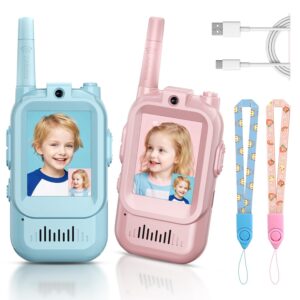
I tested dozens of sets with my child in parks, streets, and malls. I walked with a notebook and a simple meter. I logged when speech stayed clear, not just audible. The truth was simple and repeatable across brands.
What is the real range I should expect in common places?
I used to believe the “up to 3–10 miles” printed on retail boxes. Then I ran park tests. I learned to translate claims into real use cases.
Open fields: 1–2 km. Suburbs: 200–600 m. Indoors: 30–100 m across floors. Crowded downtown areas can drop to 100–300 m. Clear speech, not just static, sets the limit.
Dive deeper
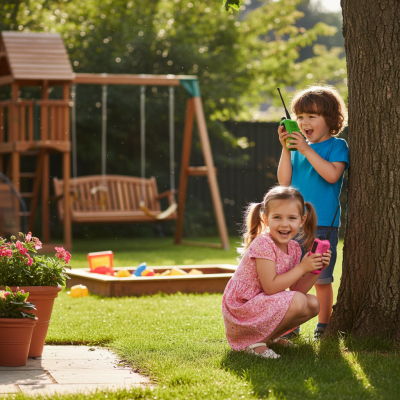
I measure range by “clear voice both ways” because one-way faint signals do not help kids. I also hold radios upright and pause one second after pressing PTT. That small habit adds real range. Here is how each place changes the result.
Environments and expected range
- Open park or beach: Best case. Flat ground and line of sight help. 1–2 km is common for toy-grade sets.
- Suburban streets with trees and cars: Mid case. Multi-path and absorption reduce clarity. 200–600 m is typical.
- Indoors across rooms or floors: Worst case. Walls, wiring, and appliances block signals. 30–100 m is realistic.
- Hilly trails or urban cores: Mixed case. Hills and buildings block line of sight. Expect 100–400 m unless you get high ground.
Why claims look bigger
- Box numbers assume mountain-to-mountain with zero obstacles.
- Many claims use the maximum detectable signal, not clear voice.
- Power and antenna efficiency on kids’ sets are limited by safety and cost.
| Environment | Clear two-way voice (typical) | What helps most | What hurts most |
|---|---|---|---|
| Open field/beach | 1–2 km | Elevation, upright antenna | Curved terrain |
| Suburbs/park paths | 200–600 m | Fewer trees, higher hold | Cars, trees, houses |
| Indoors/floors | 30–100 m | Near windows, fewer walls | Concrete, metal, appliances |
| Urban/hilly | 100–400 m | High ground, line of sight | Buildings, hills, glass tint |
What technical factors decide the range?
I chased range by swapping batteries, antennas, and settings during tests. Some changes helped a lot. Some did nothing. I now check four things first.
Output power, antenna efficiency, frequency band (FRS/PMR446), and receiver sensitivity decide range. Battery health and good etiquette add a bit more.

Dive deeper
I keep the tech simple and practical. I measure what I can with a handheld meter and a scope when I have a lab. Most kids’ models share a similar core design, so small details swing results.
Power and regulations
- Kids’ sets on FRS/PMR run low power by design. That keeps them safe and legal.
- Power helps only up to a point. Doubling power does not double range because obstacles dominate.
Antenna and layout
- Fixed stubby antennas are safe, but efficiency varies. A good PCB layout adds noticeable range.
- Holding the radio upright and away from the body reduces loss.
Receiver and squelch
- Sensitivity and squelch thresholds set the “cutoff.” A tight squelch can make a strong radio sound weak.
- Privacy codes (CTCSS/DCS) do not increase range. They only hide other users’ audio.
Power path
- Weak batteries drop transmit power and reduce audio clarity. I replace cells before long tests.
- Cold weather reduces battery output. I keep spares in a warm pocket.
| Factor | Effect on range | My quick fix |
|---|---|---|
| Antenna efficiency | Big | Hold upright; avoid covering top |
| Battery voltage | Medium | Fresh AA/AAA or full charge |
| Squelch level | Medium | Use factory default; avoid “tight” |
| Privacy codes | None on range | Use for sanity, not distance |
How can I maximize range without breaking rules?
I do not swap antennas or boost power beyond legal limits. I still get better results by using smarter habits. Kids can learn these fast.
Get line of sight, stand higher, hold the antenna upright, keep messages short, and pause one second after PTT before speaking. Fresh batteries matter more than brand names.

Dive deeper
I teach a five-step routine during camps and park games. It adds clarity and makes kids feel skilled.
Five simple habits
- Height: Move to a small rise or stand on a bench to clear obstacles.
- Orientation: Keep the antenna vertical and away from the face and chest.
- PTT timing: Press, pause one second, then talk. This prevents clipped words.
- Short calls: Use short, clear messages. Less airtime means less chance of overlap.
- Channel sanity: Pick a channel with less chatter. Codes reduce noise but not interference.
Gear choices that help
- Choose models with a clear, fixed squelch and steady audio.
- Look for IPX2–IPX4 if you play outdoors, so you keep using radios in light rain.
- Use good alkaline or low self-discharge NiMH cells. Cheap zinc-carbon cells sag early.
| Tip | Why it works | Kid-friendly cue |
|---|---|---|
| Stand higher | Fewer obstacles | “Find the hill” |
| Antenna upright | Better radiation pattern | “Keep it like a tree” |
| Pause after PTT | Avoid clipped words | “Press, pause, speak” |
| Fresh batteries | Stable power | “New ones for big games” |
Do VOX and privacy codes increase range?
I once hoped VOX would “boost” reach. It did not. It only changed when the radio sent audio. Codes also confused a buyer who thought they were encryption.
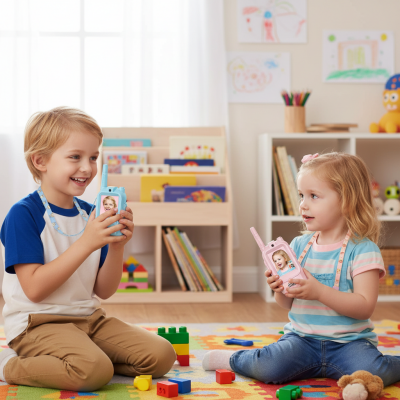
VOX and privacy codes do not extend range. VOX only auto-transmits on sound. CTCSS/DCS only filters what you hear. Neither changes signal strength or receiver sensitivity.
Dive deeper
I still use these features, but I set expectations.
VOX
- Good for hands-free play, but wind can trigger it.
- Hot-mic drains the battery and may block others.
Privacy codes
- They reduce background chatter by muting unmatched signals.
- They do not make your conversation private or stronger.
When to use
- Use VOX for biking or building games, with conservative sensitivity.
- Use codes in parks to avoid hearing other groups.
| Feature | What it does | What it does not do | My setting |
|---|---|---|---|
| VOX | Auto PTT on sound | Add distance | Low sensitivity |
| CTCSS/DCS | Mute other users | Encrypt or boost | Same code on all units |
How do batteries and weather affect range?
I ran the same route in winter and summer with new and old batteries. The winter range dropped. Old cells made it worse. I now plan around this.
Cold and weak batteries reduce range. Keep spare warm batteries. Expect shorter range below 5°C and in heavy humidity or rain. Heat can also lower audio clarity.

Dive deeper
I track two simple variables in field notes: temperature and battery voltage. They predict performance more than brand.
Temperature
- Cold reduces battery output and can change RF behavior. Expect more dropouts.
- Keep radios inside jackets between uses. Swap cells sooner in winter.
Humidity and rain
- Light rain has a small effect. Heavy rain and wet foliage absorb more signal.
- IPX2–IPX4 keeps sets usable so kids do not stop communicating.
Battery type
- Fresh alkaline AA/AAA hold voltage well in typical play.
- NiMH rechargeables are great if you charge fully before outings.
- Built-in Li-ion is good for daily home use. Bring a power bank for long trips.
| Condition | Expected change | What I do |
|---|---|---|
| <5°C | Shorter range | Warm spares; earlier swap |
| Rain, wet trees | Some loss | Higher ground; shorter calls |
| Low battery | Fast drop in clarity | Replace before big games |
Conclusion
In the real world, kids’ walkie talkies cover 1–2 km in open fields, a few hundred meters in suburbs, and tens of meters indoors. Hold them right, keep batteries fresh, and manage expectations.
